
Medical device manufacturers face a quality bar few other industries match. Every plastic component that touches a patient — a syringe hub, a diagnostic cassette, a surgical instrument handle — must be produced under documented, traceable, repeatable conditions. That is exactly what ISO 13485 injection molding delivers: an internationally recognized quality management system tailored to medical devices, applied to the molding process that produces their plastic parts.
If you are sourcing molded medical components, ISO 13485 certification is not a nice-to-have — it is increasingly a gatekeeper for OEM partnerships, regulatory submissions, and audits. But what does the standard actually require of an injection molder? How does it change the way parts are molded, validated, and documented? And how do you verify that a supplier's certification is real and relevant to your project?
This guide answers those questions, then shows what to look for when selecting an injection molding partner for medical applications.
What Is ISO 13485?
ISO 13485 is the international standard for quality management systems used in the design and manufacture of medical devices. Published by the International Organization for Standardization, it specifies requirements for organizations that produce medical devices and related services — including contract manufacturers and component suppliers such as injection molders.
The standard is built on a risk-based approach. Unlike general quality standards, ISO 13485 demands that every process be validated, every record retained, and every risk assessed in the context of patient safety. It is the quality backbone that supports regulatory compliance with the FDA's Quality System Regulation (21 CFR Part 820) in the United States and the EU Medical Device Regulation (MDR) in Europe.
Why ISO 13485 Matters for Injection Molding
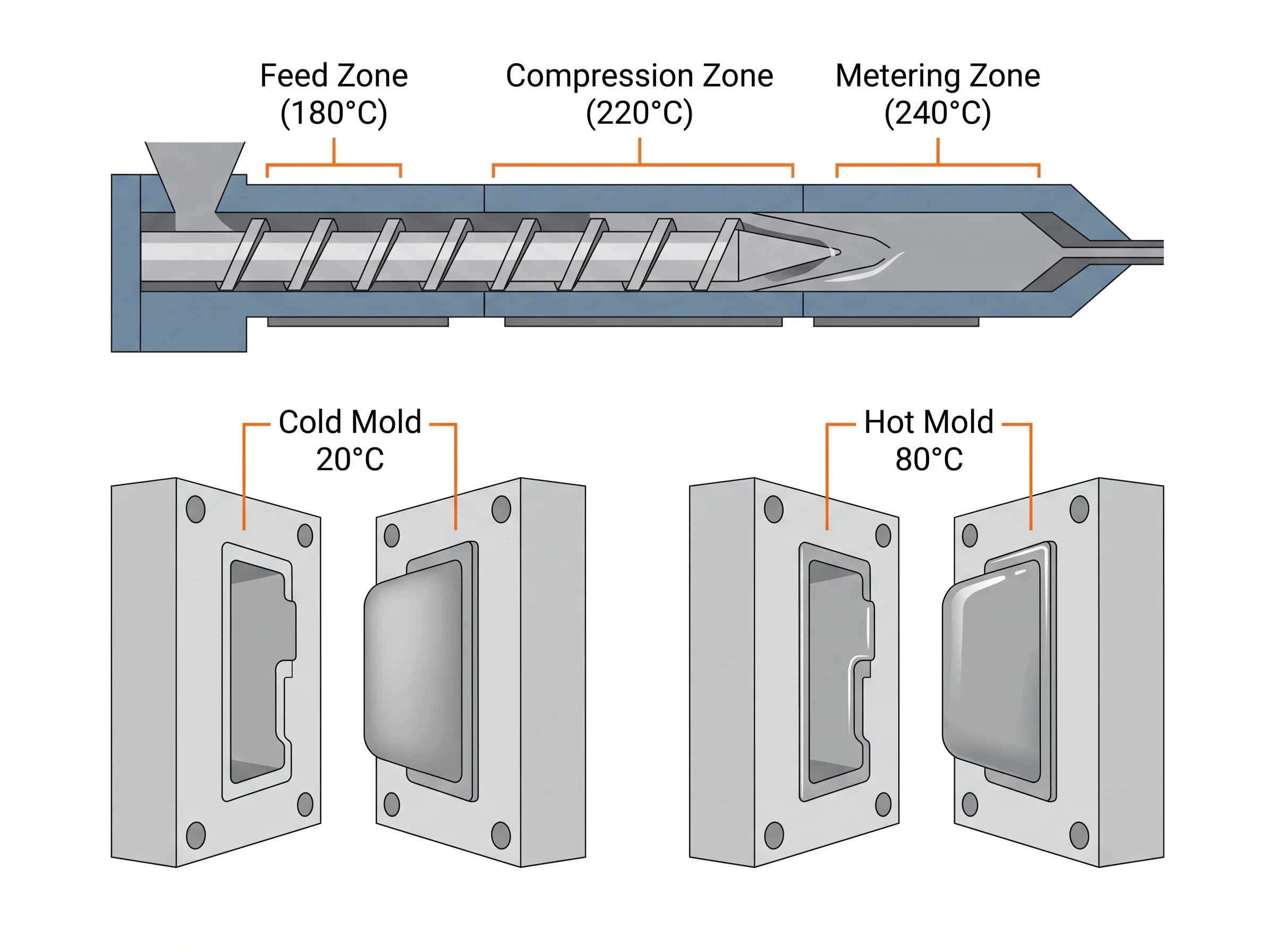
Injection molding is a high-volume process where consistency is everything. A mold produces thousands of identical parts per day, and a drift in process parameters — melt temperature, injection pressure, cooling time — can silently shift part dimensions or introduce cosmetic and functional defects. ISO 13485 turns that consistency into a managed, documented obligation.
For device manufacturers, the benefits are concrete. An ISO 13485-certified molder provides full traceability from resin lot to finished part, validated processes that stand up to FDA and notified-body audits, and controlled change management when molds or materials are revised. That documentation is often required just to include the component in a regulatory submission, and it dramatically reduces the compliance burden on the OEM.
ISO 13485 Requirements for Injection Molders
Certification is not a single inspection — it is a sustained system. For an injection molder, the key requirements include:
- Documented quality management system — policies, procedures, and work instructions covering the entire molding workflow.
- Process validation — IQ (Installation Qualification), OQ (Operational Qualification), and PQ (Performance Qualification) for molding processes and critical equipment.
- Risk management — application of ISO 14971 principles to identify and control risks in the manufacturing process.
- Supplier control — qualification and monitoring of resin suppliers, toolmakers, and subcontractors.
- Traceability — records linking each batch of parts to its raw material lots, machine, mold, and process parameters.
- Change control — documented review and re-validation whenever molds, materials, or processes change.
- Corrective and preventive action (CAPA) — a structured system for investigating and eliminating non-conformities.
- Internal audits and management review — ongoing verification that the system works and improves.
These requirements apply to the molder's own operations, which is why certification of the manufacturing site — not just the parent company — matters when you audit a supplier.
Medical-Grade Materials for Injection Molding
Medical injection molding relies on resins with documented biocompatibility and performance. Common choices include:
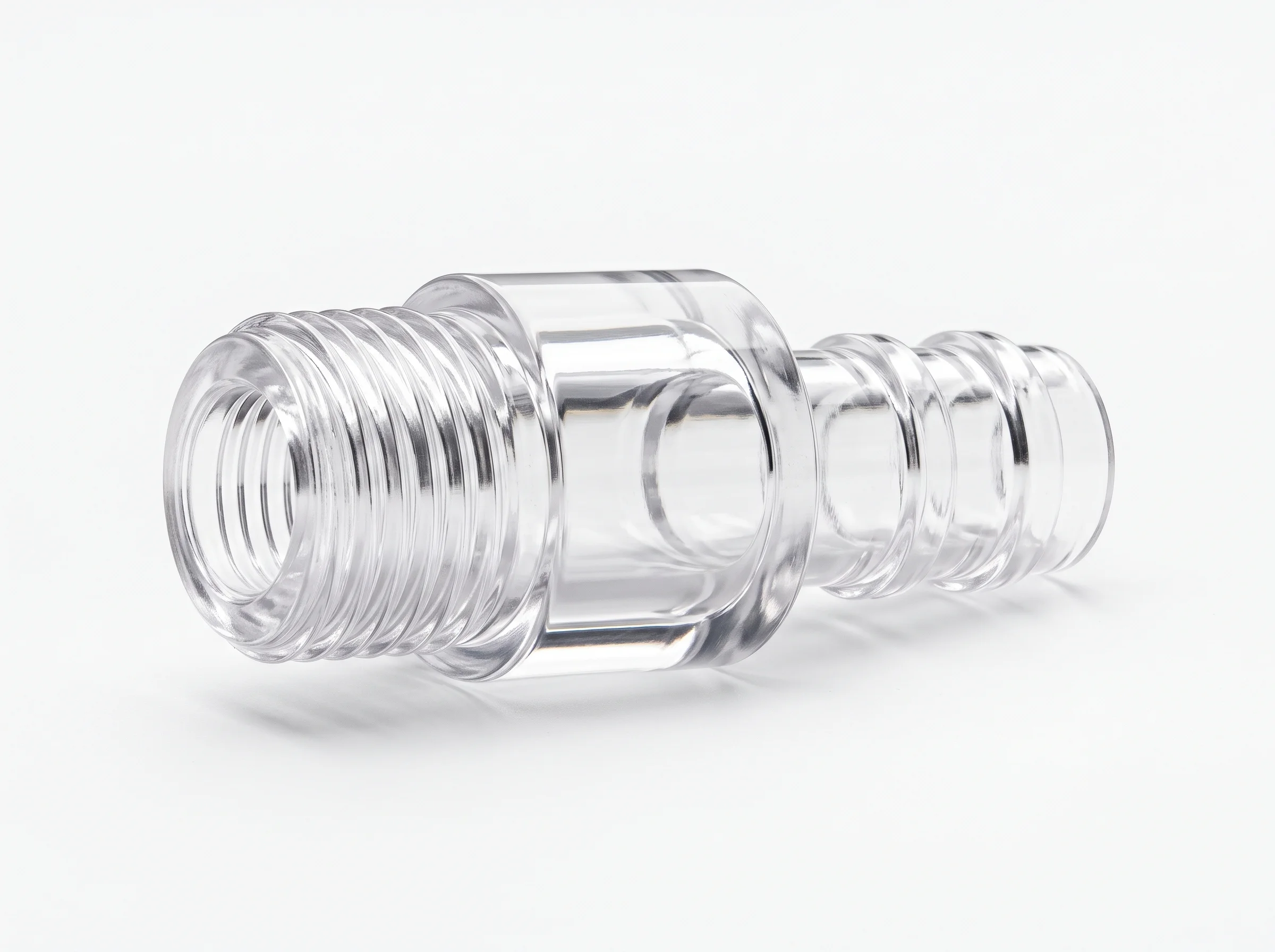
- Polycarbonate (PC) — transparency and impact strength for housings and fluidics.
- ABS — toughness and dimensional stability for device enclosures.
- Polypropylene (PP) — chemical resistance and steam sterilizability for syringes and containers.
- Polyethylene (PE) — flexibility and low friction for seals and tubing fittings.
- PEEK — high-temperature, high-strength polymer for implantable and reusable instruments.
- Liquid Silicone Rubber (LSR) — elastomeric components such as seals, valves, and masks.
Each material family requires specific molding conditions, and many medical grades carry USP Class VI or ISO 10993 biocompatibility testing. A certified molder maintains controlled resin storage, documented lot traceability, and validated drying and handling procedures — because moisture contamination alone can ruin a medical-grade nylon or PC batch. Compare candidate resins and their properties in our materials guide.
Cleanroom Molding and Process Validation
Many medical components are molded in controlled environments. Cleanrooms are classified by airborne particle counts — ISO Class 7 and Class 8 are typical for injection molding — and the classification must be verified by periodic monitoring. Cleanroom molding controls particulates that could contaminate sterile devices, but it also imposes discipline: gowning procedures, controlled material flow, and validated cleaning cycles for molds and machines.
Process validation deserves equal attention. A validated molding process has defined parameter windows (temperature, pressure, fill time, cooling) proven to produce parts within specification, with documented capability studies (Cpk) on critical dimensions. When a mold is transferred between machines or a resin lot changes, the validation review determines whether re-qualification is required. This rigor is what makes ISO 13485 molding different from commodity injection molding — and it is why validated processes command a premium that device OEMs willingly pay.
How to Choose an ISO 13485 Injection Molding Partner
Certificates can be photocopied; systems cannot. When evaluating an ISO 13485 injection molding partner, verify the certificate's scope and registrar (a certificate that lists "injection molding" in its scope is what you want), ask for audit results and quality metrics, and inspect how they handle deviations and CAPAs. Ask specifically about:
- Process validation documentation for your part family.
- Traceability from resin lot to finished goods.
- Change control procedures for molds and materials.
- Cleanroom classification and monitoring records.
- Inspection and release criteria, including in-process and final QC.
A partner that answers these questions with documents rather than assurances — and pairs certification with a documented quality assurance process — is a partner you can take into an FDA or notified-body audit with confidence.
Frequently Asked Questions
What is the difference between ISO 13485 and ISO 9001?
ISO 9001 is a general quality management standard applicable to any industry. ISO 13485 is specifically designed for medical devices and adds medical-specific requirements: risk management, process validation, traceability, and regulatory compliance. Many medical molders hold both, but ISO 13485 is the one that matters for device manufacturing.
Do I need an ISO 13485 molder for medical prototypes?
For early prototyping, an ISO 9001 molder may suffice. Once you move to validation batches, pilot production, or parts destined for regulatory submission, an ISO 13485-certified molder is strongly recommended — the documentation they produce becomes part of your device's quality record.
Is ISO 13485 certification required by law?
It is not a legal mandate in most jurisdictions, but it is effectively required by the market: regulators expect it, auditors look for it, and medical device OEMs routinely require it from their component suppliers as evidence of a controlled quality system.
What materials are compatible with ISO 13485 injection molding?
Any injection-moldable medical-grade resin — PC, ABS, PP, PE, PEEK, nylon, and LSR among them — can be molded under an ISO 13485 system. The standard governs the process and documentation, not the material list, though materials must meet the biocompatibility requirements of the device (such as ISO 10993 or USP Class VI).
How long does it take to get an ISO 13485-certified mold and parts?
Mold fabrication typically takes 3–6 weeks depending on cavity count and complexity, with first articles and validation batches following. A certified molder will build validation and documentation milestones into the timeline, so factor them into your project plan rather than treating them as afterthoughts.
Get Your Medical Injection Molding Quote
At SHBD Metal, we combine precision injection molding with the quality discipline that medical device manufacturing demands — documented processes, controlled materials, and inspection you can audit. Our engineers review your part design for moldability and help you select medical-grade resins that balance performance, biocompatibility, and cost.
Upload your CAD files today and receive a detailed quote within hours. From mold design to validated production, we are ready to help you bring your medical device to life.