SHBD Metal provides custom metal bending for sheet metal fabrication. Upload your CAD file to receive an instant quote and free DFM review within 24 hours.
All uploads are secure and confidential.
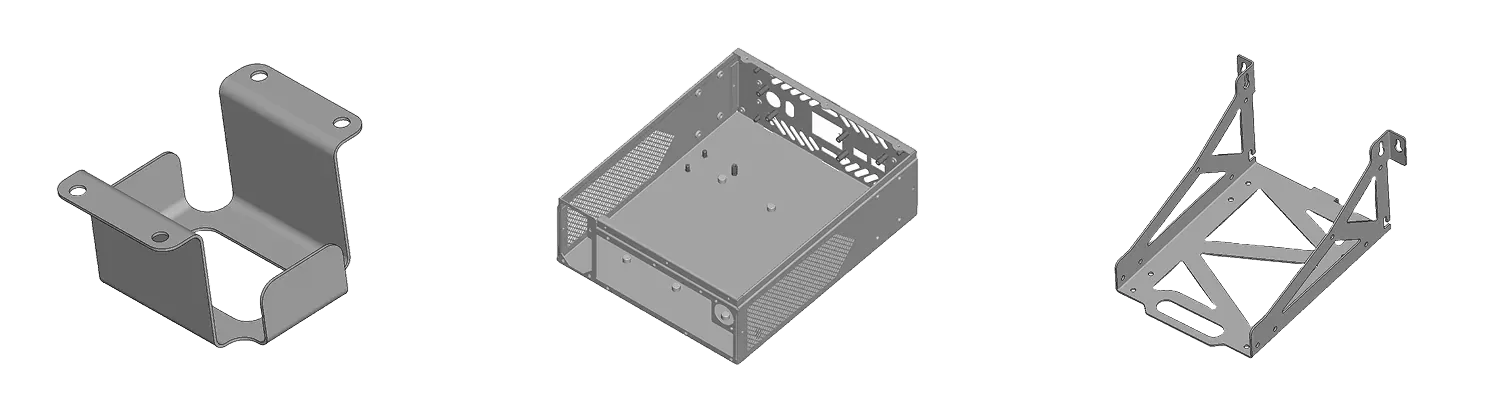
Metal bending is a sheet metal forming process where force is applied to shape materials like stainless steel, structural steel, or aluminum into specific angles, typically forming a "V" or "U" shape. This process produces bent sheet metal parts with permanent angles.
Typical bending machines include press brakes, rollers, and other precision equipment. SHBD Metal partners with trusted metal bending shops equipped with a wide range of bending machines.
Get Instant Quote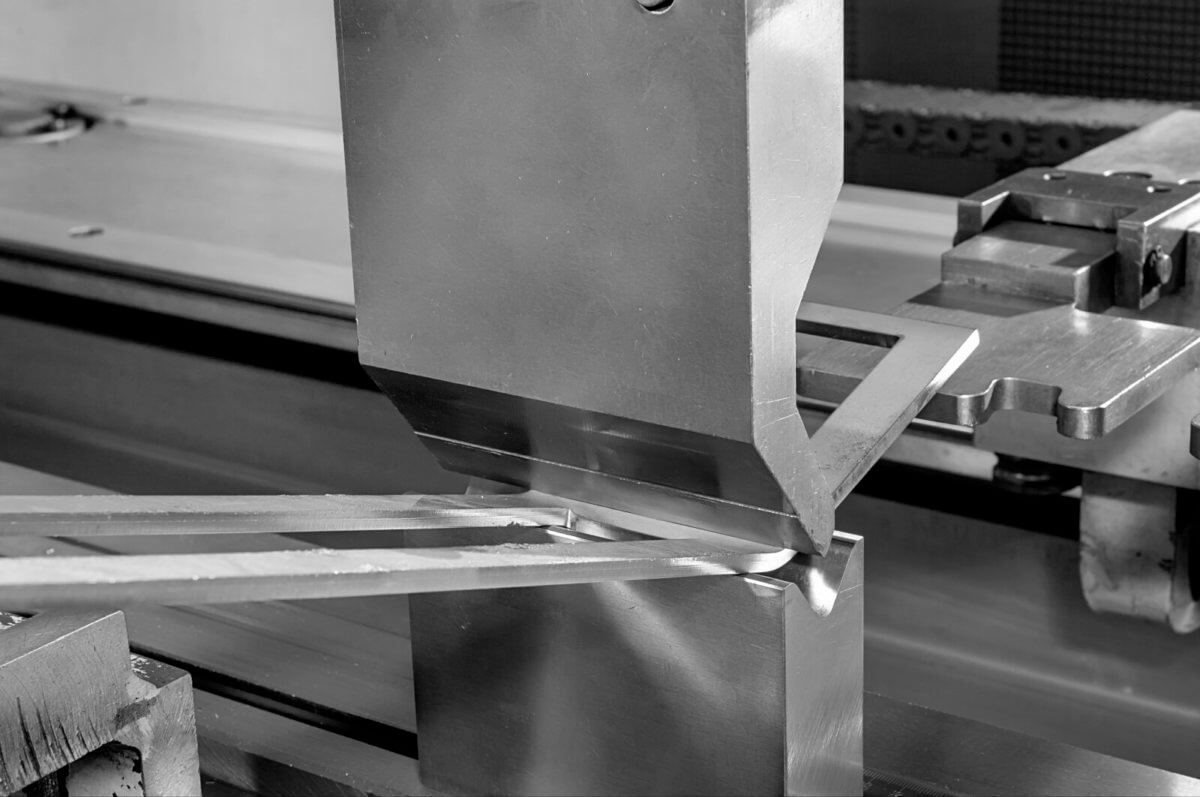
There's more than one way to bend sheet metal. Here's an overview to help you find the right fit for your project.
V-bending is the most common sheet metal bending method. The sheet metal is pressed between a V-shaped punch and die, forming a precise angle. This method is versatile and suitable for a wide range of angles and material thicknesses.
Air bending is a type of V-bending where the sheet metal only contacts the tip of the punch and the edges of the die opening. The punch does not force the sheet to the bottom of the die, allowing for greater angle flexibility with the same tooling.
Bottoming presses the sheet metal fully into the bottom of the V-die. This method provides greater angle accuracy than air bending because the sheet is forced to conform to the die shape.
Coining is a precision bending method where the punch forces the sheet metal into the die with enough tonnage to penetrate the material's surface. This creates very accurate, repeatable bends with minimal springback.
U-bending uses a U-shaped punch and die to form the sheet metal into a U-channel profile. This method is commonly used for creating channels, trays, and structural components.
Roll bending uses three rollers arranged in a pyramid configuration to gradually bend sheet metal into curved shapes, cylinders, cones, or arcs. Ideal for large-radius bends and cylindrical parts.
Rotary bending uses a rotating die to bend the sheet metal around a stationary insert. This method produces mark-free bends with excellent surface finish.
Step bending creates large-radius bends by making a series of small, incremental bends along the workpiece. Each small bend is called a "step," producing a smooth curved surface.
SHBD Metal partners with trusted metal bending shops equipped with a range of bending machines for thin sheets to thick plates.
| Machine Type | Description |
|---|---|
| CNC Press Brake | High-precision bending for aluminum, stainless steel, carbon steel, and brass sheets. |
| Hydraulic Press Brake | Heavy-duty bending for thick steel plates, iron sheets, and stainless steel panels. |
| Servo-electric Press Brake | Fast, energy-efficient bending for thin aluminum, copper, and stainless steel sheets. |
| Manual Pan Brake | Quick bending of light-gauge aluminum, galvanized steel, and soft metal panels. |
| Rotary Bending Machine | Smooth, mark-free bending for polished aluminum and stainless steel sheets. |
| Automated Panel Bender | High-speed panel bending for large aluminum, steel, and stainless steel enclosures. |
Explore more manufacturing capabilities from SHBD Metal.