
Custom Sand Casting Services
Obtain durable prototypes and low-volume production parts with fast lead times. Submit your design for expert review and a rapid quote to receive certified sand castings in as few as 12 business days.
- ✓Rapid Pattern & Mold Solutions: Produce large-scale prototypes and functional parts in various alloys for design validation.
- ✓Complex Geometry Capability: Form intricate internal passages and complex external shapes efficiently.
- ✓Broad Alloy Selection: Cast aluminum, iron, steel, bronze and more to meet diverse mechanical needs.
- ✓Cost-Effective for Large Parts: Economical solution for medium-to-large components with low upfront tooling costs.
- ✓High Design Flexibility: Accommodate design changes quickly through pattern modifications.
- ✓Dedicated Process Engineering: Ensure casting soundness with optimal gating design and full-process support.


Start a New Sand Casting Project!
Get an instant quote today.
Get instant pricing, project lead times, and DFM feedback.
File size: 15MB
Upload Your PartAll uploads are secure and confidential.
Trusted by Engineers and Purchasing Leaders at the World’s Most Successful Companies
What is Sand Casting?
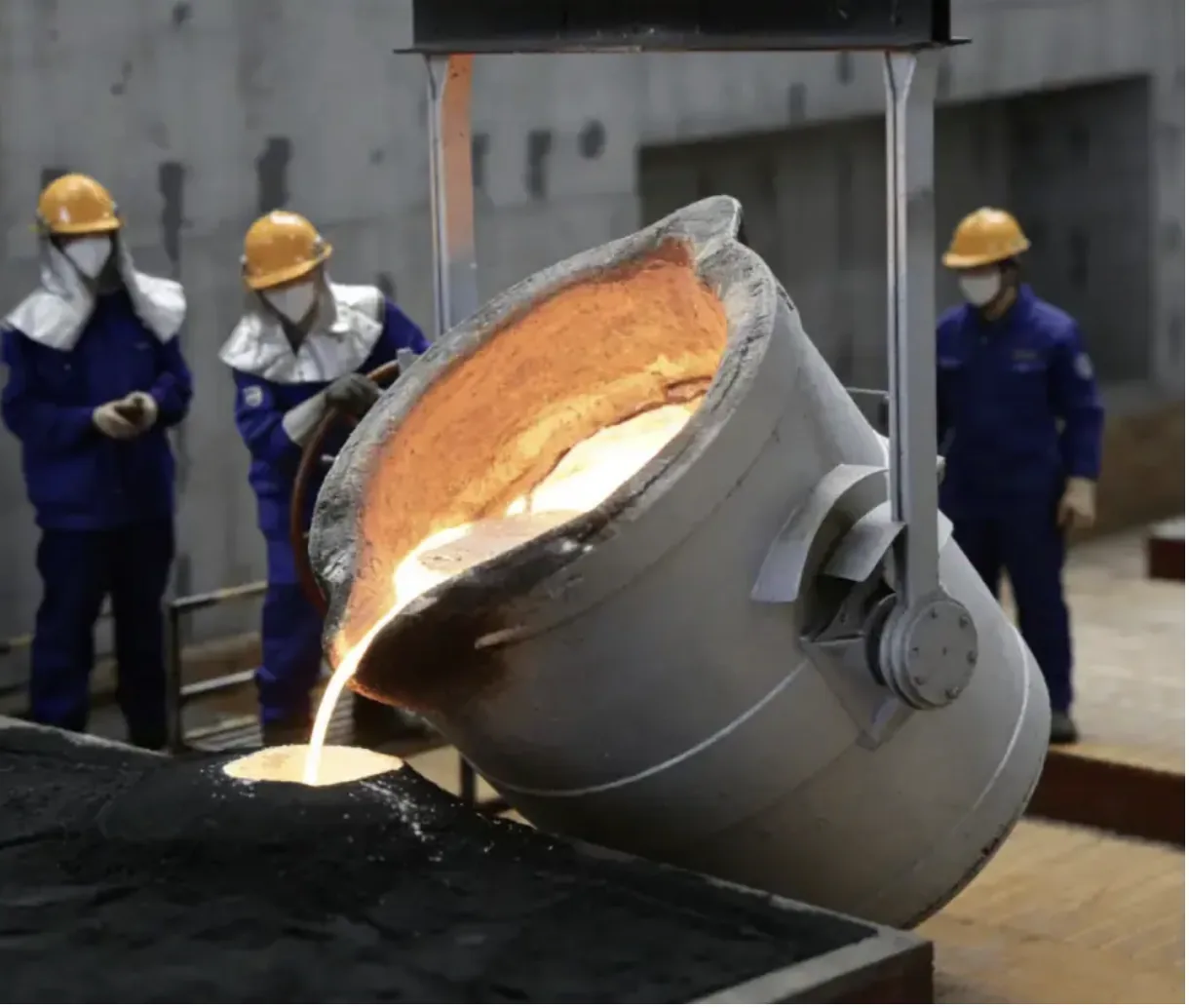
Sand casting is a versatile and cost-effective metal casting process that produces durable, complex metal parts by pouring molten metal into a sand mold cavity. This method enables the creation of large components with intricate geometries and internal passages, offering exceptional flexibility for low to medium volume production runs with minimal tooling investment.
At SHBD Metal, we specialize in green sand casting and resin-bonded sand casting services for aluminum, iron, steel, and non-ferrous alloys. Our engineering expertise addresses common manufacturing challenges such as porosity control, dimensional accuracy, and surface finish optimization through advanced gating system design, real-time process monitoring, and scientific solidification analysis, ensuring each casting achieves the required mechanical properties and structural integrity.
Utilize our digital manufacturing platform to streamline your production process. Submit your 3D model to receive an immediate quote and professional manufacturability analysis, enabling you to obtain high-quality sand cast components with reduced lead times and improved cost efficiency.
Get Instant QuoteCore Technical Parameters of Sand Casting
SHBD Metal provides high-quality sand casting services with precise control over key process parameters. All technical specifications are customizable to meet specific project requirements and comply with international standards such as ASTM and ISO.
Casting Material
| Casting Material | Pouring Temp. (°C) | Tensile Strength (MPa) | Hardness (HB) | Dimensional Tolerance (CT) | Typical Applications |
|---|---|---|---|---|---|
| Gray Iron (ASTM A48) | 1350 - 1400 | ≥200 | 170 - 220 | CT8 - CT10 | Machine bases, engine blocks, hydraulic components |
| Ductile Iron (ASTM A536) | 1370 - 1420 | ≥450 | 160 - 210 | CT8 - CT10 | Gears, crankshafts, heavy-duty structural parts |
| Carbon Steel (AISI 1020) | 1550 - 1600 | ≥430 | 140 - 200 | CT9 - CT11 | Industrial machinery, brackets, tooling fixtures |
| Aluminum Alloy (A356) | 700 - 750 | ≥230 | 60 - 90 | CT7 - CT9 | Automotive housings, aerospace brackets, enclosures |
| Stainless Steel (CF8) | 1520 - 1580 | ≥485 | 140 - 180 | CT9 - CT11 | Valves, pumps, chemical processing equipment |
Sand Casting General Process Parameters
| Part Weight Range | 0.5 kg - 30 Tons |
|---|---|
| Maximum Part Size | 8000 x 6000 x 3000 mm |
| Surface Roughness (Ra) | 6.3 - 25 μm |
| Standard Tolerance Grade | CT7 - CT12 (ISO 8062) |
| Common Mold Materials | Furan resin sand, Green sand, Sodium silicate sand |
| Common Release Agents | Water-based, alcohol-based, powder-based |
Sand Casting Production & Quality Parameters
| Melting Equipment | Medium frequency induction furnace, electric arc furnace |
|---|---|
| Pouring Method | Manual ladle, automatic pouring system |
| Cooling Time | 8 - 48 hours (varies with part size & material) |
| Common Heat Treatment | Annealing, Normalizing, Quenching & Tempering |
| Defect Control Standard | Visual inspection, X-ray, magnetic particle testing |
| Monthly Production Capacity | 100 - 10,000 pieces |
How Does the Sand Casting Work
Sand casting is a reliable and versatile manufacturing method for producing robust metal components. At SHBD Metal, our proven process ensures each casting achieves dimensional accuracy, structural integrity, and consistent quality.
Feasibility & DFM Review
We conduct a thorough design review and manufacturability (DFM) analysis to optimize your part for casting. This upfront engineering identifies potential issues in geometry, wall thickness, and draft angles to prevent defects, reduce costs, and accelerate the project timeline.
Pattern & Tooling Fabrication
Precise patterns and core boxes are crafted using advanced CNC machining or 3D printing. This stage is critical for achieving the final part’s dimensional accuracy and surface detail in the sand mold.
Mold & Core Assembly
Specialized bonding sands are compacted around the pattern to form the mold cavity. Cores are placed to create internal features. Our controlled process ensures mold strength and stability for consistent metal filling and solidification.
Melting & Controlled Pouring
Alloys are melted in regulated furnaces to precise temperatures and chemistries. The molten metal is then poured into the prepared mold under controlled conditions to minimize turbulence, oxidation, and inclusion formation.
Solidification & Shakeout
The casting is allowed to solidify within the mold according to calculated thermal profiles. After cooling, the mold is broken away (shakeout) and the raw casting is extracted for initial cleaning and inspection.
Finishing & Final QA
The casting undergoes finishing processes such as grinding, shot blasting, and machining. Each part undergoes dimensional inspection and non-destructive testing to verify it meets all specifications before final delivery.
Post-Casting CNC Machining
SHBD Metal provides complete CNC machining services for sand cast components, delivering the final dimensional accuracy and surface quality required for direct assembly. We optimize manufacturability by performing an integrated analysis to define the optimal as-cast geometry, machining allowances, and fixturing strategy, ensuring part integrity and cost efficiency.
High-Rigidity 5-Axis Machining
For complex contours, deep cavities, and angled features on large, heavy castings.
Critical Bore & Face Machining
To achieve tight tolerances, precise flatness, and sealing surfaces on engine blocks, housings, and valve bodies.
Fixture Design & Secondary Finishing
For stable part holding and subsequent processes including tapping, threading, and deburring.
APPLICATIONS
Sand Casting for Industrial Applications — SHBD Metal utilizes advanced sand casting to produce large, geometrically complex metal components, delivering the optimal balance of structural integrity, design freedom, and cost-effectiveness for high-demand sectors.
Aerospace & Defense
Lightweight structural brackets, engine mounts, and housings meeting stringent performance and safety standards for flight-critical applications.
Automotive & Transportation
Durable engine blocks, cylinder heads, and transmission components balancing cost-efficiency with high strength and thermal stability.
Heavy Machinery & Equipment
Massive, wear-resistant frames, gearboxes, and crawler segments built to endure extreme impact and abrasion.
Energy & Power Generation
High-integrity valve bodies, turbine casings, and structural parts capable of withstanding high temperatures and corrosive media.
Industrial Machinery & Automation
Heavy-duty frames, custom enclosures, and complex pump housings serving as the backbone for automated systems.
Agricultural Machinery
Durable tillage parts, harvester components, and gear housings built to resist abrasion and impact in rugged field conditions.
Advantages and Disadvantages of Sand Casting
Advantages
- Exceptional Design Freedom: Accommodates highly complex geometries, internal passages, and large-scale components unsuitable for other processes.
- Broad Material Versatility: Compatible with a comprehensive range of ferrous and non-ferrous alloys, from aluminum and ductile iron to specialized steels and bronzes.
- Low-Cost Tooling for Prototypes: Cost-effective pattern creation enables rapid iteration and functional testing during product development phases.
- Ideal for Very Large Parts: The most practical method for manufacturing oversized, heavy components that exceed the size limits of other casting techniques.
- Rapid Design Iteration: Allows for relatively quick and economical design changes through pattern modification, accelerating development cycles.
Disadvantages
- Lower Dimensional Precision: Generally offers wider tolerances compared to investment or die casting, often necessitating secondary CNC machining for critical features.
- Rougher As-Cast Finish: Surfaces require more extensive post-processing (e.g., machining, grinding) to achieve smooth functional or cosmetic finishes.
- Slower Production Cycle: Not optimized for high-volume runs; per-unit cycle times are longer compared to automated high-pressure die casting.
- Labor-Intensive Process: Relies significantly on skilled craftsmanship for high-quality mold assembly and pouring, impacting scalability and consistency.
- Lower Material Yield: The process generates more gating and riser waste compared to near-net-shape processes, affecting overall material utilization and cost for high-volume orders.