
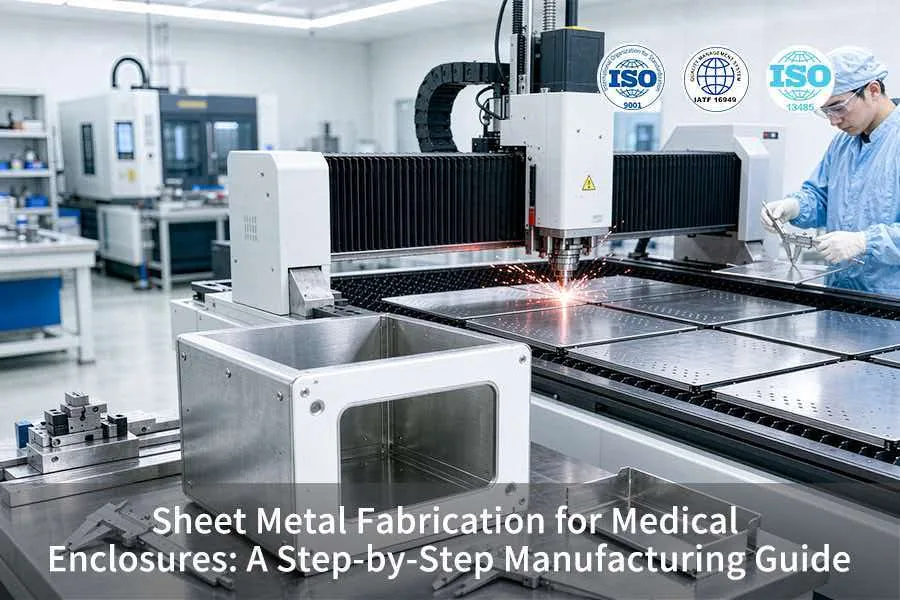
From blank to sterilizable housing: laser cutting, forming, welding and passivation are handled in one shop.
Housings for medical equipment rarely fail inspection because a panel drifted a few hundredths of a millimetre. They fail because disinfectant collects in a lap joint that a cloth cannot reach, or because a burr survived the last clean. Formed sheet metal handles both problems — but only when the drawing is written with the cleaning protocol in mind.
What follows is a walk-through of sheet metal fabrication for medical enclosures: the route a housing takes from flat blank to sterilizable assembly, the tolerances worth printing, the standards that decide whether it passes, and the bend defects that quietly undo an otherwise sound design.
What this guide covers
- The process, defined: alloy sheet is formed into sealed, sterilizable housings. Material is shaped rather than cut away, so the blank’s bulk properties survive intact.
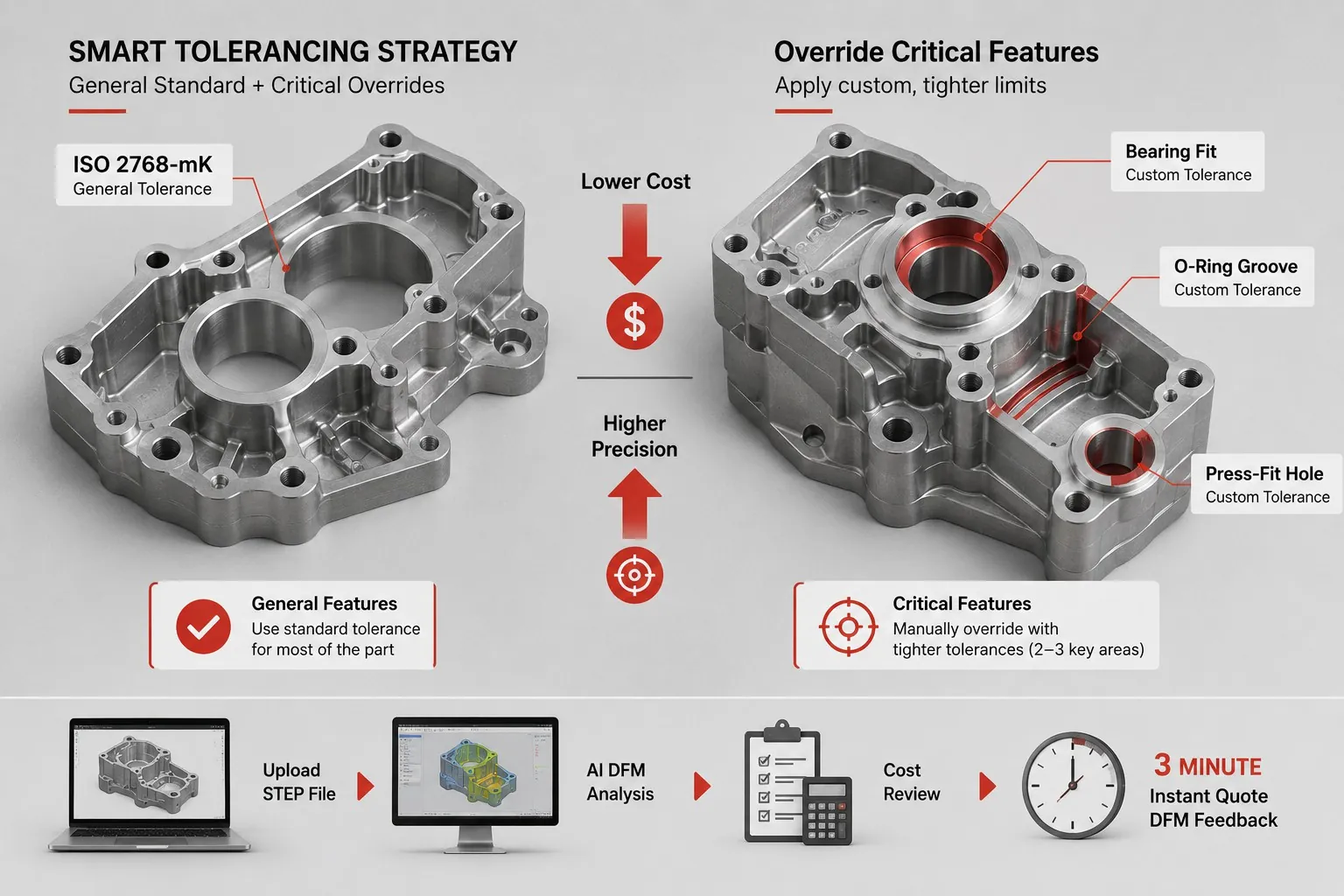
- Two tolerance bands: general profiles ride on a general class such as ISO 2768-1, while sealing and mating features get a tighter callout — down to ±0.01 mm at the interface.
- Seven stages: DFM review, laser blanking, press brake forming, hardware insertion, welding, passivation, and CMM plus hygiene inspection.
- Defect prevention: an overbend allowance cancels springback, relief notches separate neighbouring bends, and hole clearance keeps distortion out of the seams.
The Seven-Step Fabrication Route
A medical chassis is not built in one operation. It moves through a fixed chain, and every stage leaves the next one less room to recover from a bad decision.
1. CAD and DFM review. The flat pattern is checked before any metal is cut: bend deduction along each fold line, bend radius against stock thickness, and enough clearance between holes and bend zones.
2. Fiber laser blanking and punching. Blanks are profiled, then openings and vent arrays are punched. Contour accuracy on this stage sits at roughly ±0.05 mm.
3. CNC press brake forming. Panels are bent in several passes. Because cold-worked sheet springs back after unloading, the press is set to overbend by 1.5°–2.5° so the finished angle lands on target.
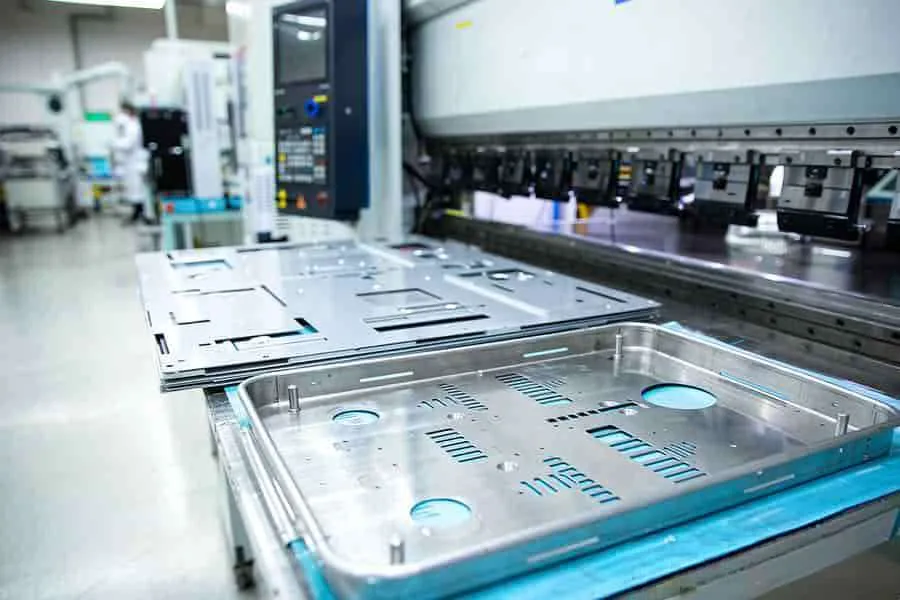
Press brake forming: trays and front panels are bent in sequence, with overbend compensation set from a measured coupon rather than a fixed press value.
4. Hardware insertion. A press sets self-clinching studs and standoffs into pre-pierced holes, giving boards and brackets captive mounting points without loose fasteners inside the housing.
5. TIG or spot welding. High-purity argon shielding keeps the weld pool from oxidising, and seam dressing grinds beads flush so no crevice is left to trap fluid.
6. Passivation or coating. A nitric acid bath run to ASTM A967 rebuilds the chromium oxide film; treated panels then hold up under neutral salt spray testing to ASTM B117.
7. CMM and hygiene inspection. A coordinate measuring machine verifies the drawing, tight features to ISO 2768-f, and the same inspection gates surface condition — micro-porosity and burrs are reject reasons in their own right.
What Makes an Enclosure Medical Grade?
Medical sheet metal is alloy sheet formed into sealed, sterilizable housings that satisfy hygiene, biocompatibility and shielding requirements at the same time. Cutting, punching and bending change the shape of the stock without changing what it is made of, which is what separates the route from machining.
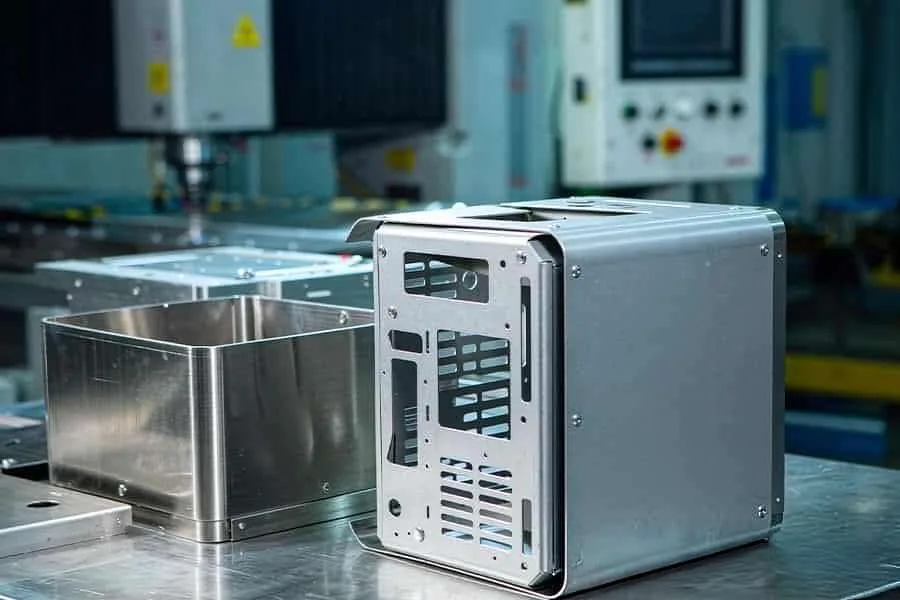
A formed housing in the white: continuous walls, vent slots and pressed hardware. Seam dressing removes the crevices that would otherwise hold fluid after wiping.
Two functions matter as much as the geometry:
- Shielding. One continuous metal skin behaves as a Faraday cage, routing external fields to ground. That is not a luxury on diagnostic equipment, where front-end boards resolve microvolt-level signals.
- Structure. The same panels carry the electronics and absorb knocks in service, so wall thickness is a design decision rather than a leftover.
Hygiene then sets the boundaries. Wipe-down protocols drive fluid into any pocket a cloth cannot follow, so unfilled lap joints and blind corners become bacterial traps even when every dimension is in tolerance. Grain direction constrains things further: bend across the rolling direction and the outer face is more likely to fissure. A swab run along each seam tells you more about cleanability than a visual pass ever will.
The Forming Sequence, Stage by Stage
Strip the detail away and fabrication is five mechanical steps that turn a flat blank into a three-dimensional shell. Groover’s Fundamentals of Modern Manufacturing lists them in this order, and the sequence is worth keeping in mind when a drawing is being marked up:
- Flat pattern review. Bend deduction, a bend radius of at least one times thickness, and hole-to-bend clearance are all settled on the drawing, because they decide whether the blank tears at the fold.
- Cutting and blanking. A fiber laser profiles the panel outline and the vent grids.
- Press brake forming. Each wall is bent in turn, over several passes, into the finished chassis shape.
- Hardware insertion. A pneumatic press drives studs and standoffs into pierced holes to anchor the boards.
- Seam welding and dressing. TIG or spot welding closes the joints, and dressing brings the beads down flush.
Where the chain runs out of road is geometry. Deep-drawn, large-radius shells need dedicated dies, which only pays off at volume. Flat-faced benchtop instruments are the natural fit for formed panels, and the tooling can be shared across a family of housings.
Why Bend Defects Appear and How to Prevent Them
Cracks, angular drift and distorted holes all start in the same place: the outer fibres of the bend, where tensile strain is highest. Rolled sheet is anisotropic — ductility varies with grain direction — so strain concentrates along the rolling lines. Push past the material’s forming limit and micro-cracks open; release the load and the elastic part of the strain comes back as springback.
Springback is elastic recovery, not machine error, and it is governed by yield strength over elastic modulus. No press setting removes it; an overbend angle cancels it instead. Because a coupon bent at production settings and measured after unloading gives the exact angle to add, we measure rather than guess — and re-measure on heavily cold-worked lots, where work hardening has shifted the rebound.
| Defect | What causes it | What you see | Countermeasure |
|---|---|---|---|
| Springback | Elastic strain releases as the punch retracts | Finished angle sits 1°–3° open | Press angle compensation, 1.5°–2.5° overbend |
| Corner tearing | Tensile strain concentrates where two bends meet | Fine cracks along the bend intersection | Relief notch, width at least 1× thickness |
| Hole distortion | Holes inside the plastic zone get stretched | Counterbores turn oval or elongate | Hole edge kept 2.5× thickness from the bend tangent |
| Surface marking | Soft sheet presses into hard V-die shoulders | Linear scratches on cosmetic faces | Polyurethane film or a large-radius die |
On a hygienic housing the stakes are higher than on a decorative panel. A crack that would be tolerable elsewhere becomes a cleaning problem, because fluid follows it in and stays there. That is why defect control belongs at the drawing stage, well before anyone adjusts the press.
Stainless Steel or Aluminium Housing?
Two alloy families cover most medical enclosure work: austenitic stainless grades 304 and 316, and aluminium grades 5052 and 6061. Both hold a general profile within the same tolerance band, so the decision is not about accuracy — it is about the surface film each metal grows and how that film behaves under the client’s cleaning chemistry.
| Dimension | Stainless steel (304 / 316) | Aluminium (5052 / 6061) |
|---|---|---|
| Surface film | Chromium oxide that rebuilds after cutting | Instant alumina film; anodising per ISO 7599 builds wear resistance |
| Cleaning agents | Tolerates formaldehyde and hypochlorite wipe-downs | Fine with neutral detergents; alkaline or damp service needs anodising |
| Stiffness and forming | Higher yield strength, more springback, work hardens quickly | A third of the density, ductile, punches well |
| Typical housings | Endoscopy hosts, dialysis bases, steriliser cabinets | Portable ultrasound, cart-mounted monitors, ECG shells |
The usual misreading is that stainless automatically clears a hygiene review while aluminium fails it. Cleaning chemistry decides: an anodised aluminium panel shrugs off neutral detergent, while stainless that was never passivated will still rust where free iron was left behind. Stiffness and mass come second — fixed cabinets take stainless, and anything carried on a cart tends toward aluminium, where a third of the density pays for itself in handling weight.
Passivation: Protecting Stainless Housings
Blanking and die friction smear unalloyed iron onto the surface of stainless sheet. That free iron forms micro-galvanic cells against the surrounding alloy, and pitting corrosion starts at those sites — pinholes that later collect wipe-down fluid. Passivation removes the iron and lets the chromium-rich oxide film regrow, a layer only nanometres thick.
The treatment is a single immersion: nitric or citric acid dissolves the deposits while leaving the alloyed chromium alone, since acid attacks free iron far faster than it attacks the matrix. ASTM A967 covers both chemistries. Verification follows one of two routes:
- Copper sulphate drop test — free iron shows up through copper plating within seconds.
- Water immersion — rust staining reveals what remains after a dwell.
What passivation cannot do is repair structure. Acid will not close a weld crack, and a creviced joint still fails hygiene review once wiping drives fluid into it. Surface chemistry and joint geometry have to be right together.
Standards That Govern Medical Enclosures
Once a housing encloses live electronics and is expected to survive disinfection, a set of standards defines what “acceptable” means:
- IEC 60529 rates ingress protection through two digits. A foam gasket only holds a rating if seam compression stays within ±0.01 mm.
- IEC 60601-1 sets insulation, creepage distance and flame resistance for enclosures around live circuits.
- IEC 60601-1-2 covers electromagnetic emission and immunity — and a continuous metal skin satisfies it without conductive paint.
- ISO 14971:2019 is the risk management file: every mitigation is recorded against a named hazard.
- ISO 2768 classes set general and fine tolerances, while ASME Y14.5-2018 governs the GD&T callouts on the drawing.
Note what sits outside that list: a dropped instrument generates transient loads no enclosure standard covers. Biocompatibility and cleaning evidence, including passivation records, are filed separately — which is why the paperwork matters as much as the panel.
DFM in Practice: A Benchtop Analyzer Housing
A typical case is an in-vitro diagnostics team bringing a benchtop blood chemistry analyzer to production. The first drawings carried sharp internal corners, dense vent perforations and mounting holes crowded against the bend lines. Prototypes came back with twisted edges and uneven assembly gaps, because the hole rows were feeding strain straight into the bend roots.
Three changes to the drawing cleared it before any new tooling existed:
- The inner bend radius was raised to at least the wall thickness, which brought peak strain back inside the material’s ductility.
- Relief notches, roughly 2.0 mm deep, were added where bends met, so neighbouring deformation zones no longer overlapped.
- Holes were moved to at least 2.5× thickness from the bend tangent, which stopped counterbores from going oval.
The revised prints held critical assembly interfaces within ±0.05 mm under ISO 2768-m, rework grinding fell away, and gasket seats stayed parallel enough for a consistent seal. None of that required a new press or a new material — only a drawing review carried out before the blank was cut.
Medical Enclosure Fabrication at SHBD Metal
We have been forming sheet since 1994, and medical, laboratory and diagnostic housings are a standing part of the workload. Fiber laser cutting, CNC press brake forming, hardware insertion, TIG welding, passivation and CMM inspection sit under one roof, which means the tolerance chain never leaves our control between operations.
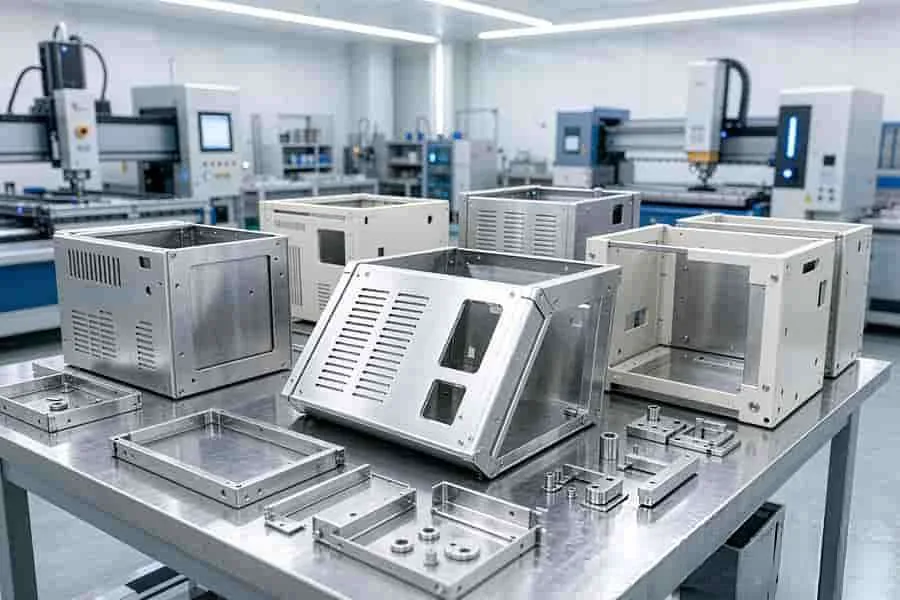
Finished housings, lids and formed panels from a single production batch — laser blanked, formed, welded, passivated and measured in-house.
Our sheet metal fabrication service covers stainless and aluminium housings from single prototypes to repeat production batches, with 150+ staff, more than a hundred machines and a seven-person QC team working to an ISO 9001:2015 quality system. Where a housing needs machined inserts, brackets or manifolds, the part moves to our CNC machining department; the alloys we run are listed in the materials library, and finishes beyond passivation — anodising, powder coating, laser marking — are set out in surface finishing.
Send the 3D model or the 2D drawing with its tolerance bands, cleaning protocol and IP target. You get back a quotation, the fabrication route we intend to run, and any drawing change we would make before cutting metal.
Have a medical housing to quote?
Upload Your CAD FilesFAQs
What tolerance should I call out on a formed medical enclosure?
Ordinary profiles are covered by a general class, most often ISO 2768-1, while anything that has to seal, mate or carry a gasket is called out separately. We hold ±0.05 mm on those general profiles and take critical mating interfaces to ±0.01 mm, so the drawing usually needs two bands rather than one.
Why is a sharp inner bend radius a problem on hygienic housings?
The inner radius sets how far the outer fibres stretch. Once the radius drops below roughly the stock thickness, strain outruns the ductility left in the material and the outer face opens fine cracks — which wipe-down fluid then runs into. Bending at or above one times thickness keeps the surface closed and cleanable.
How does passivation differ from anodising?
Both grow an oxide film instead of adding a coating, but they start from different metals. Passivation strips free iron from stainless steel and lets the chromium oxide layer rebuild, while anodising thickens the natural oxide on aluminium for wear resistance. A passivation certificate therefore says nothing about an anodised part, and vice versa.
Sheet metal or injection moulding for an enclosure?
Formed sheet suits low to mid volumes, shielded electronics and flat-faced benchtop instruments, because it needs no dedicated mould. Injection moulding wins once annual volume is high and the housing carries compound curves, since molten polymer fills a cavity that bending cannot reach.
How do you prove a housing was passivated?
With a record, not a visual check. Copper sulphate drop testing marks residual free iron in seconds, and water immersion shows rust staining after a dwell; the acid bath itself is run to ASTM A967. Both the treatment record and the test result travel with the batch.
Summary
Medical enclosure work rewards decisions made early: a bend radius that keeps the outer face closed, hole positions clear of the deformation zone, a passivation step with a test record attached, and two tolerance bands instead of one. Get those right on the drawing and the fabricated housing clears hygiene review without heroics at the press.