

Picking the right material is one of the first and most important decisions in sheet metal fabrication. The metal you choose determines how the part performs, how long it lasts, and how it looks, so each grade deserves careful thought. This guide walks through seven of the most common sheet metals, what makes each one tick, and where they are best applied.

1. Steel
Description
Steel is the workhorse of sheet metal. It combines strength, durability, and adaptability, and alloying it with carbon, chromium, or nickel tailors it to almost any job. It is available in several forms, each suited to different conditions.
Types
- Mild (low-carbon) steel: With roughly 0.05-0.25% carbon, it is inexpensive, easy to weld, and flexible, which makes it a favorite for structural work such as beams and industrial frames.
- Stainless steel: Its high chromium content (at least 10.5%) gives outstanding resistance to rust and staining, ideal for moist, chemical, or high-temperature environments. Common in kitchen appliances, medical instruments, and chemical processing equipment.
- Galvanized steel: Mild steel coated with a zinc layer through galvanization. The zinc shields the steel from rust and corrosion, which is why it appears frequently in roofing, exterior components, and car parts.
Applications
- Automotive body panels: Steel absorbs impact and supports structure while keeping weight manageable.
- Building structures: Beams, reinforced columns, and trusses in homes and commercial buildings rely on steel's strength and stability.
- Appliances: Refrigerators, washing machines, and stoves, often in stainless steel, benefit from durability, looks, and heat and moisture resistance.
2. Aluminum
Description
Aluminum is prized for its low weight, natural corrosion resistance, and excellent heat and electrical conductivity. It forms easily into complex shapes, and because it is about a third the density of steel, it is the default choice wherever weight matters.
Types
- 6061 alloy: Strong, weldable, and widely used in building structures.
- 5052 alloy: Outstanding corrosion resistance, performing well in marine settings and applications needing long-term strength.
Applications
- Aerospace: Fuselage sections, wings, and frames help aircraft save fuel and improve performance.
- Automotive: Engine blocks, transmission housings, and body parts cut weight and boost fuel economy and handling.
- Construction: Windows, doors, and wall panels last well thanks to aluminum's weather resistance.
3. Copper
Description
Copper is the reference standard for electrical conductivity, with very low resistance that makes it ideal for wiring and electronics. It also resists corrosion and kills bacteria on contact, which matters in settings where hygiene is critical.
Applications
- Electrical: Wiring, circuit boards, and connectors take advantage of copper's conductivity.
- Plumbing: Pipes, faucets, and fixtures benefit from corrosion resistance and antimicrobial properties.
- Architectural details: Roofing and decorative elements add beauty while lasting decades.
4. Brass
Description
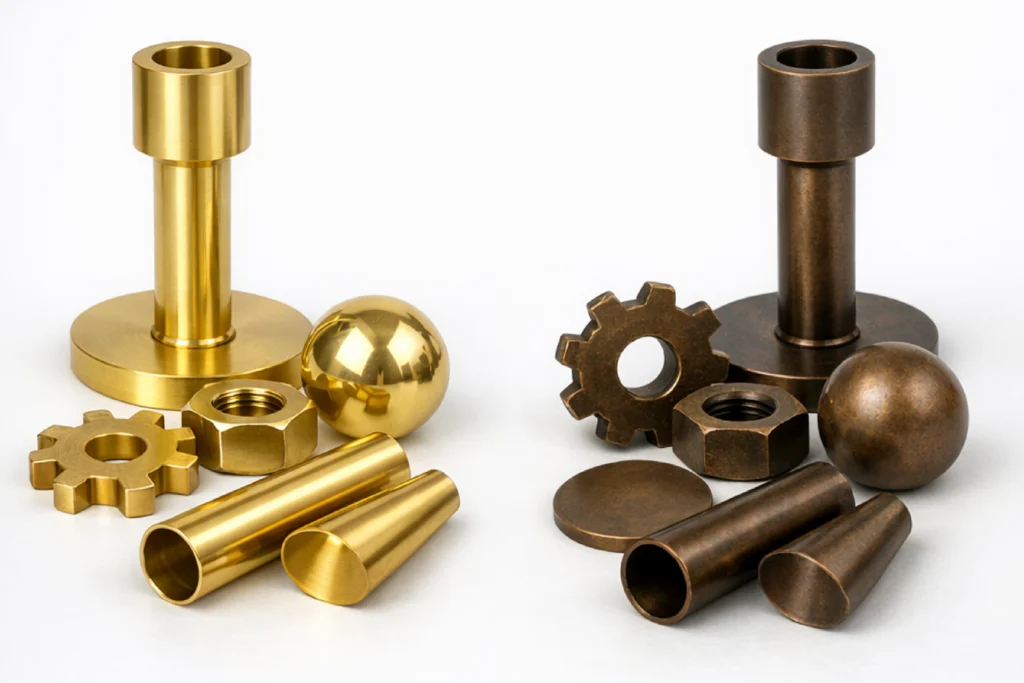
Brass is a copper-zinc alloy that is easy to work with and resistant to corrosion. Its bright golden color makes it attractive for decorative uses, and adjusting the copper-zinc ratio produces grades with very different properties.
Applications
- Musical instruments: Trumpets, trombones, and saxophones rely on brass for a rich, resonant tone.
- Decorative hardware: Knobs, handles, hinges, and light fixtures add elegance and stand up to years of use.
- Plumbing fittings: Valves, faucets, and fittings handle high water pressure reliably.
5. Titanium
Description
Titanium offers a superb strength-to-weight ratio and exceptional corrosion resistance, making it the material of choice for demanding applications. The trade-off is cost: titanium is noticeably pricier than most common metals, so budgets matter when selecting it.
Applications
- Aerospace: Airframes, engine parts, and fasteners survive high temperatures and harsh environments while staying light.
- Medical implants: Joint replacements and dental implants use titanium because it is biocompatible and rarely causes adverse reactions.
- Marine: Ship hulls, propellers, and offshore structures resist saltwater corrosion without degrading.
6. Nickel Alloys
Description
Nickel alloys are exceptionally strong and durable, holding up to extreme temperatures and corrosive environments where ordinary materials fail. That toughness makes them a staple in advanced industrial sectors.
Applications
- Chemical processing: Reactors, heat exchangers, and piping keep their integrity under high temperatures and pressures.
- Aerospace: Turbine blades and combustion chambers demand materials that handle extreme flight conditions.
- Oil and gas: Valves, pumps, and tubing endure brine and sour gas, ensuring reliability in the field.
7. Carbon Steel
Description
Carbon steel contains carbon from about 0.05% up to over 2%, which controls how strong and hard the metal becomes. Low-carbon grades are flexible and easy to weld, while high-carbon grades are harder and more wear-resistant, suited to demanding jobs.
Applications
- Heavy machinery: Gears, shafts, and frames handle heavy loads without failing.
- Structural beams and frames: Buildings and bridges use carbon steel for stability and safety at large scale.
- Cutting tools: High-carbon grades make drill bits, chisels, and dies that resist wear under intense use.
Sheet Metal Fabrication at SHBD Metal
SHBD Metal offers full-service sheet metal fabrication across these materials: laser cutting, bending, stamping, and welding for custom parts from prototypes to production volumes. Not sure which metal fits your project? Send us your design and our engineers will recommend the best material and process within 24 hours.
FAQs
What is sheet metal fabrication?
Sheet metal fabrication is the process of turning flat metal sheets into custom parts and finished products.
What materials are commonly used in sheet metal fabrication?
Steel, aluminum, copper, brass, and stainless steel are among the most common sheet metal materials.
Which technologies are used for sheet metal fabrication?
Common processes include stamping, bending, laser cutting, and welding, which together enable precise, efficient production.


Comment
0 comments
Got thoughts or experiences to share? We’d love to hear from you!