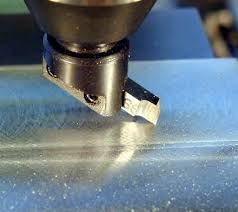

When quality, speed, and cost can decide whether a project succeeds, choosing the right production method matters enormously. Two of the biggest technology options are CNC machining and additive manufacturing (3D printing). Both offer distinct advantages, limitations, and ideal use cases, and understanding how they differ is essential to making the right call for your requirements.
This guide explains how each process works, the sub-categories within each, the materials they handle, achievable tolerances and finishes, and which process suits which application. At SHBD Metal, we offer both CNC machining services and 3D printing services, so you can compare them on the same project.
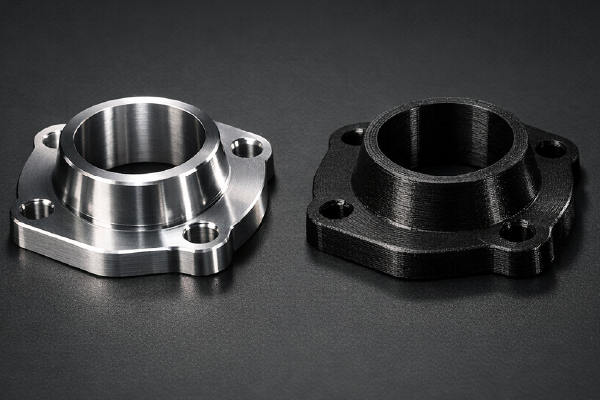
CNC Machining: Subtractive Precision
CNC machining is a subtractive manufacturing process. It starts with a solid block of material and removes material with cutting tools until the final part is revealed. The process is highly automated, driven by CAD/CAM software and G-code instructions that tell the machine exactly where to cut.
Types of CNC Machines
| Machine Type | Description | Typical Operations |
|---|---|---|
| CNC Mills | Rotating tools cut stationary workpieces. | Milling, drilling, and boring. |
| CNC Lathes | The workpiece rotates while a stationary tool shapes it. | Turning and threading. |
| CNC Routers | Often used for softer materials and larger workpieces. | Cutting and engraving. |
| CNC EDM | Electrical discharges erode and cut hard metals. | Die sinking and wire cutting. |
CNC Machining Materials
- Metals: Aluminum, steel, stainless steel, titanium, brass, copper, bronze, and superalloys.
- Plastics: ABS, polycarbonate, polypropylene, PEEK, Delrin, acrylic, and Ultem.
- Composites: Macor and Garolite.
Tolerances and Surface Finishes
Tolerances: General parts are held to ISO 2768 standards or ±0.005 in (±0.127 mm) for metals and ±0.010 in (±0.254 mm) for plastics and composites. Precision parts can reach sub-±0.001 in tolerances when specified with GD&T callouts.
Surface finishes: The standard finish is as-machined (Ra 126 µin). Options include anodizing, electroplating, electroless plating, black oxide, chem film, galvanizing, and polishing.
CNC Machining Workflow
CAD design (provided by you) → CAM programming → job planning → setup → machining → inspection → finishing and post-processing.
Additive Manufacturing: 3D Printing
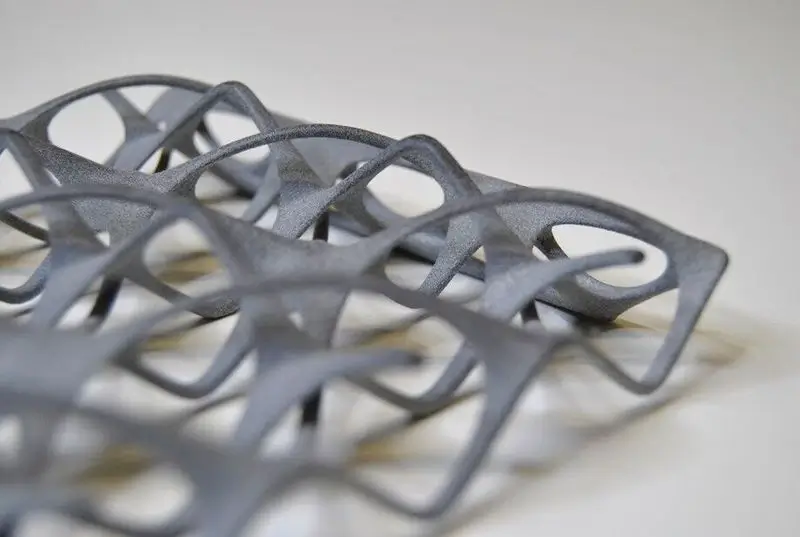
Additive manufacturing is the opposite of subtractive manufacturing. Instead of removing material, it adds material layer by layer, building components by depositing, curing, or fusing. This approach unlocks complex geometries and internal features that are difficult or impossible to produce with traditional machining.
Additive Manufacturing Technologies
| Technology | Process Description | Materials |
|---|---|---|
| SLS | Laser sinters nylon powders. | Nylon and TPU |
| DMLS | Laser fuses metal powders. | Stainless steel and titanium |
| MJF | Fuses nylon powder with agents. | Nylon |
| SLA | Laser-cures liquid resin. | Photopolymer resins |
| FFF | Extrudes thermoplastic filament. | ABS, PLA, nylon, and TPU |
| Material Jetting | Jets and cures photopolymers. | Rigid and flexible resins |
Additive Manufacturing Materials
- Plastics: ABS, PLA, PC, nylon, TPU, and PETG.
- Resins: Standard, tough, flexible, dental, and castable.
- Metals: Stainless steel, aluminum, titanium, and Inconel.
- Composites: Glass-filled, ceramic-filled, and carbon-filled.
Additive Manufacturing Tolerances and Finishes
| Technology | Tolerance | Layer Thickness | Max Build Size |
|---|---|---|---|
| SLS | First inch ±0.005 in, additional ±0.002 in/in | 0.004–0.005 in | 26 × 13.5 × 21.8 in |
| MJF | First inch ±0.010 in, additional ±0.003 in/in | 0.003 in | 14.96 × 11.18 × 14.96 in |
| SLA | First inch ±0.005 in, additional ±0.0015 in/in | 0.002–0.004 in | 31 × 31 × 23 in |
| FFF | ±0.005 to ±0.013 in first inch | 0.005–0.013 in | 36 × 24 × 36 in |
| Material Jetting | First inch ±0.004 in, additional ±0.0015 in/in | 0.0006–0.0012 in | 19.3 × 15.4 × 7.9 in |
Additive Manufacturing Workflow
CAD design (provided by you) → file preparation → slicing → printing → finishing and post-processing → inspection.
Head-to-Head Comparison: CNC Machining vs Additive Manufacturing
| Parameter | 3D Printing | CNC Machining |
|---|---|---|
| Setup Cost | Low | High |
| Per-Part Cost (1–10 units) | Lower | Higher |
| Per-Part Cost (100+ units) | Rises with volume | Drops with volume |
| Prototyping Speed | Hours to days | Days to weeks |
| Production Speed | Slower for large batches | Fast after setup |
| Material Options | Plastics, metals, resins, composites | Metals, plastics, composites |
| Part Complexity | Exceptional, no tooling limits | Limited to tool access |
Choosing CNC Machining vs Additive Manufacturing
When Should You Choose CNC Machining?
- Your project requires high-strength, tight-tolerance metal parts, such as aerospace turbine blades and engine components.
- Your project requires large production runs, such as automotive parts and electronics housings.
- Your project requires functional end-use components where mechanical properties and surface finish are critical.
When Should You Choose Additive Manufacturing?
- Your project is in early-stage development and needs rapid prototyping or frequent design iterations.
- Your project requires complex, lightweight structures, such as aerospace brackets or medical implants with lattice interiors.
- Your project requires low-volume or highly customizable parts, such as implants, prosthetics, or custom jigs.
- Your project requires internal features, such as manifolds or conformal cooling channels.
Key Decision-Making Questions
- Precision and surface finish? Tight tolerances and smooth finishes point to CNC machining.
- Part geometry complexity? Complex geometry with internal features points to additive manufacturing.
- Production volume? Low volume or prototyping favors additive; medium to high volume favors CNC.
- Materials required? Exotic or flexible plastics favor additive; full-strength metals or composites favor CNC.
- Customization or rapid iteration? If important, additive manufacturing is the stronger fit.
- Could a hybrid approach optimize cost? Sometimes combining both processes delivers the best result — our engineering team can help you evaluate the options.
CNC Machining vs Additive Manufacturing: Industry-Specific Applications
| Industry | 3D Printing Use Cases | CNC Machining Use Cases |
|---|---|---|
| Aerospace | Lightweight brackets and complex ducting | Turbine blades and structural frames |
| Medical | Custom implants, prosthetics, surgical guides | Surgical tools and orthopedic implants |
| Automotive | Prototyping, custom jigs, lightweight structures | Engine blocks, transmission parts, custom tooling |
| Consumer Products | Custom enclosures, wearables, design prototypes | Electronics housings and durable enclosures |
| Tooling | Conformal cooling channels, rapid tooling inserts | Injection molds, dies, jigs, fixtures |
Neither process is universally "better" — the right choice depends on your volumes, tolerances, materials, and budget. For guidance on materials for either route, browse SHBD Metal's materials library, and for quality assurance across both processes, see our quality system.
Ready to compare both on your actual part? Upload your CAD files for an instant quote and DFM feedback on CNC machining and 3D printing.
FAQs
When should you choose CNC machining vs additive manufacturing?
CNC machining is ideal for high-precision, high-volume parts with tight tolerances, while additive manufacturing is best for complex geometries, rapid prototyping, and low-volume production.
What are the main differences between CNC machining and additive manufacturing?
CNC machining is subtractive — it removes material from a solid block — while additive manufacturing builds parts layer by layer. CNC is typically faster and more precise for many geometries, while additive offers greater design freedom and the ability to create complex, lightweight structures.
How do CNC machining materials differ from additive manufacturing materials?
CNC machining uses solid, rigid materials such as metals, plastics, and composites that are cut and shaped into the final geometry. Additive manufacturing materials are often powders or filaments that are fused layer by layer. This difference affects material properties, achievable complexity, and production efficiency.