Polyethylene Injection Molding: Types, Design & Process
SHBD Metal TeamAugust 03, 2026
Injection Molding
Share:
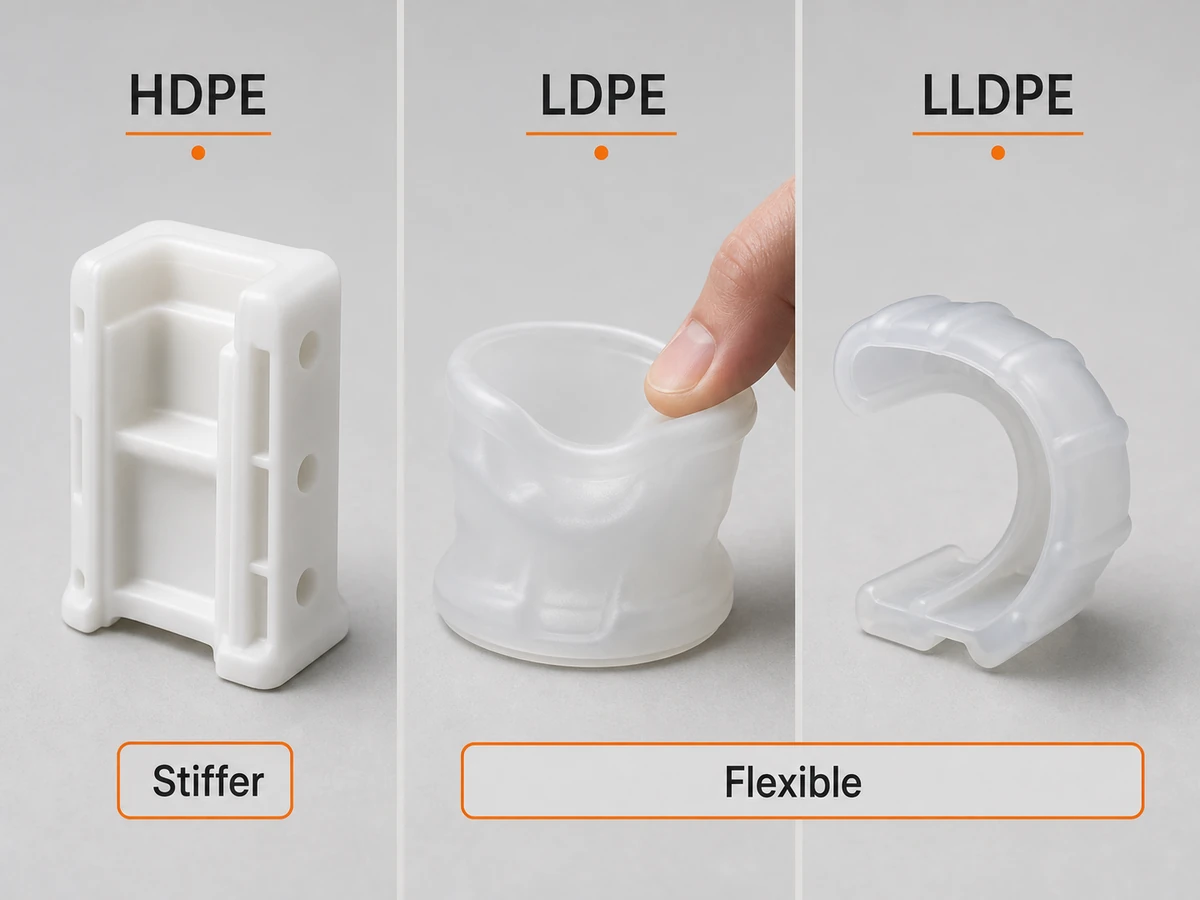
Polyethylene is not one interchangeable molding material. An HDPE grade developed for a thin-wall lid may have different flow, shrinkage, and impact behavior from one used for an industrial crate. LDPE and LLDPE introduce different trade-offs in flexibility and dimensional control.
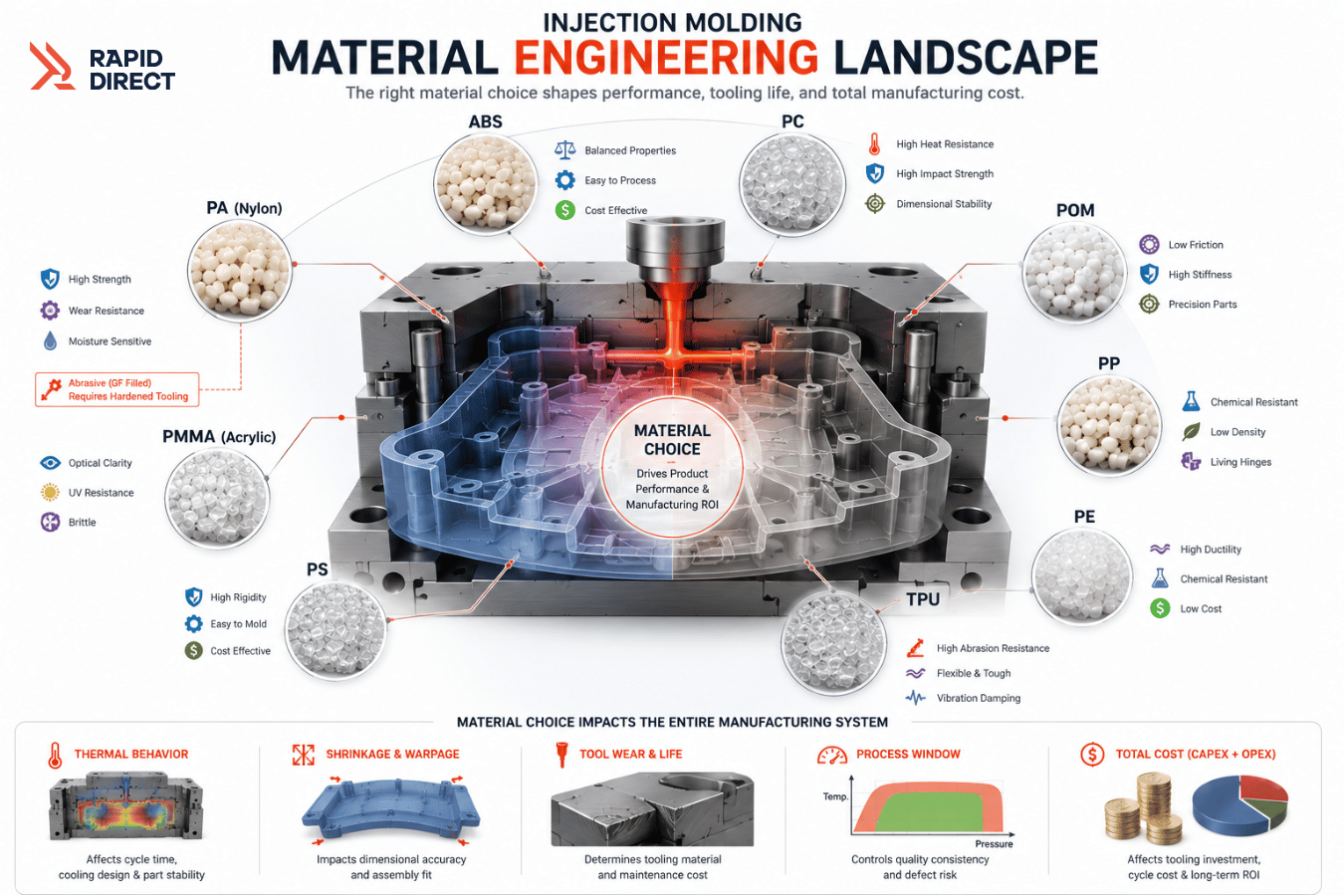
HDPE, LDPE, and LLDPE can all be injection molded when the selected grade is designed for the method. The more useful question is whether that grade can fill the geometry, meet the performance requirements, and hold critical dimensions after cooling. That decision connects the resin, part design, mold, and processing window.
Is Polyethylene Suitable for Your Molded Part?
PE is attractive when a part needs low density, toughness, chemical resistance, low water absorption, electrical insulation, or economical repeat production. Typical parts include caps, closures, containers, fittings, housings, bins, and protective components.
The main constraint is its semi-crystalline structure. PE contracts as it cools and crystallizes, making shrinkage and warpage central design issues. Grade-dependent limits can also include stiffness, heat resistance, UV resistance, bonding, and environmental stress cracking.
Environmental stress cracking deserves an application-level check. A chemical may not attack an unstressed sample yet still promote cracking around a press fit, thread, snap, or sharp corner under sustained load. Evaluate molded-in stress, assembly strain, contact chemicals, temperature, and exposure time together.
Consider another resin when the design requires transparent optics, extended heat exposure, high rigidity, strong adhesive bonding, or very tight as-molded dimensions that the available PE grade and geometry cannot support.
Family names help with initial screening, but the final material specification should identify the resin producer and full grade.
PE type
General behavior
Best fit
Main risk to check
HDPE
Relatively stiff and tough
Crates, pails, lids, housings
Shrinkage, warpage, ESCR, UV exposure
LDPE
Soft and flexible
Flexible caps, plugs, compliant parts
Low stiffness and dimensional movement
LLDPE
Flexible with useful impact behavior
Specialty closures and protective parts
Many grades target film, not molding
MDPE
Intermediate stiffness
Application-specific closures and fittings
Limited molding-grade selection
UHMWPE
Very high molecular weight and melt viscosity
Specialized wear parts
Difficult conventional injection molding
HDPE Injection Molding
High density polyethylene injection molding is common because HDPE combines toughness with more stiffness than lower-density PE types. Suitable grades range from easy-flow materials for thinner parts to tougher grades for industrial products.
Select an HDPE injection molding grade around the application. A high-flow grade may help fill a thin section but should not be chosen if it sacrifices required impact or stress-crack performance. “HDPE” alone is not a complete drawing specification.
Density, molecular structure, comonomer, and additives all influence HDPE behavior. A grade selected for a thin closure may prioritize flow and cycling, while a crate or chemical-contact housing may place more weight on stiffness, toughness, or ESCR. Compare the complete property set rather than optimizing one datasheet number.
LDPE and LLDPE Injection Molding
LDPE injection molding suits parts that need softness, flexibility, and resilience. LLDPE can provide a different balance of flexibility, impact, and crack resistance. Neither should be treated as a direct substitute for the other.
Many LDPE and LLDPE products are formulated for film. Confirm that the supplier identifies the grade for injection molding and provides relevant processing and mechanical data.
MDPE and UHMWPE
MDPE offers a middle ground between lower-density PE and HDPE when a suitable molding grade is available.
UHMWPE needs separate treatment. Its high molecular weight provides wear and impact performance but also very high melt viscosity. Compression molding, ram extrusion, or another route may be more practical than conventional injection molding.
How to Select a PE Injection Molding Grade
Connect each datasheet value to a part requirement:
Density and crystallinity: Higher density generally increases stiffness within the PE family, but it can reduce low-temperature toughness or stress-crack resistance, depending on the grade. Crystallinity also affects cooling and shrinkage.
Melt flow: Higher flow may help thin sections or long flow paths. Compare values only when the test conditions match, and do not use melt flow as a substitute for mold-filling analysis.
ESCR: Environmental stress crack resistance matters when a loaded part contacts detergents, oils, surfactants, or other chemicals. Part-level exposure tests are necessary for critical applications.
Additives and color: UV stabilizers, antioxidants, antistatic additives, and pigments can change performance or processing. Validate the complete material and color system.
Documentation: Food-contact, medical, electrical, outdoor, or recycled-content requirements need grade-specific documents rather than family-level assumptions.
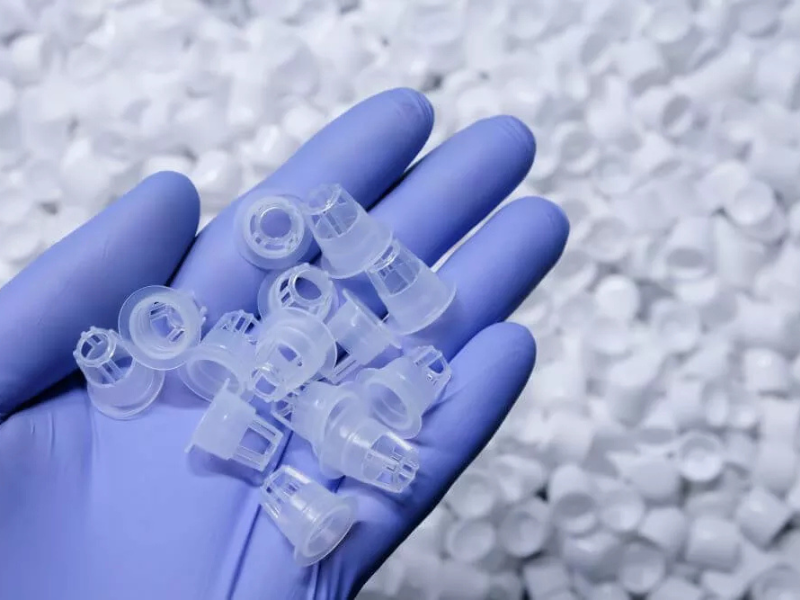
Natural PE may look milky or translucent, but it is not normally an optically transparent plastic. Grade, wall thickness, texture, pigment, and processing all affect appearance. Use molded samples when light transmission matters.
Datasheet values also need context. Confirm the test method, specimen, temperature, and conditioning before comparing grades. Typical values help with screening but are not specification limits unless the supplier states otherwise. Record the datasheet revision used for design and process development so material substitutions can be reviewed against the same baseline.
Polyethylene Injection Molding Process and Controls
PE pellets are plasticized in the heated barrel, injected through the runner and gate, packed while the gate remains open, cooled, and ejected. Material confirmation and cooling balance deserve particular attention because they directly affect shrinkage and part movement.
Before a trial, confirm the producer, full grade designation, colorant, additive package, allowable regrind, and required traceability. A replacement resin can still be “HDPE” while producing different flow, shrinkage, impact, or stress-crack behavior. Treat a grade change as a process and product review, not a simple purchasing substitution.
Variable
Main effect
Verification
Melt and barrel temperature
Viscosity, filling, surface, degradation risk
Actual melt condition and fill pattern
Mold temperature
Cooling, crystallization, appearance, shrinkage
Mold-surface balance and dimensions
Speed and pressure
Flow-front behavior and cavity filling
Short-shot study and pressure data
Packing
Part weight, sink, voids, shrinkage
Gate freeze and weight stability
Cooling
Ejection stiffness and warpage
Part temperature and post-mold movement
Temperature and Filling
Set barrel zones and the initial mold temperature from the grade-specific supplier guidance. These values are starting conditions, not universal PE settings.
A melt that is too cold can produce high flow resistance, short shots, poor surfaces, or weak weld lines. Excessive heat can contribute to flash, burning, sticking, longer cooling, or changes in part properties.
Injection speed controls the advancing flow front. Pressure is the response required to move material through the machine and cavity. Use short shots and machine data to determine whether an incomplete part comes from pressure, temperature, gate restriction, flow length, or poor venting.
Packing, Cooling, and Drying
Packing supplies material while the gate is open. Too little packing can leave sink, voids, or undersized features. Excessive packing can contribute to flash, residual stress, difficult ejection, or inconsistent dimensions.
After gate freeze, additional hold time cannot pack the cavity. Establish hold time with part-weight and dimensional studies instead of extending it by habit.
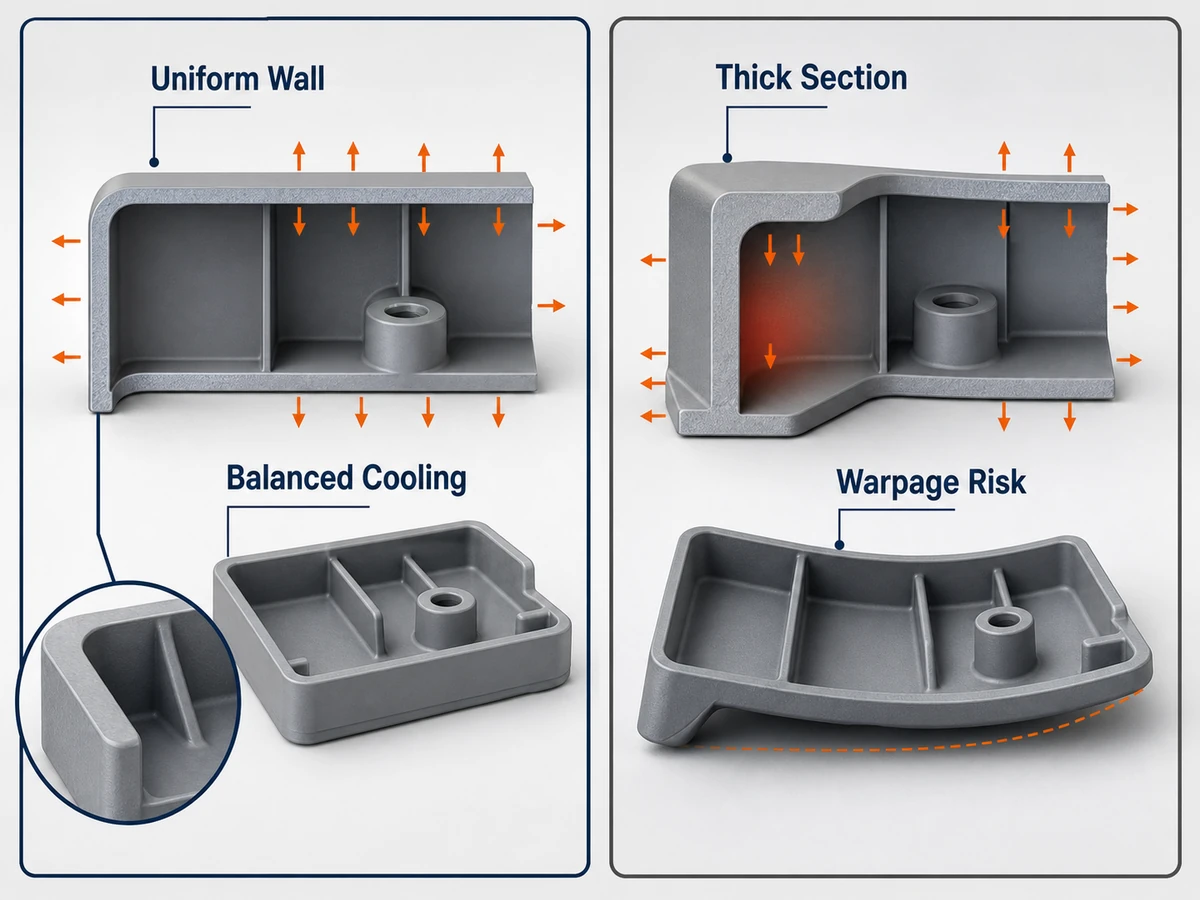
Uneven cooling between the core and cavity, around thick features, or between cavities creates uneven contraction. A part can bow or twist after ejection even when the cavity dimensions are correct.
Cooling time should be long enough for stable ejection, not simply the shortest time at which the mold can open. A soft part may deform on ejector pins, in a robot gripper, or after falling into a bin. If dimensions continue to change after molding, define the storage condition and measurement time in the inspection plan.
PE has low moisture absorption, and many clean, properly stored grades do not require routine predrying. Follow the resin supplier’s datasheet and investigate condensation, contamination, or poor storage rather than applying a generic drying cycle.
Design for PE Shrinkage and Dimensional Control
Design decisions often control PE part quality more effectively than machine adjustments.
Keep wall thickness uniform and use gradual transitions. Core out heavy regions that could create sink, voids, or differential shrinkage.
Use ribs for stiffness without creating a thick rib base. Support bosses while limiting local material mass.
Add draft for reliable ejection. Use radii around loaded corners, snaps, threads, and press fits to improve flow and reduce stress concentration.
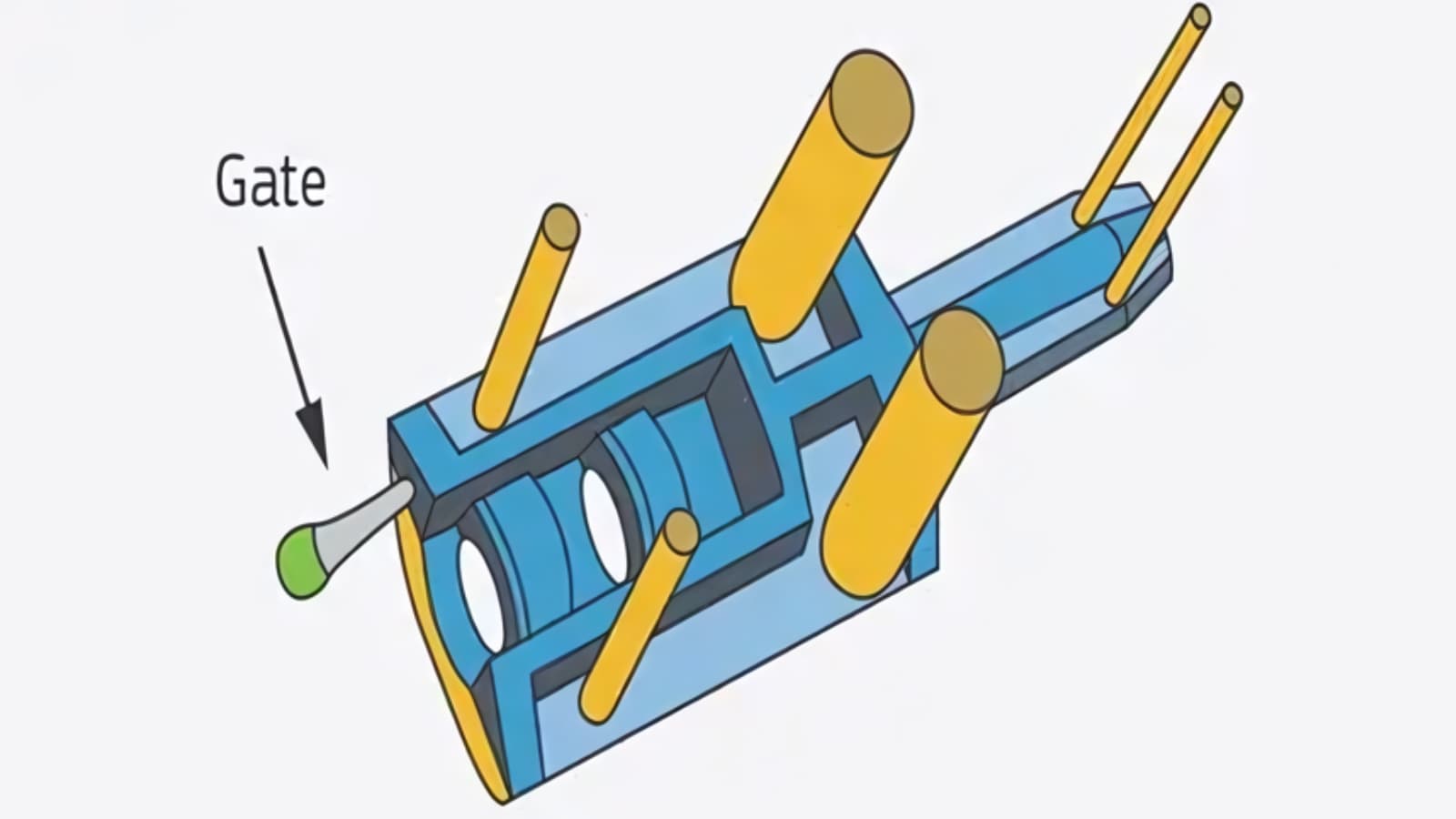
Position gates so critical sections can fill and pack. Keep weld lines away from sealing surfaces and major loads where possible.
Vent the ends of fill and locations where air may be trapped.
Balance cooling on both sides of the part and across every cavity.
An HDPE shrink rate from a supplier datasheet is an initial tooling input, not one scale factor for the complete part. Actual shrinkage changes with grade, wall thickness, flow direction, gate position, packing, mold temperature, cooling, pigment, and measurement timing.
Identify critical dimensions before tool release. Define datums, inspection method, conditioning time, and assembly relationship. For high-risk dimensions, consider mold-flow analysis, trial measurements, and steel-safe tooling adjustments where practical.
Tolerance capability combines tool dimensions, material variation, flow orientation, process repeatability, cooling, and post-mold movement. A tight general tolerance applied to every feature can add tool risk without improving function. Separate critical mating, sealing, and alignment dimensions from noncritical geometry before quoting.
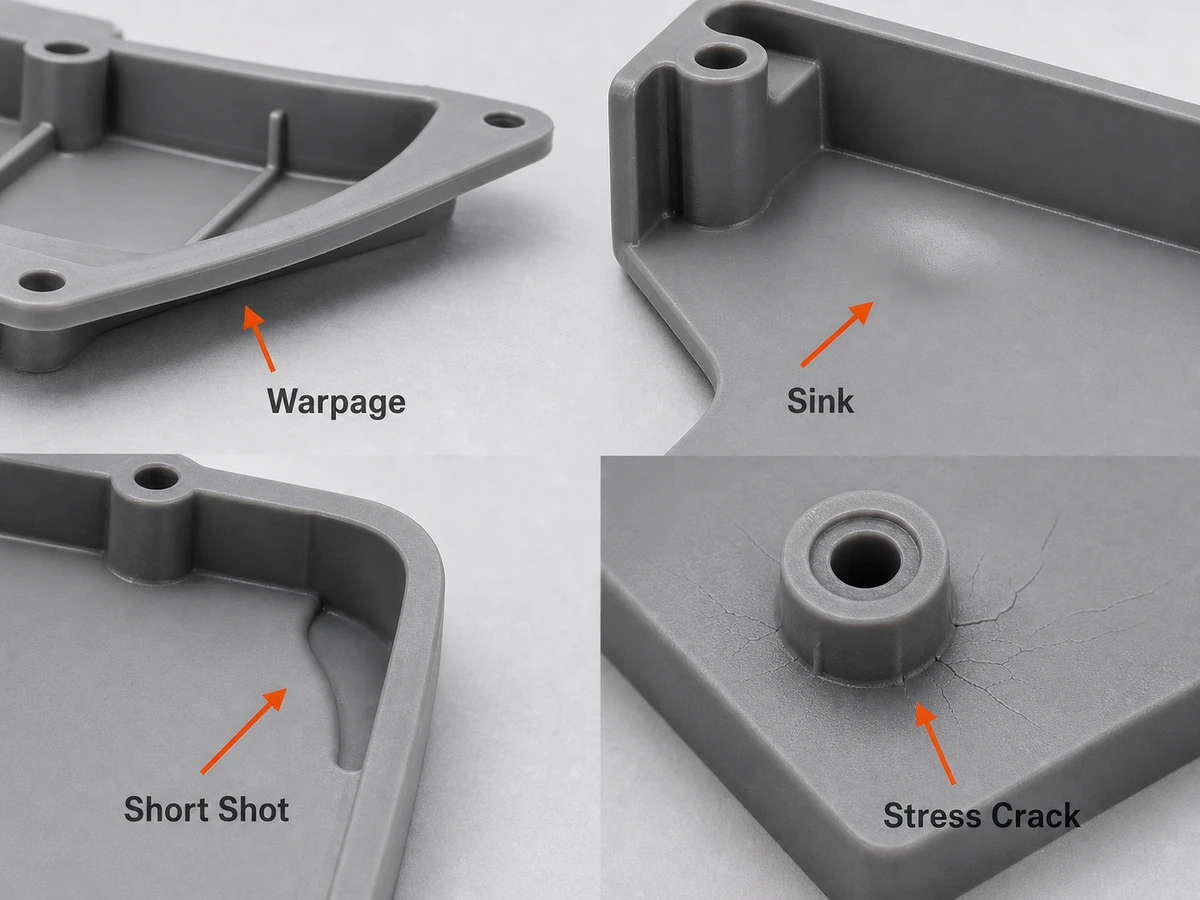
Common PE Injection Molding Defects
Defect
Possible causes
What to check
Warpage
Uneven walls, cooling imbalance, early ejection
Mold temperatures and dimensions over time
Sink or voids
Heavy sections, weak packing, early gate freeze
Geometry, part weight, and gate-freeze study
Short shots or weak weld lines
Restricted flow, cold melt, poor venting
Short-shot pattern, gate, vents, pressure
Flash or burns
Excessive pressure or heat, trapped air, mold issue
Transfer point, venting, melt condition, parting line
Stress cracking
Residual or assembly stress plus chemical exposure
Fits, radii, load, and representative exposure tests
The same visible defect can have several causes. Change one controlled variable at a time and use part weight, process data, temperature measurements, and cavity comparisons to isolate the cause.
Establish a repeatable baseline before changing settings. If speed, temperature, pressure, and cooling are adjusted together, an acceptable sample may be produced without identifying the controlling variable. That makes the process harder to transfer, validate, and maintain during later production.
How to Specify a PE Molding Project
A useful request for quote should include:
exact resin grade, or functional requirements if selection remains open;
color, texture, gloss, and translucency expectations;
critical dimensions and measurement conditions;
loads, chemicals, UV exposure, and service temperature;
expected volume and validation requirements;
regulatory, traceability, regrind, or recycled-content requirements.
SHBD Metal supports plastic injection molding, mold making, mold-flow analysis, and DFM from prototype molds through production tooling. Review the CAD model before the resin, gate plan, shrinkage allowance, and critical dimensions are locked.
Conclusion
Successful polyethylene injection molding begins with a grade-level decision. Match the PE type to the required stiffness, flexibility, exposure, and documentation. Then design for semi-crystalline shrinkage and validate the process on the actual mold, machine, material, and color.
Yes. Many HDPE grades are formulated for injection molding. Confirm that the selected grade matches the required flow, toughness, stiffness, ESCR, additives, and documentation.
How Do You Select an HDPE Injection Molding Grade?
Start with part requirements, then compare melt flow, density, stiffness, impact, ESCR, additives, regulatory status, and supplier processing guidance. Specify the full grade rather than only “HDPE.”
Can Injection Molded Polyethylene Be Transparent?
PE is more commonly translucent or opaque than optically transparent. Use molded samples in the intended wall thickness, color, and texture when appearance matters.
Does Polyethylene Need Drying Before Molding?
Many clean, properly stored PE grades do not require routine predrying, but the supplier datasheet controls. Check condensation, contamination, storage, and material handling before deciding.
What Should Be Confirmed Before Cutting the Mold?
Confirm the resin grade, shrinkage basis, gate and weld-line strategy, critical dimensions, surface requirements, measurement conditions, volume, validation plan, and required material documents.
Put your parts into production today
All information and uploads are secure and confidential.