
For years, 3D printing was treated as a prototyping tool and nothing more. That has changed. Today, additive manufacturing routinely produces end-use parts in production quantities — thousands of components a month for medical devices, robotics, aerospace interiors, and consumer products. When it is applied this way, the industry calls it rapid manufacturing with 3D printing: using additive technology to produce final parts faster and at lower cost than conventional tooling would allow.
At SHBD Metal, we combine CNC machining, injection molding, and 3D printing under one roof, so we can recommend the honest answer for each project — including the many cases where the right answer is additive.
What Is Rapid Manufacturing with 3D Printing?
Rapid manufacturing means using digital, additive processes to produce final products directly from CAD data, without hard tooling. The same file that drives a prototype can drive a production run: the part is sliced, printed, finished, and shipped. Because no mold or die is required, the fixed-cost barrier that makes injection molding economical only at high volumes simply disappears.
This makes 3D printing production an ideal fit for:
- Small batches (1–1,000 units) where mold tooling cost cannot be amortized.
- Bridge production — selling early units while a mold is being built.
- Spare parts and end-of-life support, printed on demand instead of warehoused.
- Mass customization — patient-specific medical guides, custom jigs, personalized products.
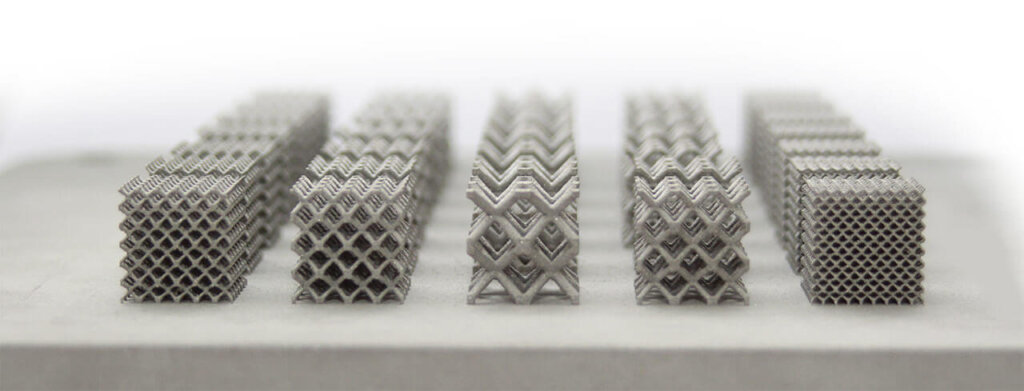
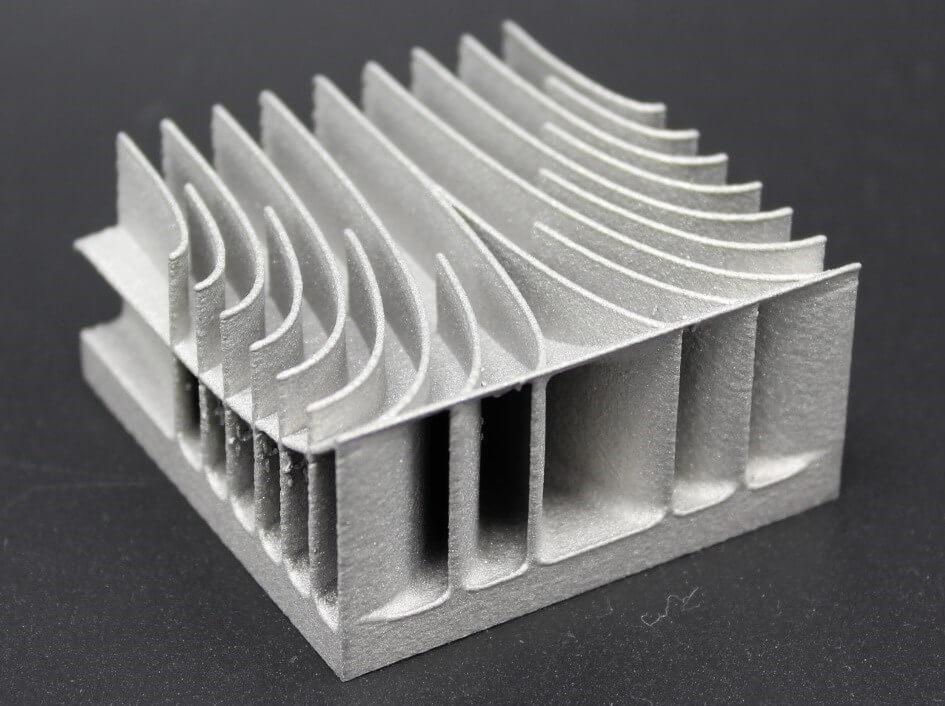
- Complex geometries — lattice structures, conformal channels, and internal features no tool can reach.
When 3D Printing Wins for Production
Additive production beats subtractive and molding routes in three situations. First, when quantity is low: below roughly 1,000 parts, per-part additive cost often undercuts injection molding because there is no tooling to pay for. Second, when speed matters: a printed batch can ship in days, while mold fabrication runs 4–8 weeks. Third, when geometry is complex: if a design requires internal channels or organic shapes, 3D printing may be the only cost-effective path.
The flip side is equally important. Above a few thousand parts, molding and machining win on unit cost. If the part needs tight tolerances, bearing surfaces, or metal strength, CNC machining is usually the better route. And if surface finish matters, printed parts need secondary finishing that adds time and cost. The decision is a trade-off — not a loyalty test.
Key 3D Printing Technologies for Rapid Manufacturing
SLS and MJF (Polymer Powder Bed)
Selective laser sintering (SLS) and Multi Jet Fusion (MJF) fuse nylon powder into durable, functional parts. Both are the workhorses of additive production: no supports required, good mechanical properties, and batch-friendly builds. Nylon PA12 and PA11 parts are tough, chemical-resistant, and suitable for hinges, clips, housings, and ducting.
SLA (Resin)
Stereolithography cures liquid resin with a laser or light engine, delivering the finest detail and smoothest surfaces of any polymer process. It is the choice for cosmetic parts, master patterns, and components needing fine features — though resins are generally more brittle than sintered nylon.
FDM (Fused Deposition Modeling)
FDM extrudes thermoplastic filament layer by layer. It is the most economical process for large, low-stress parts and is popular for jigs, fixtures, and functional prototypes in ABS, PETG, and engineering blends. Layer lines are visible, so cosmetic parts usually need post-processing.
DMLS and SLM (Metal)
Direct metal laser sintering and selective laser melting build parts in stainless steel, aluminum, titanium, and Inconel. Metal printing is the fastest-growing corner of production additive manufacturing, used for aerospace brackets, medical implants, and tooling inserts — wherever material savings and design freedom justify the premium over machining.
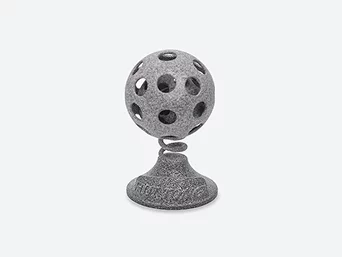
Design Considerations for Production Parts
Designing for additive production is different from designing for machining:
- Build orientation determines strength, surface quality, and cost. Orient parts to minimize supports and to place critical faces away from the build plate.
- Minimum wall thickness of 0.8–1.0 mm (polymer) keeps parts printable and stiff; thicker walls add cost in powder-based processes because they consume more material.
- Holes: diameters below 0.5 mm may need post-drilling; horizontal holes should be designed with teardrop or diamond shapes in FDM to avoid sagging.
- Tolerances: plan for ±0.1–0.3 mm on polymer parts and ±0.05–0.1 mm on metal. Critical fits should be machined after printing.
- Consolidate parts: one printed assembly can replace several machined and welded components — the classic additive cost win.
Cost and Lead Time: 3D Printing vs CNC Machining
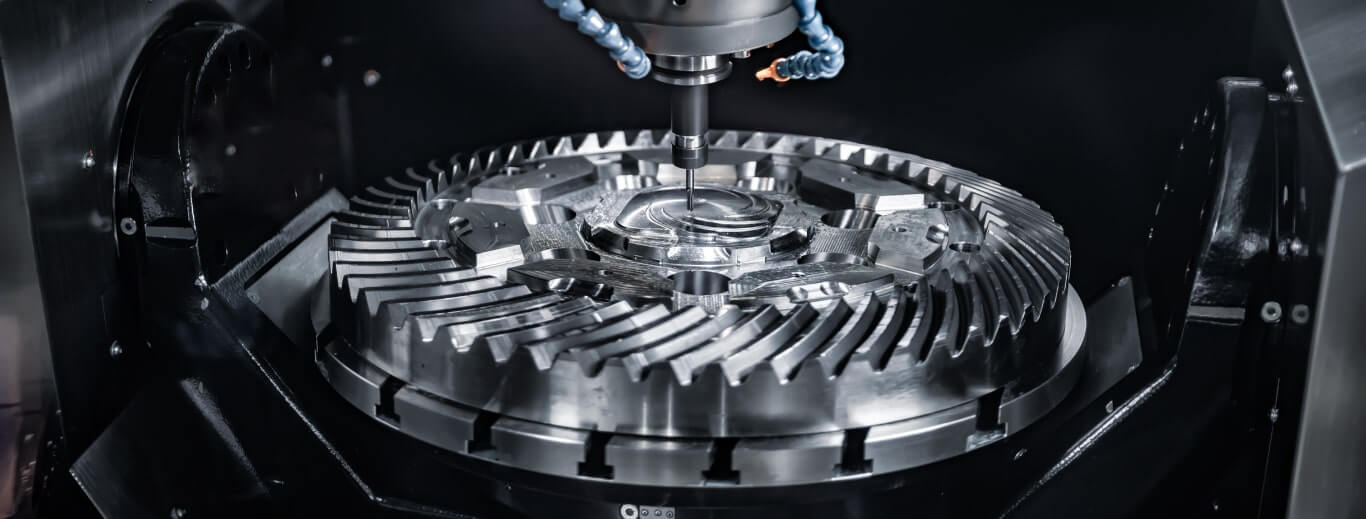
Cost curves cross. Machining cost per part falls slowly with quantity because setup is spread across the run; 3D printing cost per part is nearly flat — the same file costs about the same per unit at 10 or 500 parts. As a result, additive tends to win below a few hundred to a few thousand units, depending on geometry, and machining wins above that.
Lead times tell a similar story. A printed first article can ship in 1–3 days. Machined parts ship in 3–10 days depending on material and complexity. For prototypes, bridge runs, and emergency replacements, that difference is decisive. For long production programs, machined or molded parts offer lower unit cost and better repeatability. A hybrid strategy — print the first iterations, machine the final design — is often the fastest and cheapest path overall.
Materials for Production 3D Printing
Production-grade options now cover most engineering needs: nylon PA12 and PA11 for toughness, glass- and carbon-filled nylons for stiffness, TPU for flexible parts, polycarbonate and ULTEM for heat resistance, and a full metal lineup including 316L stainless, AlSi10Mg aluminum, Ti6Al4V titanium, and Inconel 718. Mechanical property data should come from the material vendor and be validated with test coupons — printed properties are anisotropic and differ from molded or wrought values. Browse the full material range in our materials guide.
Quality Assurance for 3D Printed Parts
Production additive manufacturing demands the same rigor as any other process. Dimensional verification with CMM, surface inspection, material certification, and build-lot traceability are standard for aerospace and medical work. Powder handling, recycling ratios, and process parameters all affect part quality, so documented process control matters as much as the printer itself. Review our quality assurance process to see how we verify every shipment — printed, machined, or molded.
Frequently Asked Questions
Can 3D printing be used for production, not just prototyping?
Yes. SLS, MJF, SLA, FDM, and metal processes are all used for end-use production parts. The sweet spot is low to medium volumes, complex geometries, custom parts, and bridge production — typically up to a few thousand units, after which molding or machining becomes more economical.
What is the difference between rapid prototyping and rapid manufacturing?
Rapid prototyping uses 3D printing to validate form, fit, and function before production. Rapid manufacturing uses the same technology to produce final, end-use parts at production quantities. The processes overlap completely; the difference is intent, qualification, and quality control.
Which 3D printing technology is best for small production batches?
For durable polymer parts, SLS and MJF offer the best combination of strength, detail, and no-support design freedom. For fine cosmetic parts, SLA resin is better. For metal parts, DMLS/SLM. The best choice depends on the part's function, environment, and quantity.
How do 3D printing costs compare with CNC machining?
At low volumes, 3D printing usually wins because there is no setup or tooling cost. As quantity rises, machining's per-unit cost advantage grows. As a rough guide, additive is competitive below a few hundred to a few thousand units; above that, machining or molding is typically cheaper.
Do 3D printed parts need finishing?
Most production parts benefit from some post-processing: support removal, bead blasting for uniform matte texture, dyeing or painting for color, and vapor smoothing for polymers. Metal prints often require CNC machining of critical faces. Finish selection follows the same logic as for machined parts.
Start Your Rapid Manufacturing Project
Rapid manufacturing with 3D printing is a production tool, not a compromise. At SHBD Metal, we help you decide honestly — additive, machining, or molding — then execute with full quality documentation. Print the first iterations, validate the design, and scale with confidence.
Upload your CAD files today and receive a detailed quote with technology recommendations, lead times, and per-unit pricing at your target volume. Your production line can be running this week.