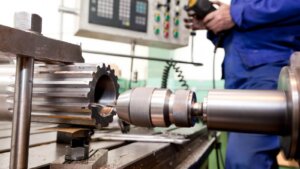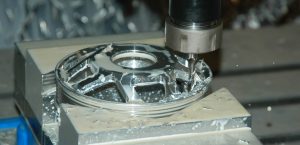

The assembly stage determines whether a sheet metal enclosure holds its shape, a bracket survives vibration, or a chassis stays serviceable. Yet most design teams treat assembly as an afterthought—something the shop floor figures out.
The problem is that no single assembly method works for every project. Welding creates the strongest joint but destroys serviceability. Screws allow field repair but add part count and assembly time. Adhesives seal perfectly but demand surface prep and cure time.
This guide compares seven sheet metal assembly methods across strength, cost, speed, and serviceability—so your design team can pick the right one before tooling starts.
What Is Sheet Metal Assembly?
Sheet metal assembly joins two or more fabricated sheet metal components into a functional unit. It sits downstream of cutting, bending, and finishing. The joining method directly affects product rigidity, service life, corrosion resistance, and production cost.
Common assembly scenarios include enclosures bolted to internal frames, brackets welded to chassis plates, panels riveted to housings, and electronic sub-assemblies mounted with PEM hardware.
The method you choose also affects what happens in upstream fabrication. A welded assembly can tolerate looser fit-up. A PEM-based design demands precise hole placement up front. A snap-fit enclosure needs controlled bend angles and material springback compensation.
7 Sheet Metal Assembly Methods at a Glance
The table below compares all seven methods across the dimensions that matter most during design review: joint strength, relative cost, production speed, disassembly, and material compatibility.
| Method | Joint Type | Relative Cost | Production Speed | Disassembly | Best Material Fit |
| Welding (MIG/TIG/Spot) | Permanent | Medium–High | Fast (spot); Medium (MIG/TIG) | No | Carbon steel, stainless, aluminum |
| Mechanical Fasteners (bolts, screws) | Removable | Low–Medium | Medium | Yes | All metals |
| Blind Riveting | Permanent | Low | Fast | No (drill-out) | Thin-gauge steel, aluminum, mixed materials |
| Clinching | Permanent | Low | Very Fast | No | Ductile thin sheets, coated/painted |
| Adhesive Bonding | Permanent | Medium | Slow (cure time) | No | Dissimilar metals, thin sheets |
| Self-Clinching Hardware (PEM) | Permanent insert, removable joint | Medium | Fast | Yes (threaded) | Ductile thin sheets |
| Snap-Fit / Tab-and-Slot | Removable or permanent | Very Low | Very Fast | Design-dependent | Spring steel, thin aluminum |
Permanent Joining Methods
Welding
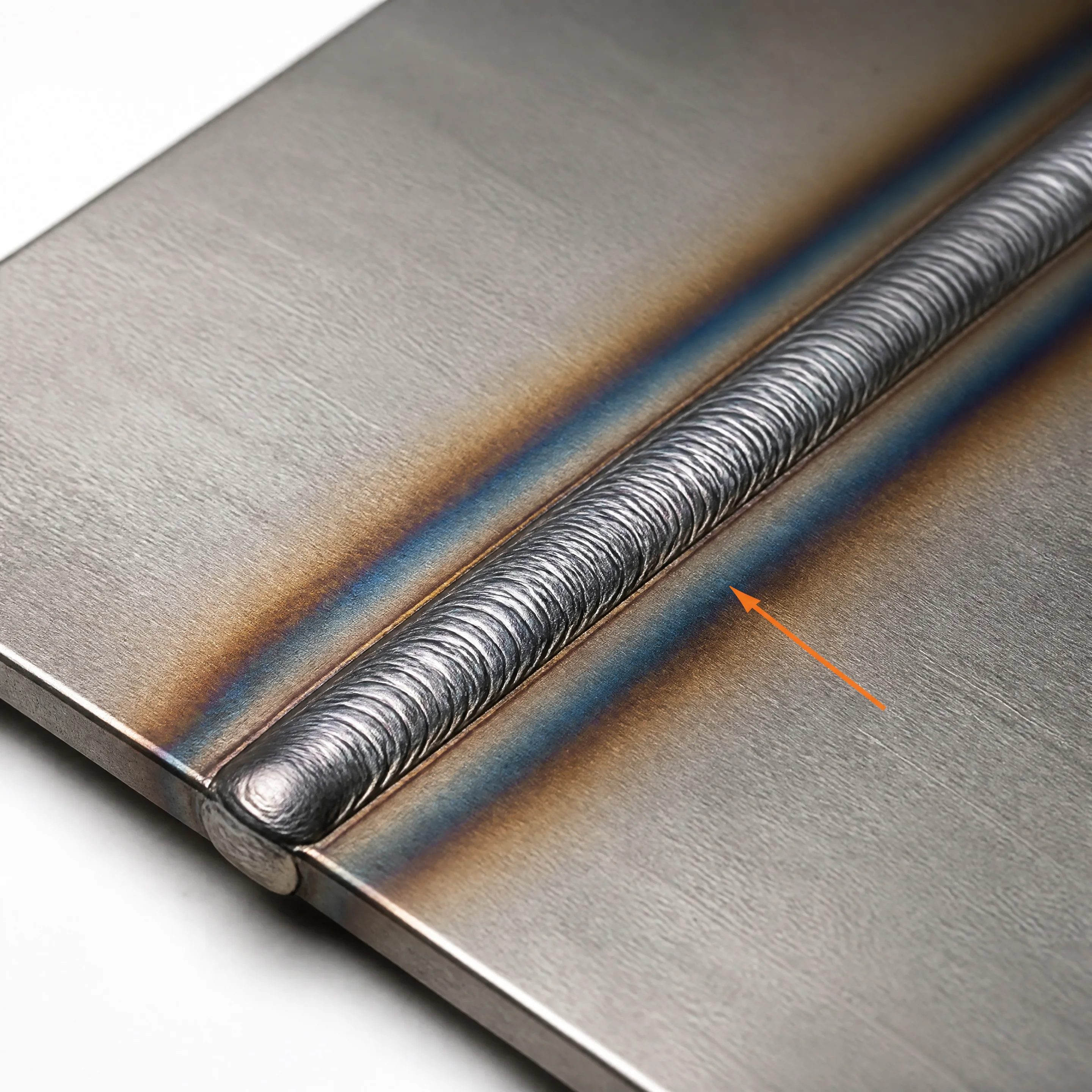
Welding fuses the base metals into a single continuous structure. When an assembly needs maximum rigidity, a watertight seal, or a joint that handles sustained structural loads, welding is the default choice.
MIG welding handles steel and aluminum at a fast pace, making it cost-effective for structural brackets and frames. TIG welding produces cleaner seams on thin stainless steel but runs slower and demands more operator skill. Spot welding dominates automotive and appliance production—fast, localized joints with no filler metal—but creates point connections that cannot seal.
The main trade-off is heat. Welding introduces a heat-affected zone (HAZ) that alters the metal’s microstructure near the joint. Thin-gauge sheets—especially aluminum—can warp or burn through without proper fixturing and parameter control. Welded assemblies are also permanent; disassembly means cutting and reworking.
Adhesive Bonding
Structural adhesives—epoxies, acrylics, polyurethanes—bond sheet metal surfaces through chemical adhesion. Unlike welding or fasteners, the bond distributes stress evenly across the entire joint area rather than concentrating it at discrete points. This makes adhesive bonding the preferred choice when joining dissimilar metals or when heat distortion from welding is unacceptable.
Adhesives also seal against moisture, dampen vibration, and leave no visible fastener heads or weld beads. The trade-off is surface preparation and cure time. Oil, oxidation, or roughness variation on the bonding surface directly compromises joint strength. Production throughput drops during the curing window unless the line is configured for batch processing.
Clinching
Clinching forms a mechanical interlock by cold-deforming overlapping sheets with a punch and die. No filler metal, no fasteners, no heat. It is fast, clean, and runs well on coated or painted sheets because the coating is mechanically displaced rather than burned off.
Clinching suits high-volume production lines that cannot tolerate welding fumes or fastener inventory—HVAC ductwork, appliance panels, automotive sub-assemblies. Its limit is sheet thickness and joint tensile strength. Clinched joints are weaker in tension than welded or riveted joints, and the method is impractical for thick-gauge structural plates.
Removable Joining Methods
Mechanical Fasteners
Bolts, machine screws, and self-tapping screws remain the most flexible assembly method. They allow full disassembly for maintenance, repair, and field modification. For serviceable enclosures, modular chassis, and equipment that ships partially assembled, mechanical fasteners are the only practical choice.
The design cost is hole placement. Misaligned holes create assembly friction and stress concentration. Vibration loosening is a known failure mode—lock washers, thread-locking compounds, or prevailing-torque nuts are standard countermeasures. Fasteners also add part count and visible hardware to the finished surface.
Blind Riveting
Blind rivets—or pop rivets—install from one side of the assembly, making them ideal for enclosed spaces where tool access is limited. They create a reliable permanent joint with good shear strength and vibration resistance. Aerospace, transportation, and HVAC industries rely on riveted assemblies where welding is impractical or disallowed.
Riveting requires drilled or punched holes, which reduce the sheet’s cross-sectional area at the joint. Rivet heads protrude on the accessible side, which may conflict with cosmetic or clearance requirements. For assemblies that mix rivets with adhesive bonding, the adhesive seals the seam while the rivets provide immediate handling strength.
Self-Clinching Hardware (PEM)
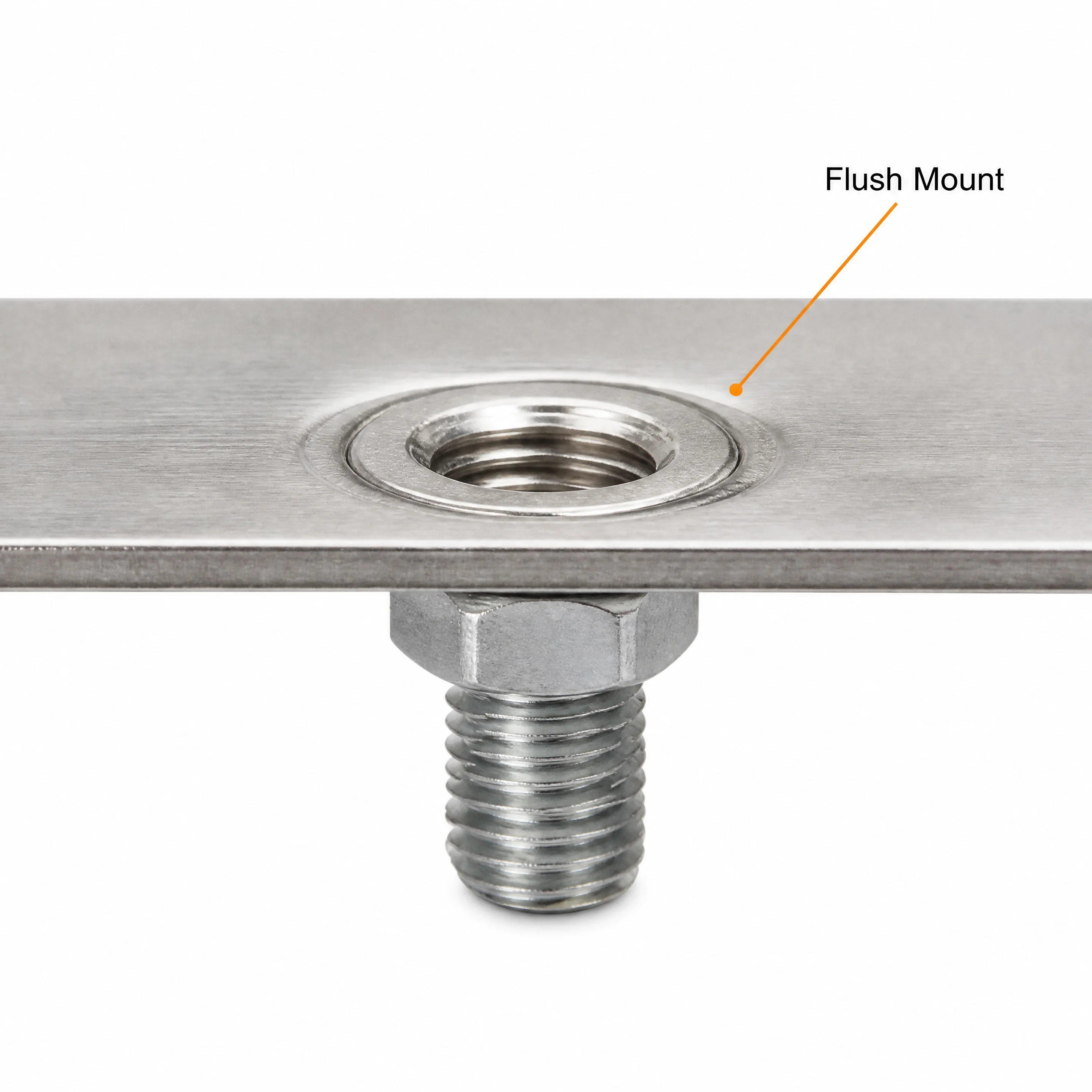
PEM fasteners—nuts, studs, standoffs—embed into thin sheet metal through a cold-forming press operation. The sheet material flows into an undercut on the fastener shank, creating a permanent anchor with strong torque-out and push-out resistance.
This method is standard in electronics enclosures, server racks, and any assembly where threaded connections are needed in material too thin to tap directly. PEM hardware keeps the exposed surface clean—no weld spatter, no protruding rivet tails. The trade-off is that installation requires a calibrated press and precisely sized holes. Ductile sheet materials work best; brittle or ultra-thin sheets risk cracking at the installation point.
Integrated Assembly Features
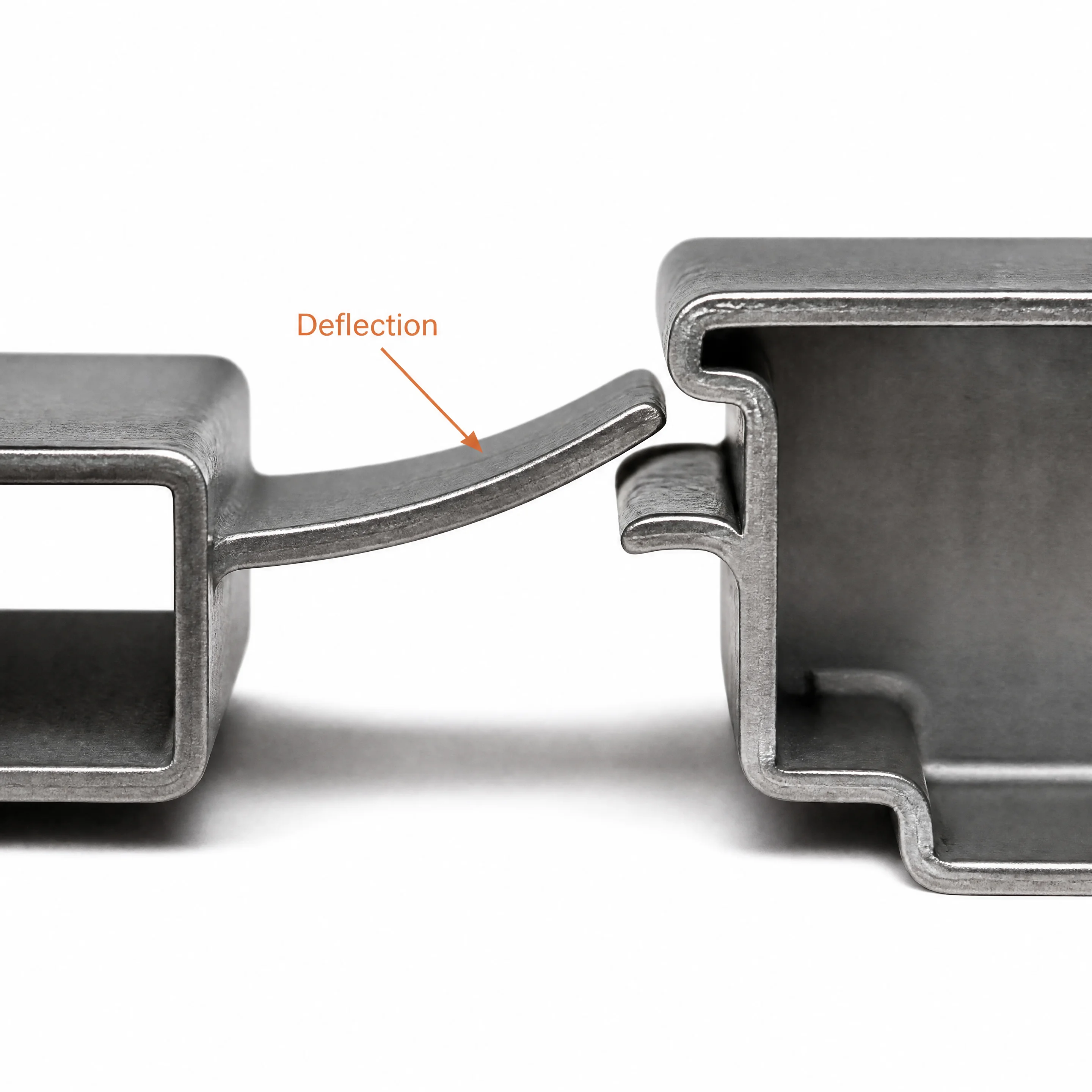
Snap-fit joints and tab-and-slot features eliminate hardware entirely. The geometry of the parts themselves creates the connection.
Snap-fit joints use a cantilevered tab that deflects during insertion and locks into a mating feature. Tab-and-slot construction uses laser-cut tabs on one part that fit into corresponding slots on the mating part, providing self-locating alignment and initial holding force before permanent joining.
Both methods cut assembly time and eliminate fastener cost. They work best in moderate-load applications—access panels, battery covers, lightweight enclosures. The design requirements are stricter: snap-fit geometry must account for material springback, fatigue life under repeated engagement, and acceptable deflection force.
How to Choose the Right Method
The decision starts with four questions:
1. Does the joint need to come apart?
If yes, the field narrows to mechanical fasteners, PEM hardware, or designed-in snap-fits. If no, welding, riveting, adhesives, or clinching are in play.
2. What is the production volume?
High-volume lines favor spot welding, clinching, or snap-fit—methods with fast cycle times and low per-unit consumable cost. Low-volume or prototype work leans toward fasteners and PEM hardware, which require less dedicated tooling.
3. What material are you joining?
Similar metals with good weldability open up welding. Dissimilar metals push the decision toward adhesives, riveting, or mechanical fasteners. Thin-gauge material rules out high-heat welding in favor of clinching or PEM.
4. What does the finished surface demand?
A cosmetic outer panel needs clean, invisible joints—adhesives or flush welding with post-grinding. An internal bracket inside a sealed enclosure can take visible rivets or screw heads.
For most assemblies, the answer is not one method but a combination. A common strategy: weld the structural frame for rigidity, rivet or PEM-mount the enclosure panels for access, and use snap-fit features for removable covers.
Joining Dissimilar Materials: Metal to Plastic
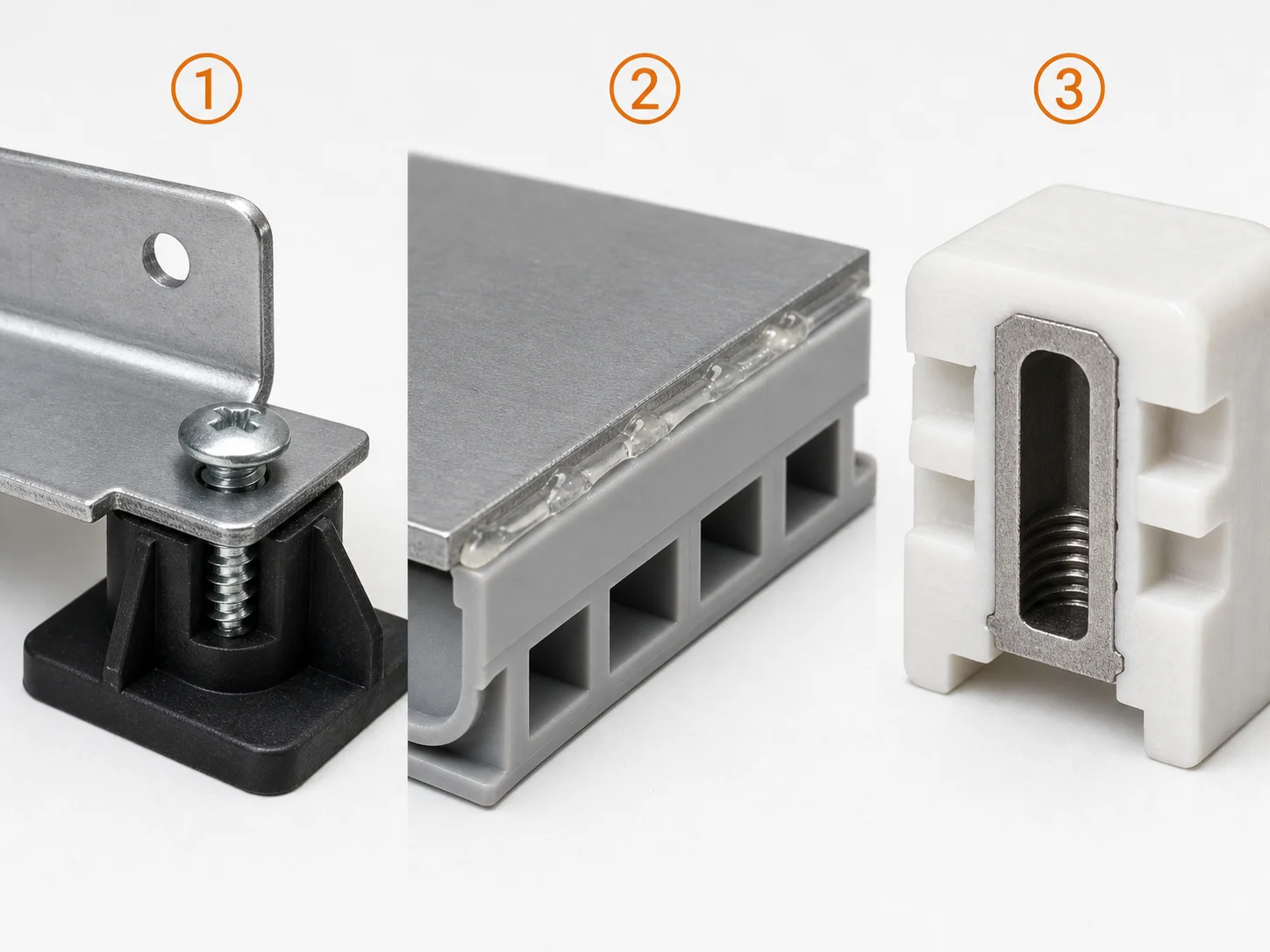
When a sheet metal housing needs a plastic window, gasket, or structural insert, the joining equation changes entirely. Thermal expansion mismatch is the primary failure mode—aluminum and ABS expand at different rates under temperature cycling, which can crack bonded joints or loosen threaded connections.
Three practical approaches:
- Mechanical fasteners with thread-forming screws into plastic bosses—the plastic boss provides thread engagement while the metal sheet carries the load.
- Structural adhesives formulated for mixed-material bonding—compatible with metal-to-plastic interfaces but demand surface preparation on both substrates.
- Overmolding or insert molding—the plastic is molded directly onto or around the metal feature, creating a mechanical interlock without separate assembly steps. This is a production-mold solution, not a prototyping route.
Conclusion
Sheet metal assembly is not about finding a universal method. Permanent joints, removable fasteners, and integrated features each solve different sets of requirements. The right choice depends on what the part needs to survive, how it will be serviced, and what the production volume justifies.
If your design is at the assembly planning stage, running a DFM check before releasing the drawing can catch tolerance conflicts and method mismatches early. RapidDirect provides sheet metal fabrication and assembly—from laser cutting and bending to welding, riveting, and PEM insertion—with free DFM feedback on every quote.
FAQ
Welding creates the strongest joint, often matching or exceeding the base metal’s strength. For thin sheets where welding causes distortion, riveted joints with structural rivets provide the next-highest mechanical strength.
Yes. A common configuration: spot-weld the internal frame for rigidity, PEM-mount threaded standoffs for PCB mounting, and use snap-fit tabs for the removable access cover. The combination should be specified in the assembly drawing with torque values and installation sequence where relevant.
Each joining method adds dimensional variation. Welding introduces thermal distortion. Fastened joints stack hole-position tolerances. Tolerance stack-up analysis—using worst-case or RSS methods—should account for the joining process, not just individual part fabrication.
There is no universal threshold, but spot welding typically becomes cost-competitive around 500–1,000 units. Below that volume, the fixture cost for automated welding often outweighs the per-part savings. Fasteners remain more flexible for sub-500-unit runs.
A complete RFQ package includes the 3D CAD assembly file, 2D drawings with critical dimensions and tolerances flagged, a bill of materials specifying fastener types and quantities, the target annual volume, and any finishing or packaging requirements.
Adhesive bonding and insert molding are the two most common hardware-free routes. Adhesives work for flat interfaces; insert molding embeds the metal feature into the plastic during injection, creating a mechanical interlock without fasteners or secondary assembly steps.