
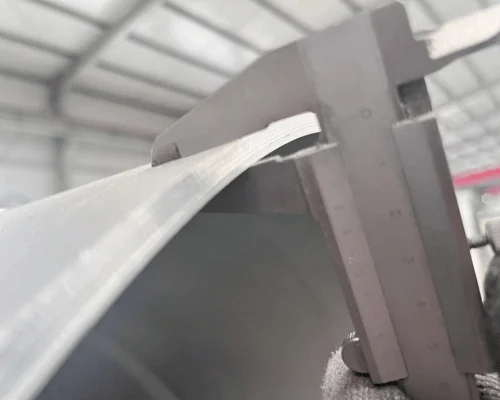
6061 and 6063 tube
The two workhorse alloys: 6061 for structural tube, 6063 where the anodized finish is the visible requirement.
Frames, rails, architectural tubeRaw Materials · Aluminum Products
Round tube is the default choice for a frame, a rail or a line that has to carry fluid, because a circular section puts the same wall everywhere. Alloy and temper decide the strength; the wall decides whether it dents on site.
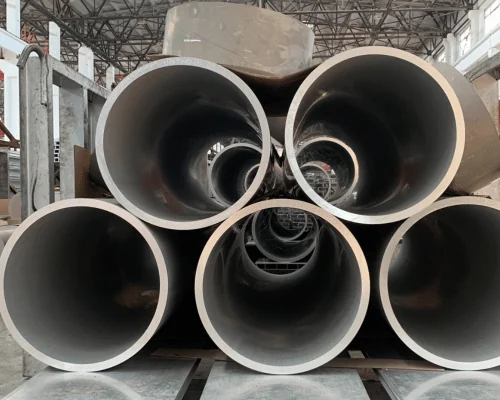
Four routes cover most of what we quote. Each is a different mill or process route, so the size window and the lead time differ even where the grade looks similar.
The two workhorse alloys: 6061 for structural tube, 6063 where the anodized finish is the visible requirement.
Frames, rails, architectural tube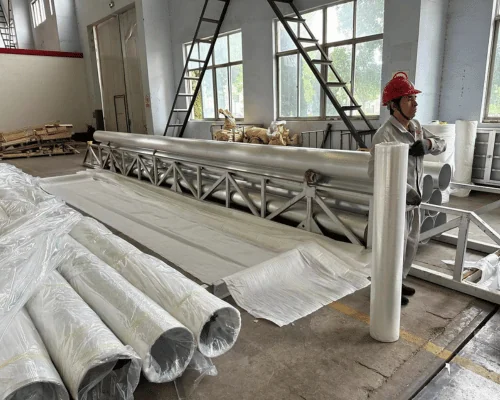
Salt-water-resistant and weldable, for structures and lines that run in a marine environment.
Marine frames, dockside structures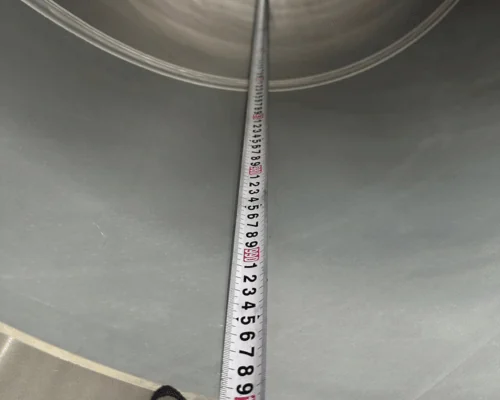
High-strength tube for parts where weight and load both matter, supplied in the temper the design calls for.
Aerospace, motorsport, high-load parts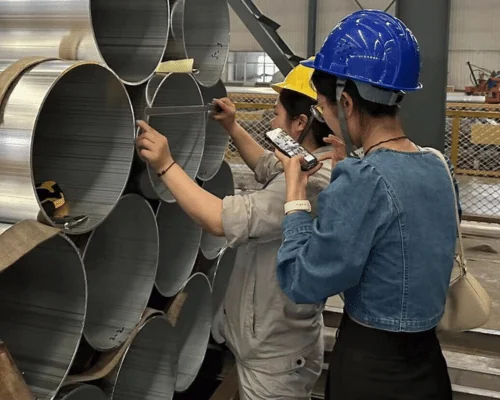
Tube cut to length, bent or drilled before anodizing or powder coating, so the finish covers the finished part.
Handrails, frames, fabricated assembliesRound tube is quoted by outside diameter, wall and temper. A tube specified only by outside diameter leaves the strength undefined, because the wall carries it.
Swipe the table sideways for the notes →
| Parameter | Range | What decides it |
|---|---|---|
| Outside diameter | 8 – 350 mm | Below 20 mm the wall range narrows; above 200 mm the wall range widens. |
| Wall thickness | 1 – 40 mm | Wall and diameter are quoted as a pair, since not every wall exists at every size. |
| Alloys | 6061, 6063, 5083, 2024, 7075, 3003 | 6063 for finish, 6061 for structure, 5083 for marine and welding. |
| Temper | T4, T5, T6, T651 | T6 for structural parts, T5 for architectural tube, O where forming comes first. |
| Length | Cut to length, typically up to 6 m | Handling and freight, rather than the mill, set the practical maximum. |
| Finish | Mill, anodized, powder coated, sand blasted | Anodizing is a surface conversion; powder coating adds a film with a colour. |
Four properties explain why round aluminum tube ends up in frames, facades and fluid lines.
A circular section puts material at a constant distance from the axis, which is efficient in torsion and predictable in bending.
The natural oxide layer makes 6061 and 6063 usable outdoors; 5083 extends that to salt water.
Annealed tube bends and flares without cracking, which is why bending is usually specified before ageing rather than after.
Round tube takes anodizing evenly around its circumference, so a run of lengths matches in colour across the batch.
Tube enquiries usually come down to four decisions. We confirm them in this order because each one constrains the next.
The pair defines the section. A tube quoted by outside diameter alone leaves the load capacity undefined.
6061-T6 for structure, 6063-T5 for finish, 5083 for marine, and O where the tube is bent after delivery.
Bending, flaring and swaging are done before ageing or after annealing; the sequence changes the temper on the drawing.
Anodized or powder coated, with protection between lengths so the visible surface arrives unmarked.
Round tube is a structural and a decorative product at once, and the application decides which of the two dominates.
Lightweight frames where the strength-to-weight ratio reduces both handling cost and the load on the structure below.
Anodized or powder-coated tube in exterior work, where the finish has to survive weather and cleaning.
Tube bent and finished as a visible part, with the joint details decided before anodizing.
Process and pneumatic lines where a consistent bore and a known wall carry the requirement.
Need round tube priced by diameter, wall and temper? Send the specification, quantity and any certification requirement and we will come back with what we can supply.
Get Instant Quote