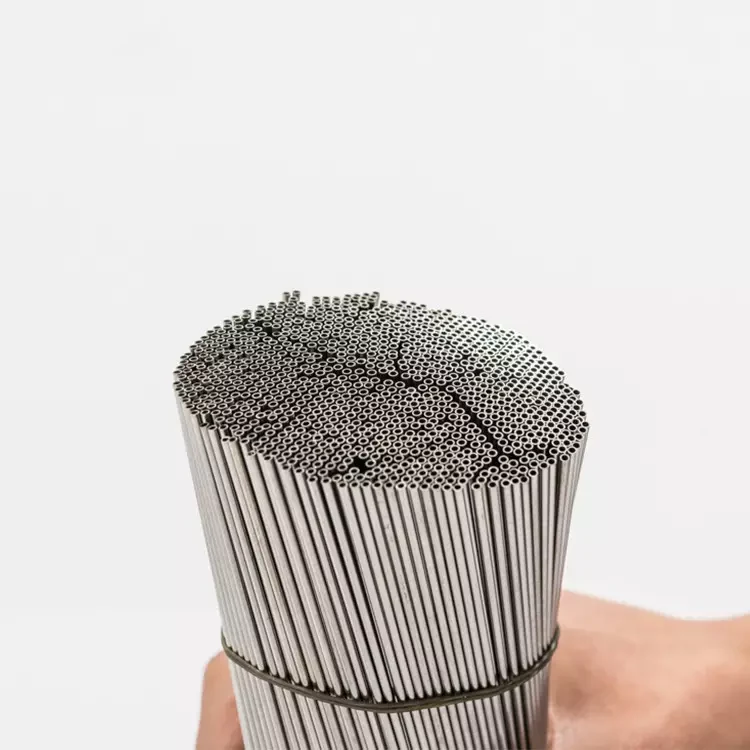
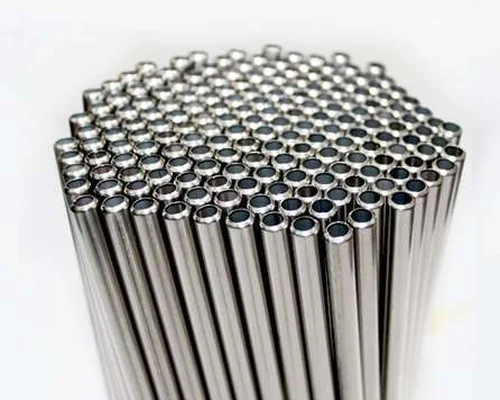
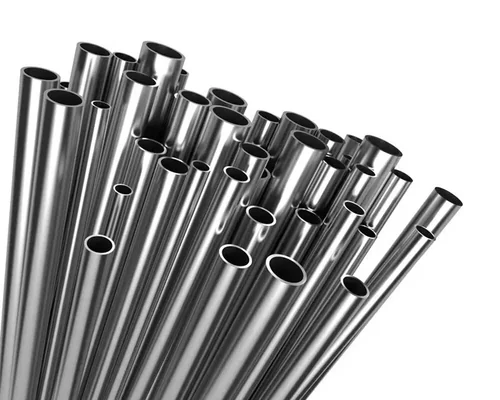
A capillary tube is defined by its bore. From 0.1 mm outside diameter upwards, the
inside diameter, the wall and the tolerance on each are what decide whether an instrument doses, samples
or flows the way it was designed to — so those are the numbers we quote against, and the ones the
inspection report is written for.
Bore and wall, not a nominal size. A capillary tube is specified from 0.1 mm upwards with the inside diameter and the wall carrying the requirement, because flow and pressure behaviour follow the bore rather than the outer diameter.
Tolerance quoted against the drawing. Outside diameter, wall, concentricity and straightness are each given a number on the drawing. We confirm the achievable band for that diameter and grade before quoting, not after.
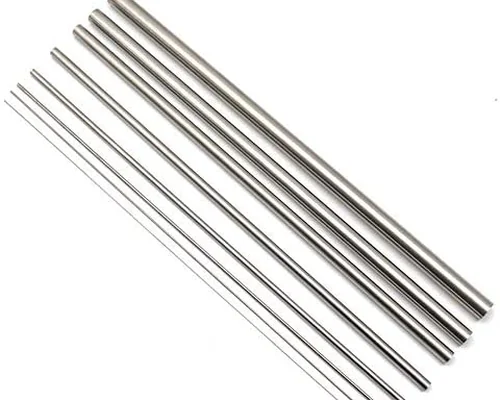
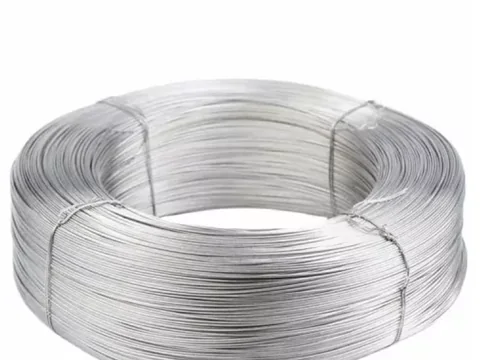
Straight lengths, coils or formed ends. Tube can ship straight and cut to length, coiled for a feed line, or cut with a burr-free end that is ready for a fitting, depending on what the assembly needs.
Grades for chloride, heat and general service. 304 covers clean general duty, 316L the chloride and product-contact work, 321 the higher-temperature side, and duplex where wall thickness or chloride stress cracking rules the austenitics out.
Four grade families cover most of what we quote. The choice is driven by the media, the temperature
and whether the tube is welded into an assembly afterwards.
304 and 304L
The general-purpose austenitic grade: formable, weldable, and the sensible default where the media is not aggressive. 304L keeps carbon low for parts that are welded after the tube is formed.
General instrumentation, clean water and air lines, sensor sheaths
316 and 316L
Molybdenum lifts pitting and crevice resistance, which is what makes 316 the grade for chloride-bearing media and for product-contact lines that are cleaned in place.
Medical and analytical instruments, pharmaceutical and food contact, chemical sampling
321 and high-temperature grades
Titanium-stabilised against intergranular corrosion in the sensitising range, so it holds up where the tube runs hot or is welded and then held at temperature.
Heat-exchanger and furnace work, high-temperature sampling lines, exhaust sensing
Duplex 2205 and 2507
Roughly twice the yield strength of the austenitics with resistance to chloride stress corrosion cracking, for the small-bore lines where a thicker wall or a seawater duty would otherwise decide it.
Offshore and seawater instrumentation, brine and chloride process lines
Need something outside this list? 904L and 17-4PH are quoted on request where the mill
can roll them at the diameter you need, and duplex 2507 is available where 2205 runs out of pitting
resistance. Send the drawing with the bore, the wall and the tolerance band, and we will confirm what is
achievable before you commit.
Size Range
Capillary sizes are quoted as a pair — outside diameter with wall — because not every wall
exists at every diameter. Beyond that, the tolerance, the form and the surface finish all change what the
mill will quote.
Swipe the table sideways for the notes →
Parameter
Range
What decides it
Outside diameter
0.1 – 6.0 mm
Below 0.3 mm the achievable range narrows; the exact band is confirmed per size.
Wall thickness
0.02 – 1.5 mm
Quoted with the diameter, since not every wall exists at every OD.
Tolerance
Typically ±0.01 mm or ±1% of OD
Set on the drawing: OD, wall, concentricity and straightness each carry their own figure.
Length and form
Straight cut lengths or coils
Straight lengths, pancake coils or spools, cut to the length or the coil weight you specify.
Surface
Bright annealed, pickled or passivated
Bright annealed for instrument and medical work; pickled or passivated where a scale-free finish is enough.
Grades
304/304L, 316/316L, 321, duplex 2205/2507
904L and 17-4PH on request, subject to mill availability at that diameter.
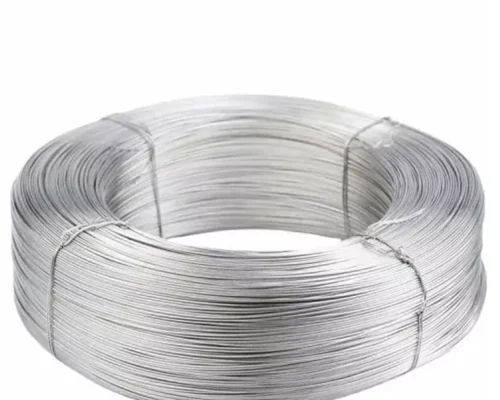
Coiled
For feed lines and long runs without a joint, supplied on a spool at the coil weight you ask for.
Straight lengths
Cut to length and packed so the tube stays straight, for assemblies that cannot take a coil set.
Cut and formed ends
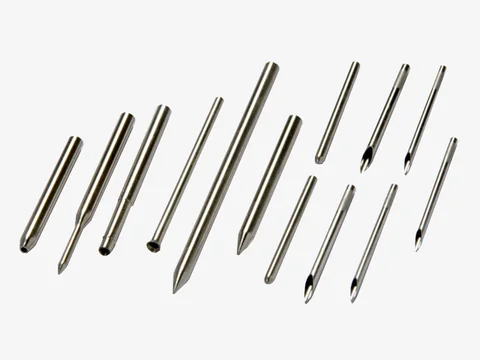
Burr-free cutting, with a chamfer, taper or bend where the end has to meet a fitting or a needle.
What Precision Means in a Capillary Tube
Precision is not a single tolerance on the drawing. In tube this small it is four separate properties,
and a part usually fails on the one nobody wrote down.
Fit is decided at the bore
A capillary tube that is 0.02 mm out on the inside diameter changes the flow through a whole instrument. The bore, its roundness and its finish are what get measured, not just the outside.
Concentricity, not only wall thickness
An off-centre bore leaves one thin side that fails first under pressure. Wall is checked around the circumference rather than at a single point.
Burr-free ends and controlled straightness
A burr at the cut end contaminates the line it feeds, and a tube with a set in it will not sit in the fixture. Cutting and straightening are part of the specification, not a packing detail.
Cleanliness has to be provable
For medical and pharmaceutical work the tube is ultrasonically cleaned, inspected optically and packed in a controlled area, so the particle count at the customer's line is the one that was specified.
How We Help Customers
Capillary work goes wrong at the specification stage more often than at the mill. These are the four
questions we settle before a price goes out.
01
State the bore, the wall and the tolerance
Give the inside diameter and the wall with the tolerance band on each. A capillary specified only by outside diameter leaves the flow undefined.
02
Name the grade and the condition
304L and 316L are not interchangeable on a welded assembly, and the surface condition (bright annealed, pickled, passivated) changes both corrosion behaviour and lead time.
03
Choose the form: straight, coil or formed
This decides packing, freight and how much straightening the tube needs before it can be used. It is cheaper to settle it at quotation than at delivery.
04
Agree the test regime and the documents
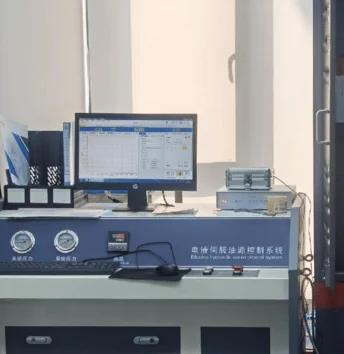
Chemical composition, mechanical properties, corrosion check and dimensional inspection are recorded against the heat number, and the report ships with the tube.
Visual and dimensionalCorrosion resistanceChemical compositionMechanical properties
Real Applications
Where the bore is doing the work — metering, sampling or sensing — a capillary tube is
usually the part that sets the accuracy of the whole assembly.
Medical devices and analytical instruments
Needle stock, catheter and probe tubing, and the small-bore lines inside instruments, where the bore sets the dose or the sample volume.
Chromatography and laboratory systems
HPLC and GC tubing, transfer lines and sample loops: an inert, smooth bore with a known volume per metre and no dead volume at the joint.
Chemical and process sampling
Sample and impulse lines carrying aggressive media, where 316L or duplex prevents the pitting that would block a narrow bore.
Sensors, thermowells and hydraulics
Sheaths, capillary lines to gauges and small hydraulic circuits, where pressure rating and a consistent wall matter more than the cost per metre.
Have a capillary drawing with a tolerance we should look at? Send the specification, quantity and any certification requirement and we will come back with what we can supply.