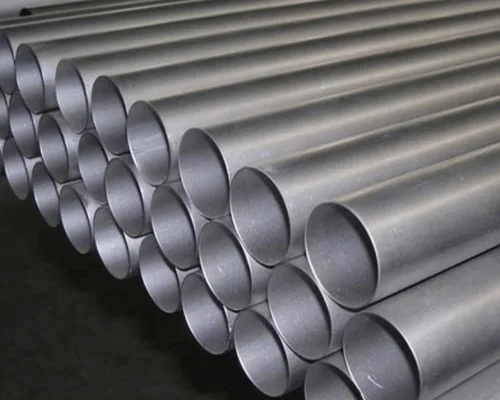
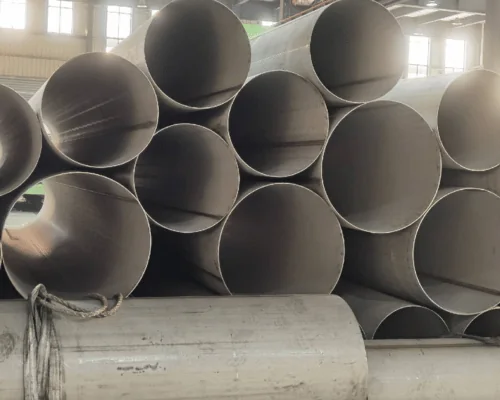
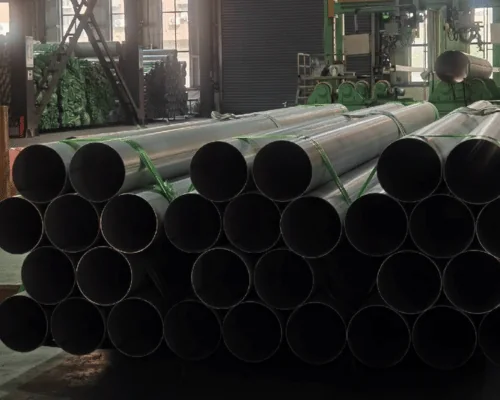
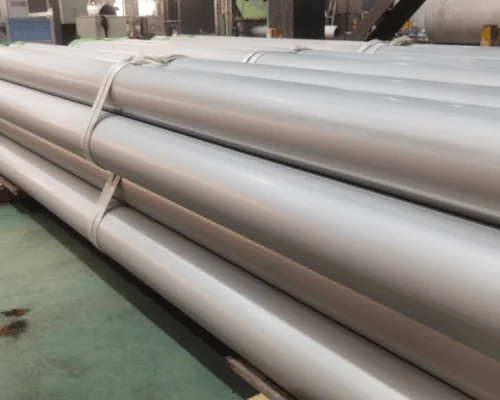
Welded tube begins as strip: formed into a circle, closed with a longitudinal weld, then
brought back to a uniform surface. That route is why the wall stays consistent along the length, why the
size is not limited by a billet, and why the cost per metre sits below seamless — provided the weld is
tested rather than trusted.
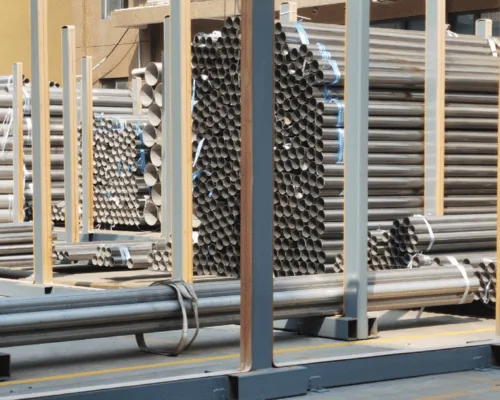
Sized to the drawing. Outside diameter, wall and length are confirmed against your document before the order is accepted, not adjusted to whatever came off the line.
Weld integrity checked, not assumed. Ultrasonic or eddy-current inspection on the seam, plus a destructive sample where the service calls for one, so the weld stops being the unknown part of the tube.
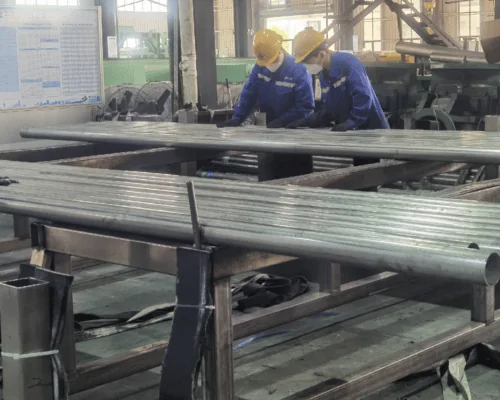
Second operations handled. Cut to length, deburred, annealed, pickled, polished or bent before dispatch, so the tube arrives as a part of your process rather than raw input to it.
Documentation with the tube. Mill certificate and test reports against the standard you name, so the paperwork is ready when the goods reach your inspection bay.
Four grades cover most of the work; each one is chosen for what it does badly as much as what it does
well. The grade, the wall and the finish are confirmed per order, and the mill certificate travels with
the shipment.
SS 304 welded tube
The 18/8 austenitic grade: 18% chromium with 8% nickel, and the sensible starting point for most general service. It forms and welds without complaint and shrugs off atmospheric and food-grade conditions. Step up only when chlorides or temperature make it necessary.
General fabrication, kitchen equipment, architectural trim
316 / 316L welded tube
Two to three percent molybdenum is what separates 316 from 304: it raises resistance to pitting and crevice attack in chloride-bearing water. The L grade keeps carbon low so the weld and its heat-affected zone do not sensitise in service.
Chemical and marine service, sanitary lines, medical and food contact
440 welded tube
A high-carbon martensitic grade (roughly 0.6–1.2% C) that hardens to a far higher wear resistance than the 300 series, at the cost of toughness and weldability. Used where abrasion decides life, not forming.
Bearing races, blades and cutting edges, wear parts
Duplex 2205 welded tube
Roughly 22% chromium, 5% nickel and 3% molybdenum in a mixed austenitic-ferritic structure. The yield strength is about double that of 304, and it resists chloride stress-corrosion cracking that the 300 series cannot hold up to.
Brine and chloride process lines, desalination, structural tube
Working in another grade? We also quote against your specification for 309S/310S
(high-temperature service), 317L, 321/321H and 347/347H (stabilised against sensitisation), 410/410S, and
duplex 2507. Send the grade and the standard, and we will tell you what the mills can actually supply
— we would rather decline a line than ship a substitute.
Size Range
Lengths are cut to order. Anything outside the window below is worth asking about anyway: large
diameter and thin wall are exactly where the welded route has the advantage over seamless.
Typical window; final values follow the grade and the standard on your order.
The four properties below are the ones that decide whether welded tube is the right answer for a
part — and the ones worth checking before a cheaper quote wins the order.
Corrosion resistance is a film, and it needs oxygen
Above roughly 10.5% chromium the surface grows a passive oxide layer within hours of being exposed to air. Scratch it and it heals, provided the environment can still supply oxygen — which is why the same grade behaves so differently in a sealed, deaerated vessel.
The seam is engineered, not tolerated
Strip is formed and closed by TIG, laser or high-frequency welding, then the weld is annealed and tested. The result keeps the dimensional consistency of strip while carrying the pressure duty of tube.
Cheaper per metre, and free of billet limits
Because the wall starts as coil, welded tube undercuts seamless on cost and can be made in large diameters and thin walls that a pierced billet simply cannot reach.
Fabricates like sheet, not like pipe
It cuts, bends, swages and welds with the same tooling as sheet metal, and most 304 and 316 service needs no post-weld heat treatment, which keeps fabrication time and cost down.
How We Help Customers
Most of the value sits before the tube is made: reading the requirement properly, quoting the grade
that exists, and testing the lot that ships.
01
Read the drawing, not the product name
OD, wall, length, grade, standard and the test regime go on one sheet and get checked before a price is quoted. Half of the material disputes in this trade start with a wall that was never named.
02
Match the grade to the mill that runs it
Not every mill rolls every grade, and the certificate is only as good as the heat behind it. We quote against what can actually be supplied with the paperwork you need.
03
Cut, finish, and test before dispatch
Cut to length, deburr, anneal, pickle or polish, then pull samples from the lot for the checks below.
04
Ship with the documents attached
Mill certificate, test reports and packing list travel with the tube, so import clearance and incoming inspection do not hold the shipment.
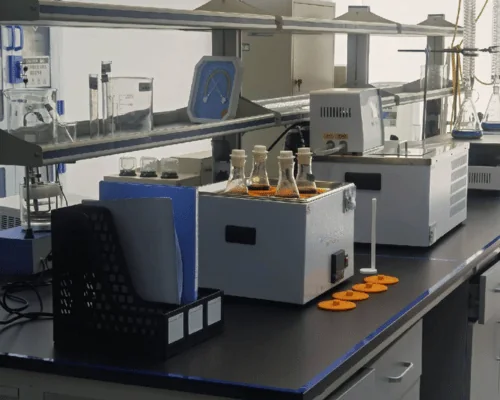
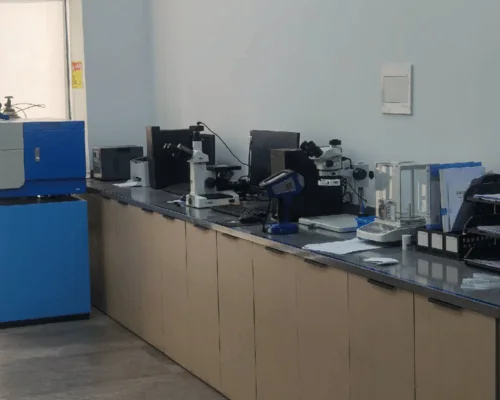
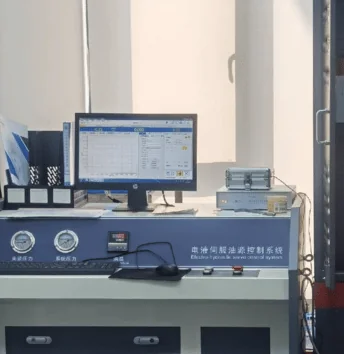
Visual and dimensional inspectionEvery length is checked against the drawing: diameter, wall, length, straightness, surface and weld bead.Corrosion resistance testingIntergranular and pitting tests to the applicable ASTM practice when the service environment demands it.Chemical composition analysisSpectrometer analysis on the heats we receive, checked against the grade rather than the supplier's word.Mechanical property testingTensile, yield, elongation, flattening and hardness pulled from the same lot that ships.
Real Applications
Hydraulic lines on industrial machinery and corrosion-resistant structures in a wastewater plant have
little in common except the material: welded tube meets both at a cost per metre that seamless cannot
match.
Architecture & Construction
Handrails, balustrades, canopies and column casings, where the tube has to hold a line for decades in salt spray and still look untouched at the joints.
Fluid Transport
Process water, CIP and sanitary lines. A smooth bore that cleans down and a weld that does not trap product are the two properties that matter more than pressure rating here.
Industrial Machinery
Hydraulic return lines, exhaust sections, guards and frames — tube used structurally, where acid and alkali exposure rules out coated carbon steel.
Energy & Environmental
Wastewater and sludge lines that see hydrogen sulphide, and outdoor structures such as solar mounting that face UV and weather year round.
Need welded tube in a grade or wall that is not listed? Send the specification, quantity and any certification requirement and we will come back with what we can supply.