
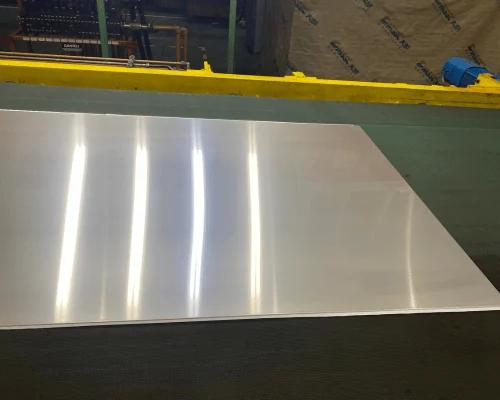
Hot-rolled plate and sheet
Rolled hot and annealed, with a No.1 or 2D surface. Used where thickness carries the load and the surface will be painted, lined or hidden.
Raw Materials · Stainless Steel Products
Sheet is bought on three numbers: grade, thickness and finish. The finish decides what the surface looks like and how it holds up outdoors; the thickness tolerance decides what the press brake or the laser can do with it. We quote against all three, in the size the part actually needs rather than the size the mill prefers to ship.
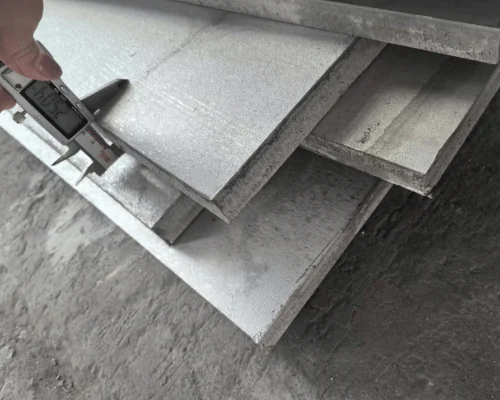
Six forms cover most requests. Each is a different mill route, so the finish, the thickness window and the lead time differ even when the grade is the same.
Rolled hot and annealed, with a No.1 or 2D surface. Used where thickness carries the load and the surface will be painted, lined or hidden.
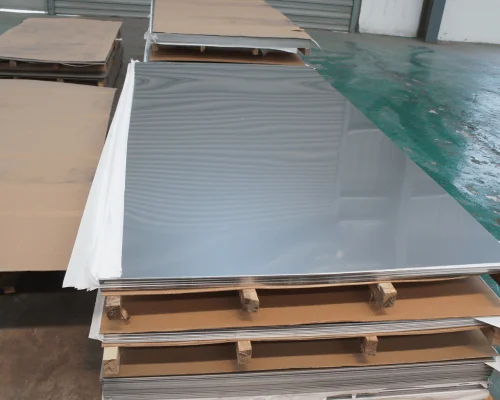
The default cold-rolled finish: smooth, matte, and the easiest surface to form, weld and fabricate without extra polishing.
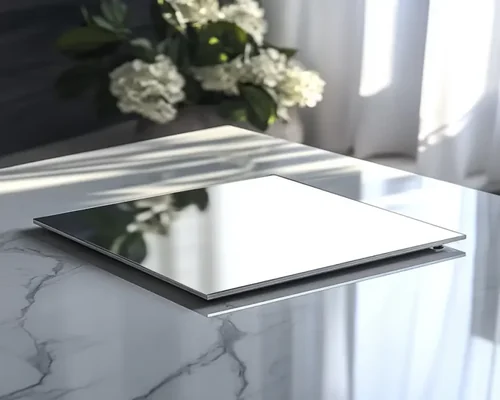
Polished to a reflective finish, with the reflectivity and the flatness both specified. Handling protection matters more here than on any other finish.
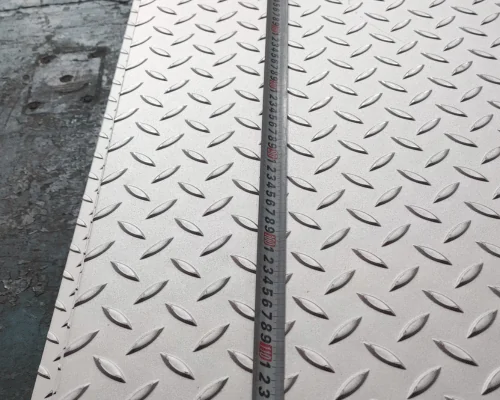
Raised diamond or lentil pattern rolled into the surface for grip underfoot, in a standard thickness range that suits flooring and steps.
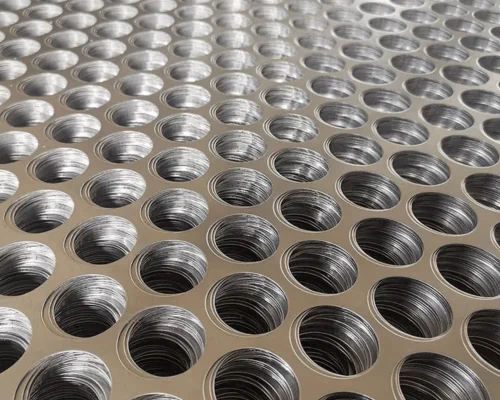
Holes punched on a fixed pitch: round, square or slotted, with the open area set by the hole size and pitch you choose.
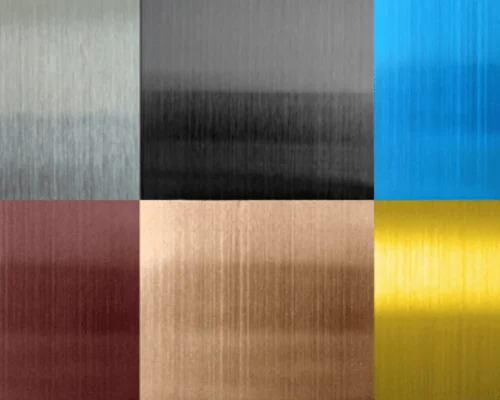
A decorative finish over the stainless substrate, in the colour and texture agreed against a physical sample rather than a screen.
Grades on the same order as the finishes: 304/304L and 316/316L cover most of it, with 430 and 441 for dry interior work, 309S/310S for heat, 904L and duplex 2205/2507 for chloride and marine duty. Tell us the environment and we will narrow the list rather than quote the whole catalogue.
Dimensions below are the standard window; cut-to-size blanks are confirmed against the drawing. Thickness tolerance is the number that decides whether a part forms cleanly.
Swipe the table sideways for the notes →
| Parameter | Range | What decides it |
|---|---|---|
| Thickness | 0.3 – 6.0 mm | Below 1 mm the tolerance band tightens; above 3 mm the route moves to plate. |
| Width | 914 – 2500 mm | Cut to width or supplied full width, depending on the blank you need. |
| Length | 1000 – 12000 mm | Sheared or laser-cut blanks; long lengths need a flat bed for transport. |
| Finish | 2B, No.1, 2D, No.4, BA, hairline, mirror / No.8 | Decorative and hygienic work drives the finish; structural work usually takes 2B or No.1. |
| Grades | 304/304L, 316/316L, 317L, 309S/310S, 409L/430/441/443, 904L, 2205/2507 | Chlorides push the choice to 316L, 904L or duplex; heat pushes it to 309S/310S. |
| Surface protection | PVC film, interleaving paper or bare | Film for visible surfaces, paper where the film would leave adhesive, bare where the sheet is processed at once. |
Four things separate a sheet that fabricates well from one that causes rework, and only one of them is on the mill certificate.
A No.4 is a grit line, hairline is a finer directional grain, and BA is annealed in a controlled atmosphere. Two sheets can look alike in a photo and behave differently under a weld or a bend.
A sheet at the bottom of the tolerance band forms differently from one at the top. For critical pressing work we quote the tolerance class, not just the nominal thickness.
Sheet that is not flat will not cut a square blank, and a laser will follow the bow. Flatness is worth writing into the requirement on anything that gets welded or robot-handled.
Full sheets carry freight and offcut you may never use. A cut-to-size blank usually wins once the part is smaller than half a sheet, even after the cutting charge.
Sheet orders go wrong on finishes and thickness tolerance more often than on grade. These are the four things we settle before quoting.
2B, No.4, hairline, BA, mirror or No.8, plus the direction of the grain where it matters, so the sample and the delivery are the same thing.
Nominal thickness alone is not enough for forming work. We confirm the tolerance class against the process the blank goes through.
Sheared blanks are cheaper and leave a straight edge; laser cutting handles profiles and holes. The choice affects both cost and the edge finish.
Film, paper or bare, and how the sheets are stacked and strapped, so the surface arrives in the condition the finish was bought for.
Sheet turns up wherever a flat, cleanable or decorative surface has to carry load or take an impact. These are the four we quote most.

Cladding, trays and structural plate in chemical and petrochemical plant, where 316L or duplex holds the surface against chlorides and process spillage.

Cladding, roofing and interior features, where the finish and the flatness are the specification and the sheet has to stay visually consistent across a whole elevation.

Hygienic surfaces, tables, splashbacks and equipment skins, in a finish that can be cleaned and does not trap residue at a weld or a fold.
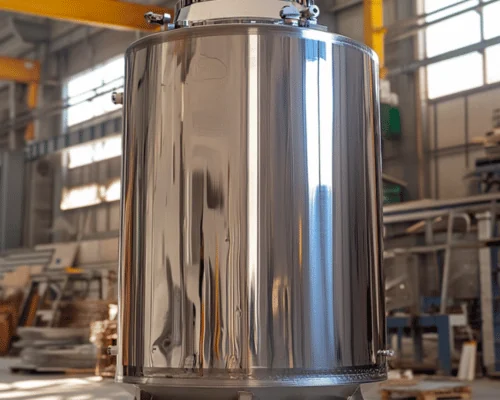
Chemical and fuel tankers, silos and vessel shells, where plate thickness and weld quality decide the service life.
Need a specific finish, thickness tolerance or blank size? Send the specification, quantity and any certification requirement and we will come back with what we can supply.
Get Instant Quote