

Transitioning a product from a digital concept to a physical, real-world component requires moving beyond basic desktop prototyping methodologies. To achieve genuine functional validation, product designers, mechanical engineers, and project managers must carefully navigate the complex landscape of 3d printing materials.
Facing hundreds of different 3d printing materials available on the market today, knowing which option will accurately simulate your final production material—and understanding the hidden manufacturing realities of each process—is critical. Choosing the right material is the fundamental key to moving from a simple concept to a high-value functional part. This guide breaks down the four most advanced 3D printing technologies (Industrial Metal AM, PolyJet, SLS, and SLA), exploring their specific material offerings and the strict Design for Manufacturability (DFM) realities you must know before requesting a quote.
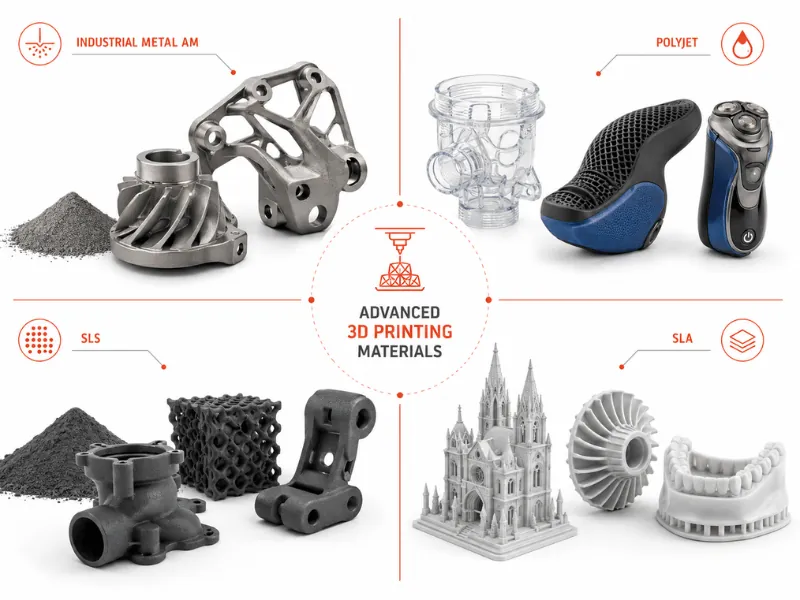
SLM and DMLS: Industrial Metals for Extreme Performance
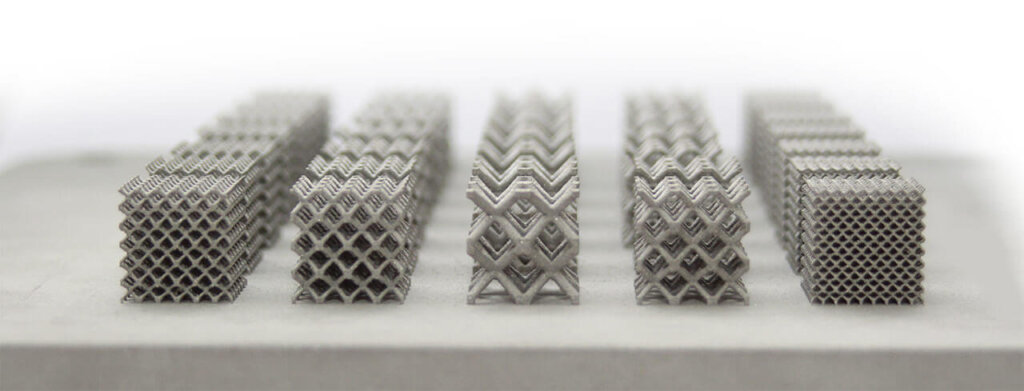
When your engineering project requires the absolute highest level of mechanical strength, thermal resistance, and structural durability, Selective Laser Melting (SLM) and Direct Metal Laser Sintering (DMLS) represent the ultimate manufacturing solutions. Rather than utilizing polymer-based plastics, this process utilizes actual industrial metals. These technologies operate by using a high-powered laser to precisely melt layers of fine metal powder into a solid, high-density component.
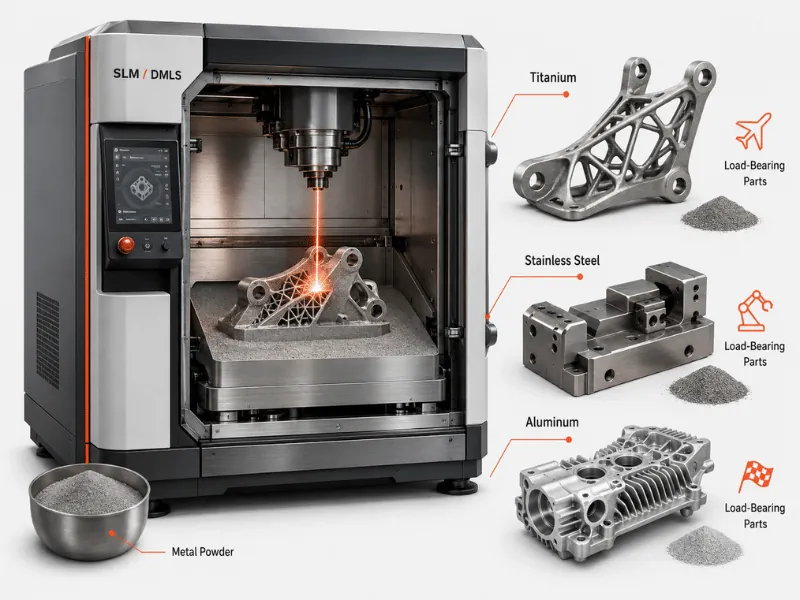
This technology allows hardware teams to create functional, load-bearing parts that rival traditionally machined components in both density and yield strength.
- Common Materials:
- Titanium Alloys: Known for their exceptional strength-to-weight ratio, titanium alloys are incredibly lightweight yet highly durable. They also offer outstanding biocompatibility and corrosion resistance.
- Stainless Steel:This widely used metal provides excellent corrosion resistance, high structural rigidity, and is highly effective for heavy-duty industrial tooling.
- Aluminum:Offering excellent thermal conductivity and a lightweight profile, aluminum is a highly versatile manufacturing metal that is easily post-machined.
- Best Applications:Because of the extreme performance characteristics of these metals, SLM and DMLS are heavily utilized in demanding, high-stakes industries. Typical applications include lightweight aerospace engine components, customized orthopedic medical implant bones, and high-performance racing engine accessories.
PolyJet: Multi-Material & Full-Color Realism
For projects that require hyper-realistic cosmetic prototypes or complex overmolding simulations, PolyJet technology is entirely unique. It jets microscopic droplets of liquid photopolymer resin onto a build platform, immediately curing them with ultraviolet (UV) light.
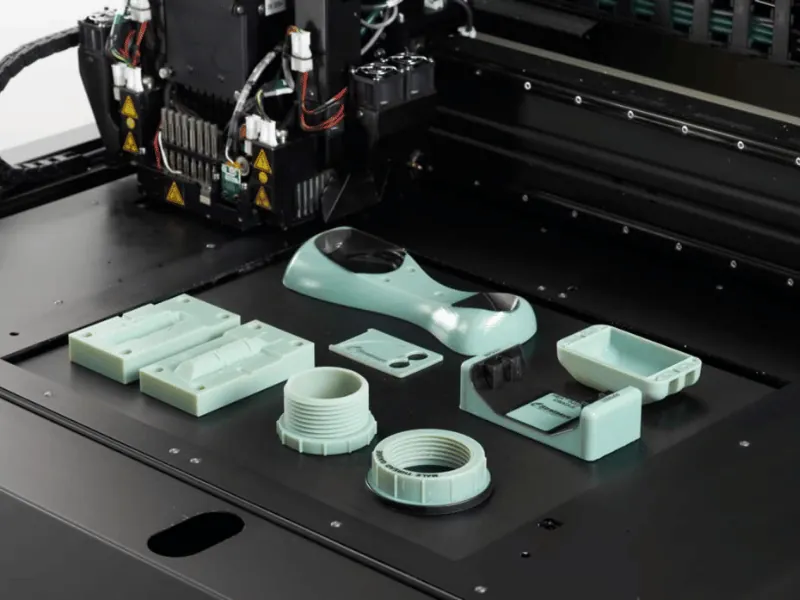
Its most powerful feature for industrial designers is the continuous variability of Shore A hardness. By digitally blending rigid plastics with rubber-like elastomers during the print, PolyJet can produce a single prototype featuring a rigid internal chassis seamlessly transitioning into a soft, tactile rubber grip.
While PolyJet is unmatched for visual realism, it is strictly a prototyping technology with significant functional drawbacks. The process relies on a thick, gel-like support material to sustain overhangs. Removing this material requires aggressive, high-pressure water jet washing, which can damage delicate features. Furthermore, PolyJet resins are highly susceptible to environmental aging and UV degradation; parts will experience dimensional warping, material creep, and severe embrittlement over time if exposed to sunlight or heat.
- Common Materials:
- Rigid Resins:Used for the solid structural body of a prototype, offering firm, stable geometry.
- Rubber-like Elastomers:These materials simulate the flexibility, compression, and grip of real rubber (often categorized by varying Shore A hardness levels).
- Transparent Blends:PolyJet can blend clear materials with various colors to create tinted, translucent parts.
- Best Applications:PolyJet is the go-to technology for creating tools with rubberized ergonomic grips, effectively simulating two-part overmolding processes in a single print. It is also widely used to produce highly realistic medical teaching models of human organs and premium consumer electronics prototypes that require exact cosmetic color-matching and varied tactile textures.
SLS: Tough Nylon Powders for Functional Parts
When discussing 3d printing materials plastic, Selective Laser Sintering (SLS) is widely considered the undisputed king of functional durability. SLS uses a high-powered laser to fuse together microscopic particles of polymer powder—most commonly engineering-grade nylon.
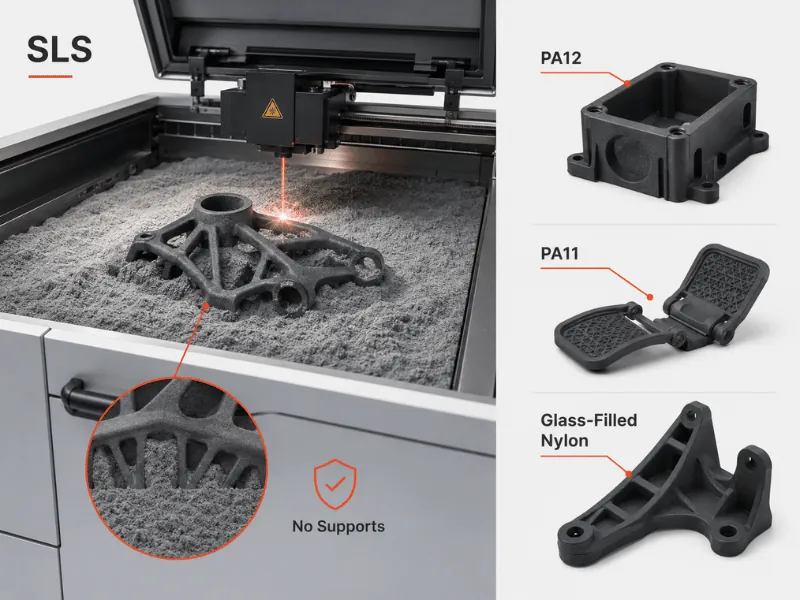
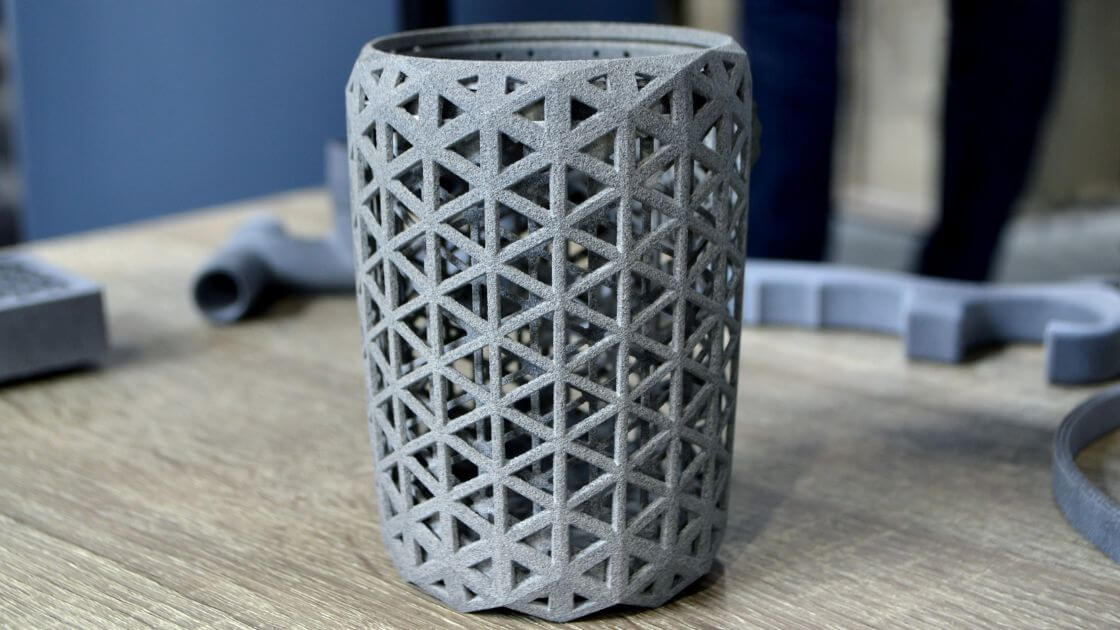
The most significant advantage of SLS is that the bed of unsintered powder surrounding the part acts as a natural support structure. Because it requires absolutely no printed support structures, engineers can design incredibly complex internal geometries, undercuts, and moving assemblies that would be impossible to manufacture with other methods.
- Common Materials:
- Nylon 12 (PA12): A highly versatile, rigid material that offers excellent all-around durability, low moisture absorption, and excellent dimensional stability.
- Nylon 11 (PA11): A more ductile nylon option that provides superior impact resistance, high elongation at break, and excellent flexibility for living hinges.
- Glass-Filled Nylon: A composite material infused with microscopic glass beads to significantly increase the stiffness, rigidity, and thermal resistance of the final part.
- Best Applications:SLS nylon powders are perfect for aggressive functional testing and end-use parts. Typical applications include complex snap-fit joints that must endure real physical stress, lightweight drone housings, and functional, low-volume automotive components that can be installed directly onto a vehicle for road testing.
SLA/DLP: Liquid Resins for Ultimate Precision
If your product development project prioritizes flawless surface finishes and the finest possible micro-details, Stereolithography (SLA) and Digital Light Processing (DLP) are the optimal choices. These technologies operate by exposing a vat of liquid resin to a precise ultraviolet light source, curing the plastic layer by layer.
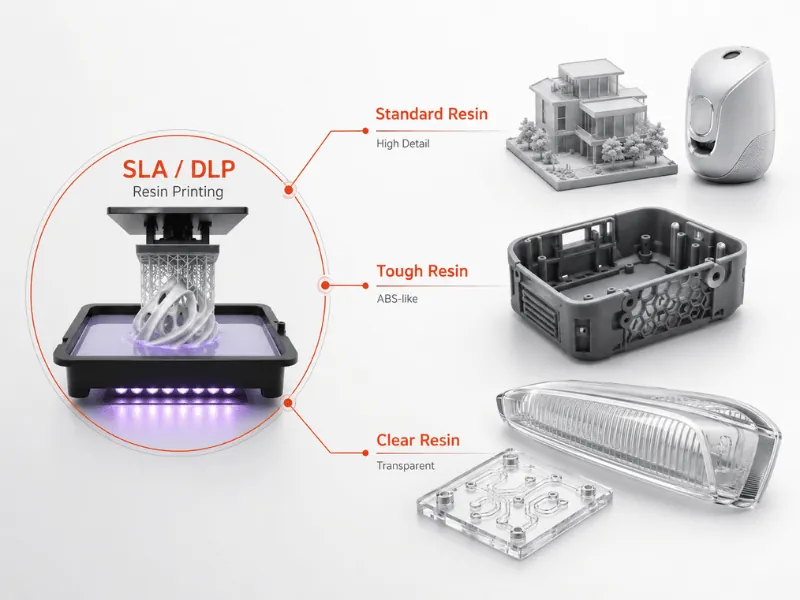
SLA produces the smoothest surface finishes available in the 3D printing industry, making it an excellent substitute for early-stage injection molded visual parts.
- Common Materials: Understanding the common 3d printing materials in this category is crucial for matching your mechanical and visual needs:
- Standard Resins: Ideal for high-detail visual models, concept communication, and aesthetic evaluations.
- Tough Resins:Formulated to simulate the durability, stiffness, and impact resistance of traditional ABS plastics.
- Clear Resins:Transparent materials that look incredibly similar to acrylic or glass after a final post-processing polish.
- Best Applications:SLA is heavily used for producing perfectly smooth display models and highly detailed consumer product mockups. It is also the industry standard for creating castable wax models in jewelry manufacturing, and for validating clear components like microfluidic chips, transparent lenses, or automotive headlight covers.
Quick Guide: Advanced 3D Printing Materials
To help you quickly reference these high-value technologies and make an informed decision for your procurement or engineering design needs, we have summarized the options below.
| Technology | Common Materials | Key Feature | Best Application |
| SLM / DMLS | Titanium, Aluminum, Stainless Steel | Extreme strength and thermal resistance | Aerospace parts, medical implants, racing components |
| PolyJet | Rigid plastics, Rubber-like, Transparent blends | Multi-material mixing and full-color printing | Overmolding simulation, realistic medical models |
| SLS | Nylon PA11, PA12, Glass-filled composites | Functional plastics requiring zero support structures | Snap-fits, drone housings, functional auto parts |
| SLA / DLP | Standard, Tough, and Clear resins | Ultimate precision and smooth surfaces | Display models, clear lenses, jewelry casting molds |
Bring Your High-Value Project to Life with SHBD Metal
Choosing the right material is half the battle in successful product development. Whether your project demands the indestructible nature of titanium aerospace brackets or the hyper-realistic, multi-material flexibility of a PolyJet consumer electronics prototype, finding a reliable manufacturing partner is critical.
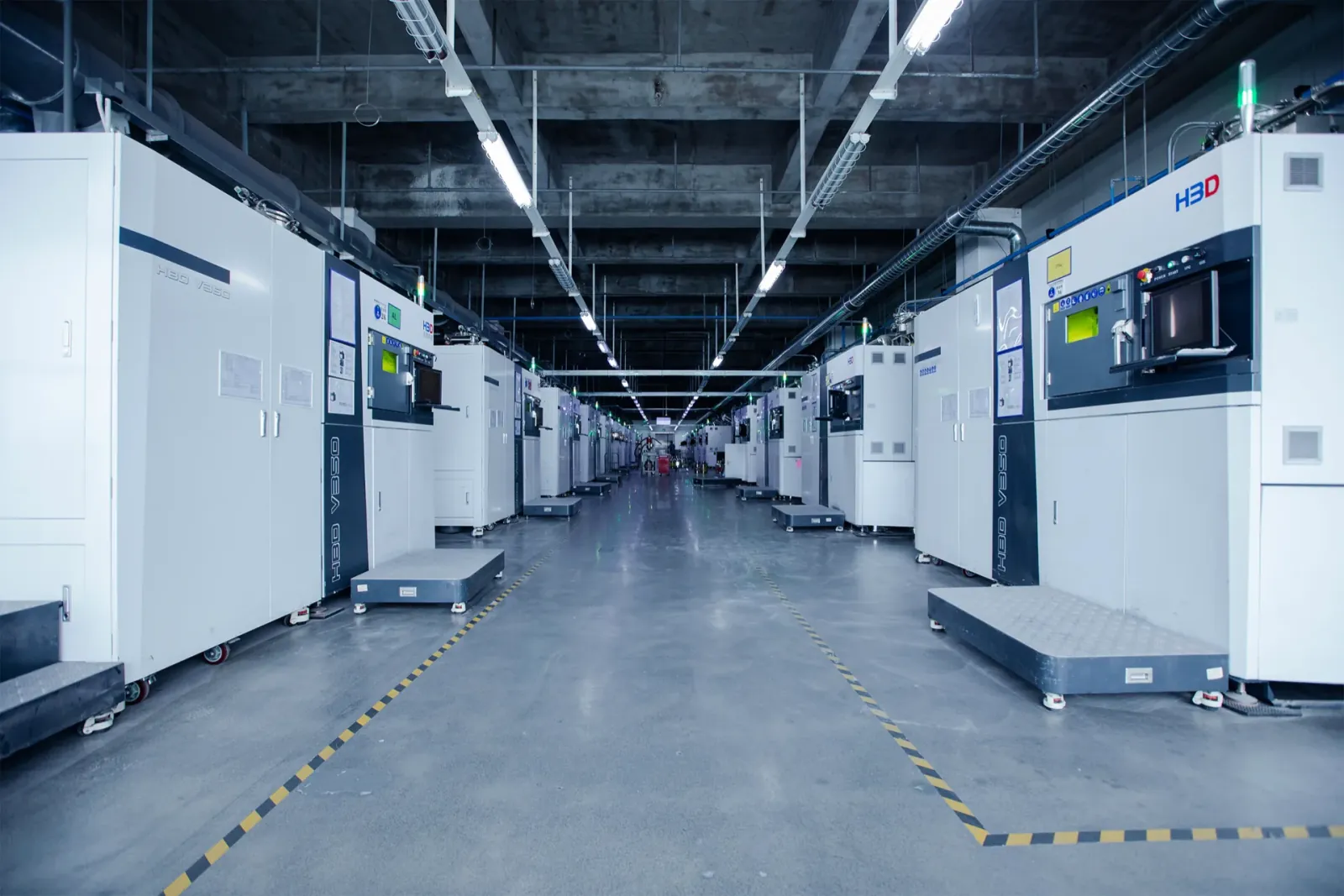
SHBD Metal provides comprehensive, factory-direct 3d printing services to help you navigate these advanced technologies. You can simply upload your 3D CAD files directly to our online platform. Our intelligent quoting system and experienced manufacturing experts will assist you in selecting the optimal material for your specific application and provide a transparent, instant quote. Bring your functional prototypes and low-volume production parts to life with speed, precision, and absolute confidence.
FAQ
If your prototype requires real-world functional testing, such as bearing mechanical loads, surviving impacts, or engaging active snap-fits, SLS nylon is the best choice due to its extreme toughness and durability. If your primary goal is a flawless cosmetic appearance, capturing highly intricate details, or achieving transparency, SLA resins are the superior option.
For rapid prototyping purposes, absolutely. PolyJet’s unique ability to print a rigid plastic core and a rubber-like outer layer simultaneously makes it the perfect technology to simulate a two-part injection overmolding process before investing in expensive steel tooling.
Yes. Components produced via SLM or DMLS using high-quality metal powders achieve material densities of up to 99.9%. This allows them to offer mechanical strength and durability that closely rivals, and sometimes exceeds, traditional CNC machined parts, particularly for complex geometries that cannot be machined conventionally.
Polymer-based liquid resins (SLA) experience minimal thermal expansion, allowing them to hold exceptionally tight tolerances down to 0.1 mm. However, raw engineering thermoplastics like Nylon powders (SLS) shrink slightly (typically 1.5%-2%) as they crystallize during cooling. When sourcing high-precision interlocking parts, you must select a factory-direct partner like SHBD Metal whose automated DFM engine pre-calculates these process-specific shrinkage vectors directly within the slice geometry before production.
Comment
0 comments
Got thoughts or experiences to share? We’d love to hear from you!