
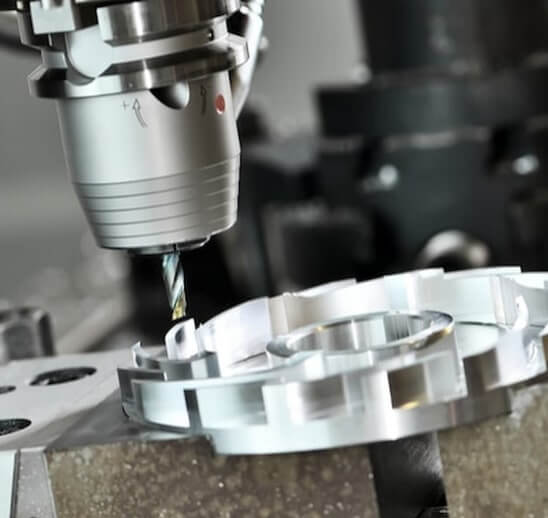
The CNC machining process offers many advantages because it is automated and uses computer-controlled machine tools to fabricate parts from raw materials. The process can produce many different parts with varying levels of complexity. CNC machining is often used in the aerospace, automotive, and medical industries, where specific parts must meet stringent specifications and tolerances in manufacturing processes.
This article explores all you need to know about CNC machining, what it is, how it is done, different types, and the benefits of the process.
What is CNC Machining?
CNC Machining stands for Computer Numerical Control machining. It is a manufacturing process where pre-programmed computer software dictates the movement of factory tools and machinery. The process can be used to control a range of complex machinery, from grinders and lathes to mills and routers. With CNC machining, three-dimensional cutting tasks can be accomplished in a single set of prompts.
Who Invented CNC Machining?
The first CNC machines were developed in the late 1940s and early 1950s by John T. Parsons in collaboration with MIT. Parsons was working on a project for the US Air Force to produce helicopter blades, and his work led to the development of the first numerical control system.
How Does CNC Machining Work?
CNC machining works by using computer instructions to control machine tools. The process begins with creating a 2D or 3D CAD (Computer-Aided Design) model of the desired part. This model is then converted into a CNC program using CAM (Computer-Aided Manufacturing) software, which generates the code that controls the machine.
The Four Stages of CNC Machining
Stage 1 — Creating the CAD Model: The process starts with a digital design created using CAD software. This model defines the exact dimensions and geometry of the final part.
Stage 2 — Converting CAD to CNC File: The CAD model is exported to a CAM program that generates the G-code and M-code instructions the CNC machine can understand.
Stage 3 — Configuring the CNC Machine: The machine operator prepares the machine by mounting the workpiece, selecting the appropriate cutting tools, and loading the CNC program.
Stage 4 — Machining Operation Execution: The CNC machine executes the program automatically, removing material from the workpiece to create the final part shape.
Key Terminologies in CNC Machining
- CAD (Computer-Aided Design): Software used to create digital 3D models of parts.
- CAM (Computer-Aided Manufacturing): Software that converts CAD models into machine-readable code.
- DNC (Distributed Numerical Control): A system for managing multiple CNC machines from a central computer.
- G-code: The programming language that controls CNC machine movements and actions.
- M-code: Auxiliary function codes that control non-cutting operations like coolant flow and spindle start/stop.
Types of CNC Machining Processes
- CNC Milling: Uses rotating cutting tools to remove material from a workpiece. Suitable for complex geometries.
- CNC Turning: The workpiece rotates while a stationary cutting tool removes material. Used for cylindrical parts.
- CNC Drilling: Creates precise holes using rotating drill bits.
- CNC Grinding: Uses an abrasive wheel for high-precision surface finishing.
- CNC Routing: Similar to milling but typically used for softer materials like wood, plastics, and composites.
- EDM (Electric Discharge Machining): Uses electrical sparks to erode material from conductive workpieces.
- Water Jet Cutting: Uses high-pressure water mixed with abrasive particles to cut materials.
- Laser Cutting: Uses a focused laser beam to cut or engrave materials with high precision.
Advantages of CNC Machining
- Production Speed: Automated operation enables rapid production cycles.
- Consistency: Every part is identical, eliminating human error.
- Reduction of Rejections: High precision minimizes material waste.
- Cost Saving: Reduced labor costs and material waste.
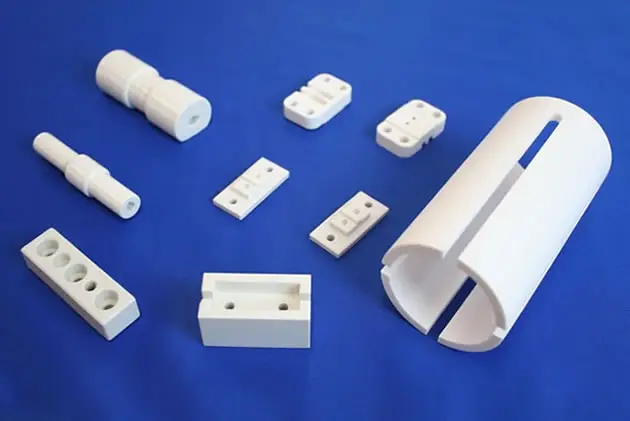
- Material Versatility: Works with metals, plastics, wood, ceramics, and composites.
- Accuracy: Tolerances as tight as ±0.001 inches are achievable.
Materials for CNC Machining
Metals: Aluminum, steel, stainless steel, brass, copper, titanium, and more.
Alloys: Various metal alloys including bronze, Inconel, and Hastelloy.
Plastics: ABS, Nylon, PEEK, Polycarbonate, Acrylic, Delrin, and PTFE.
Other Materials: Wood, foams, ceramics, and composites can also be machined.
Applications of CNC Machining
CNC machining is used across virtually every industry: automotive (engine parts, transmission components), aerospace (turbine blades, structural brackets), medical (surgical instruments, implants), electronics (enclosures, connectors), defense (weapon components, armor), and industrial equipment (gears, valves, pumps).
CNC Machining vs Other Methods
Compared to manual machining, CNC provides superior precision, repeatability, and production speed. Compared to 3D printing, CNC offers better material options, strength, and surface finish, though 3D printing excels at complex internal geometries and rapid prototyping. For mass production, CNC machining is often more cost-effective than manual methods.
Start Your CNC Machining Project Today
SHBD Metal offers comprehensive CNC machining services with state-of-the-art equipment. Contact us or request a quote today.
Comment
0 comments
Got thoughts or experiences to share? We’d love to hear from you!