
Launching a new product on the market gives companies the opportunity to jump ahead of competitors and increase revenue. However, New Product Introduction (NPI) requires meticulous planning and smooth execution in order to succeed.
The NPI process involves several phases, from concept to market launch, each of which must be planned carefully to ensure the product sells.
This article covers the basics of NPI in manufacturing, including product concept ideation, product design, prototyping, development, and launch. It looks at the NPI meaning in engineering, the difference between NPI and NPD, and tips for a successful NPI process no matter your industry.
What Is NPI in Manufacturing
New Product Introduction (NPI) is the end-to-end framework used to bring a new product to market, covering not only development but also manufacturing readiness and launch execution. A well-defined NPI strategy ensures that a promising product idea can transition smoothly into mass production.
Unlike NPD, which focuses primarily on research and development, NPI extends into production planning, supply chain preparation, and commercialization—making it especially critical for manufacturing organizations.
Why NPI Is Essential in Modern Manufacturing
The importance of NPI in manufacturing and engineering cannot be understated. Benefits for product teams include risk reduction, efficient design, supply chain readiness, and understanding of market dynamics.
Reasons to develop a clear NPI strategy include:
- Better understanding of market requirements
- Streamlining of product development
- Lower manufacturing risk
- Better alignment between different departments and suppliers
- Faster time-to-market
- Stronger market position and profitabilityover the long term
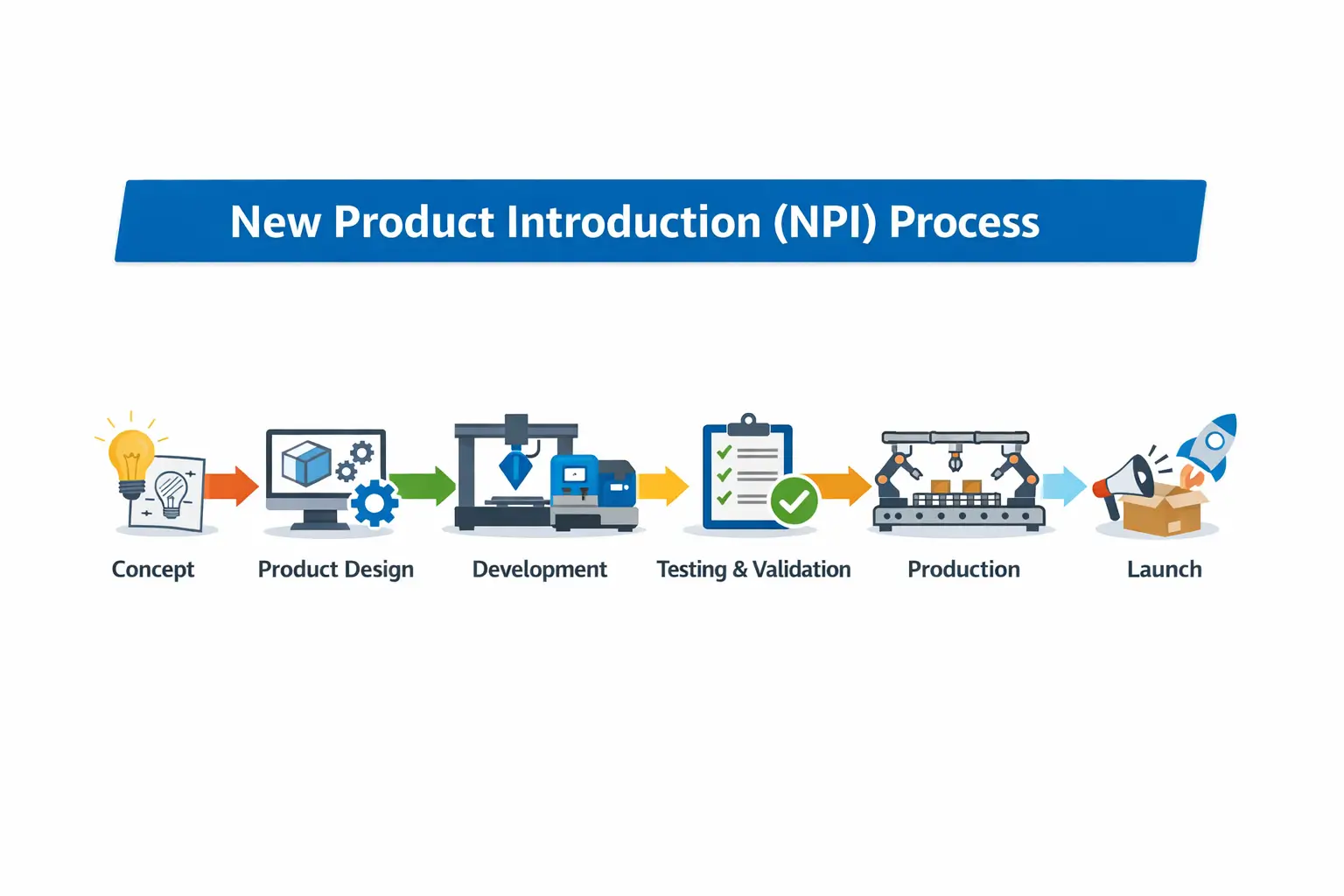
Key Stages of the NPI Process
The New Product Introduction process covers several steps, each critical to the success of a new product. Below we look at the most important New Product Introduction steps in manufacturing.
Concept
Following extensive market research and analysis, product designers use the ideation stage to come up with product concepts. At this stage, the purpose of the new product is defined, and a loose design is provided in the form of drawings, a CAD model, or a simple visual prototype.
Feasibility analysis is conducted to determine whether the new product is viable, practical, and likely to succeed. This involves looking at the product from a technical, economic, and legal standpoint.
Product Design
Once the concept is approved, the design team comes up with manufacturable designs in the form of CAD models, refining the form and function of the product. These designs must follow Design for Manufacturing (DFM) rules, and designers can use digital simulation tools to ensure the product meets performance, cost, and production constraints.
Development
The product moves from the screen to the workshop. During product development, prototypes are built, either by hand or using digital manufacturing technologies like 3D printing. Physical modeling allows engineers to identify any flaws with the design that could not be spotted during digital design.
This stage helps manufacturers refine designs early to improve production efficiency later in the lifecycle.
Testing & Validation
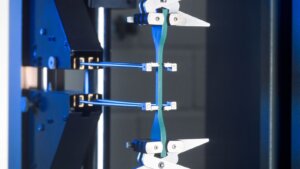
Testing and validation ensure that the product functions as intended and meets all necessary regulatory standards. Robust validation also establishes strong quality control practices before full-scale production begins. Testing can involve functional testing, stress testing, and compliance testing. Three major testing stages are outlined below.
| Meaning | Purpose | State of Product | |
|---|---|---|---|
| EVT | Engineering Validation Testing | Verify basic functionality of prototype, identify any engineering flaws | Functional prototype |
| DVT | Design Validation Testing | Assess factors like durability, reliability, user experience, compliance | Prototype close to production quality |
| PVT | Production Validation Testing | Confirm that product can be mass produced as intended, test supply chain readiness | Final parts and tooling |
Comment
0 comments
Got thoughts or experiences to share? We’d love to hear from you!