
The manufacturing world has been revolutionized by the emergence of rapid prototyping, an umbrella term for technologies and processes used to quickly fabricate physical parts, models, and assemblies using 3D CAD data. This guide provides everything you need to know about rapid prototyping — what it is, why you should use it, the different technologies available, and how to get started.
Part One: Introduction to Rapid Prototyping
What is Rapid Prototyping?
Rapid prototyping is a group of techniques used to quickly fabricate a scale model of a physical part or assembly using three-dimensional computer-aided design (CAD) data. Construction of the part or assembly is usually done using 3D printing or additive manufacturing technology, but it can also be done using CNC machining, injection molding, and other processes.
The key distinguishing feature of rapid prototyping is speed. Traditional prototyping methods can take weeks or months to produce a single prototype. Rapid prototyping can produce a prototype in hours or days, dramatically accelerating the design and development cycle.
Why Should You Use Rapid Prototyping?
- Faster Time to Market: Compress the development cycle and get products to market faster.
- Iterative Design: Test and refine designs quickly through multiple iterations.
- Cost Reduction: Identify design flaws early, before committing to expensive tooling.
- Better Communication: Physical prototypes communicate design intent more effectively than drawings.
- Functional Testing: Test form, fit, and function before full production.
- Customization: Produce custom parts and low-volume runs economically.
Types of Prototypes
Visual Prototypes: Used for aesthetic evaluation and design reviews. They show appearance but may not be functional.
Functional Prototypes: Built to test mechanical properties, moving parts, and performance characteristics.
Pre-Production Prototypes: Made using the same processes and materials as final production, used for pilot runs and process validation.
Part Two: Rapid Prototyping Technologies
3D Printing / Additive Manufacturing
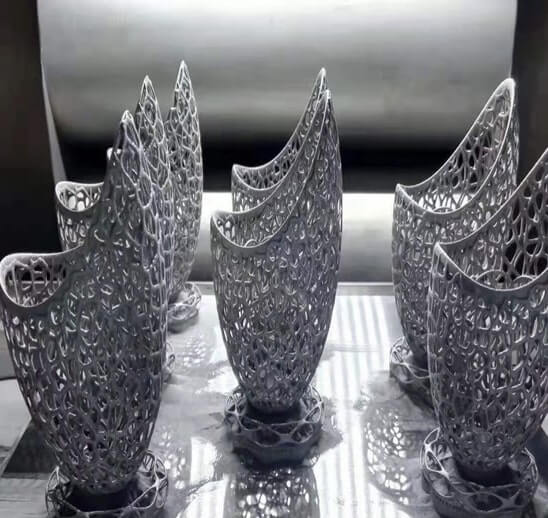
3D printing builds parts layer by layer from a digital model. Common 3D printing technologies for rapid prototyping include:
- SLA (Stereolithography): Uses UV laser to cure liquid resin. Excellent surface finish and detail.
- SLS (Selective Laser Sintering): Uses a laser to fuse nylon powder. Strong, functional parts without support structures.
- FDM (Fused Deposition Modeling): Melts and extrudes thermoplastic filament. Low cost, good for concept models.
- PolyJet / MultiJet: Jets photopolymer resin in ultra-thin layers. Multi-material and full-color capability.
- DLP (Digital Light Processing): Similar to SLA but uses a digital projector for faster curing.
CNC Prototype Machining
CNC machining is a subtractive process that removes material from a solid block using computer-controlled cutting tools. For prototyping, CNC machining offers several advantages: it works with production-grade materials (metals, engineering plastics), provides excellent dimensional accuracy and surface finish, and produces parts with mechanical properties identical to final production parts. CNC is the preferred choice for prototypes that need to withstand functional testing or match production specifications.
Injection Molding for Prototyping
Prototype injection molding uses low-cost aluminum molds to produce small quantities of plastic parts (typically 10-10,000 units). This approach offers parts made from production-grade plastics with good surface finish. It is ideal for bridging the gap between 3D printed prototypes and full production tooling. Aluminum tooling can be produced in 2-4 weeks at a fraction of the cost of steel production molds.
Vacuum Casting
Vacuum casting is a prototyping technique that uses silicone molds to produce small batches of polyurethane parts. A master pattern (usually 3D printed or CNC machined) is suspended in a mold box, and liquid silicone is poured around it. Once cured, the silicone mold is cut open, the pattern removed, and liquid polyurethane resin is poured into the cavity under vacuum. Vacuum casting produces parts with excellent surface finish and material properties similar to production plastics. It's cost-effective for 10-50 parts.
Part Three: Getting Started with Rapid Prototyping
How to Get a Prototype Made
To get a prototype made, you need: a complete 3D CAD model of your design, clear specifications for materials, tolerances, and surface finish, an understanding of which prototyping technology best suits your needs, and a reliable prototyping service partner.
Find a Rapid Prototyping Service
When choosing a rapid prototyping service, consider: the range of technologies offered (one-stop vs specialized), material selection, typical lead times, quality certifications, experience with your industry, and customer reviews and references.
How to Request a Quote
Before requesting a price from a rapid prototyping service, recheck your documentation and 3D models to ensure all part requirements and acceptance criteria are clearly stated. By providing the manufacturing service with as much detail as possible, you limit the chance of receiving an inadequate prototype. Include information about required materials, tolerances, surface finish, quantity, and timeline.
Start Your Rapid Prototyping Project Today
SHBD Metal offers comprehensive rapid prototyping services including CNC machining, 3D printing, injection molding, and vacuum casting. Contact us or request a quote today.

Comment
0 comments
Got thoughts or experiences to share? We’d love to hear from you!