

The mechanical shaft is the backbone of machine design. These simple but essential rotating components are used to transfer power or motion from one place to another, like to a different part of a machine or to another machine altogether.
Found in motors, gearboxes, pumps, and many other machines, shafts are designed to withstand strong twisting forces and high bending loads as they rotate. That means proper shaft design and manufacturing is a top priority for engineers in fields like automotive, industrial manufacturing, and power generation.
This article explains the basics of shaft machining, looking at how processes like CNC turning are used to craft robust shafts for all sorts of applications.
What is a Shaft? Definition and Mechanical Functions
So what is a shaft, exactly? The McGraw-Hill Dictionary of Engineering offers the following “shaft” definition: “A cylindrical piece of metal used to carry rotating machine parts, such as pulleys and gears, to transmit power or motion.”
Merriam-Webster offers a similar definition of “shaft” in mechanical engineering, describing a shaft as “a commonly cylindrical bar used to support rotating pieces or to transmit power or motion by rotation.” Note that this definition of shafts hints at the existence of non-cylindrical shafts, such as square shafts and hex shafts.
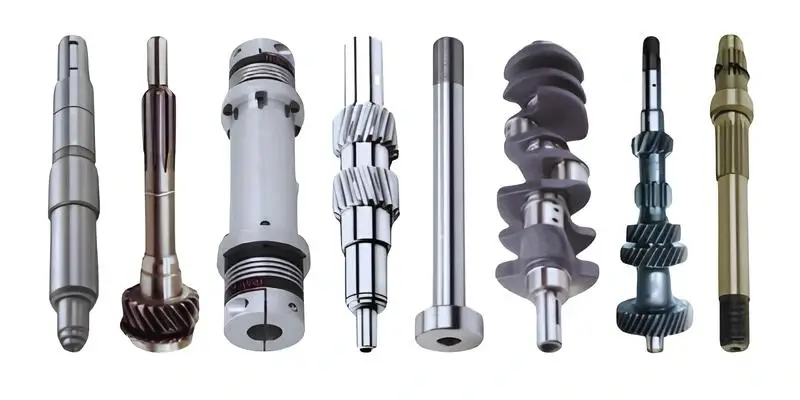
How Does a Shaft Work?
Many industry applications of shafts use these components in different ways. However, shafts broadly work in the same way, transmitting power, torque, and rotational motion from a driving device (like an engine or motor) to another machine component.
The main functions of a shaft are:
- Transmitting power by connecting power sources to components that require power
- Transmitting torque (turning force) from a driving component to a driven component
- Supporting rotating parts, such as gears and bearings, and holding them in place while they rotate
- Withstanding heavy forces like shear stresses, bending, and twisting
Common Types of Industrial Shafts
The different types of shafts can be categorized either by their function or their shape. This guide provides both distinctions, first looking at three important functional shaft types, then the various shaft forms that can be used.
Transmission Shafts
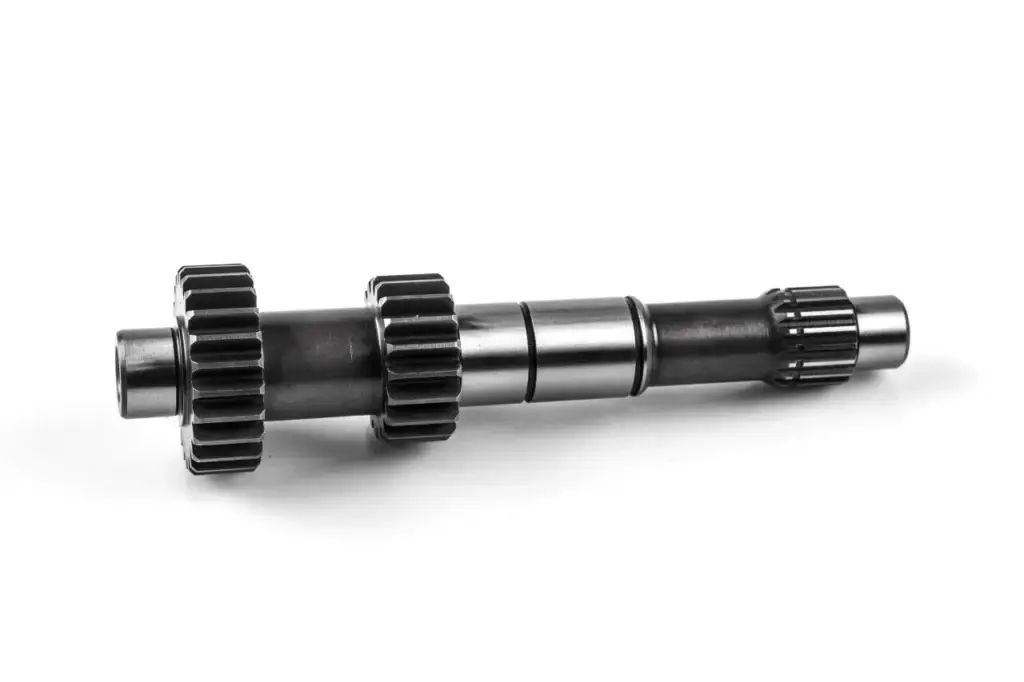
Transmission shafts are one of the main shaft subtypes. These function as a means of transferring power between a power source and a driven machine that is absorbing power.
Examples of transmission shafts include line shafts for distributing centralized power, countershafts that connect driving and driven shafts, and automotive driveshafts that transfer power from the engine to the differential.
Machine Shafts
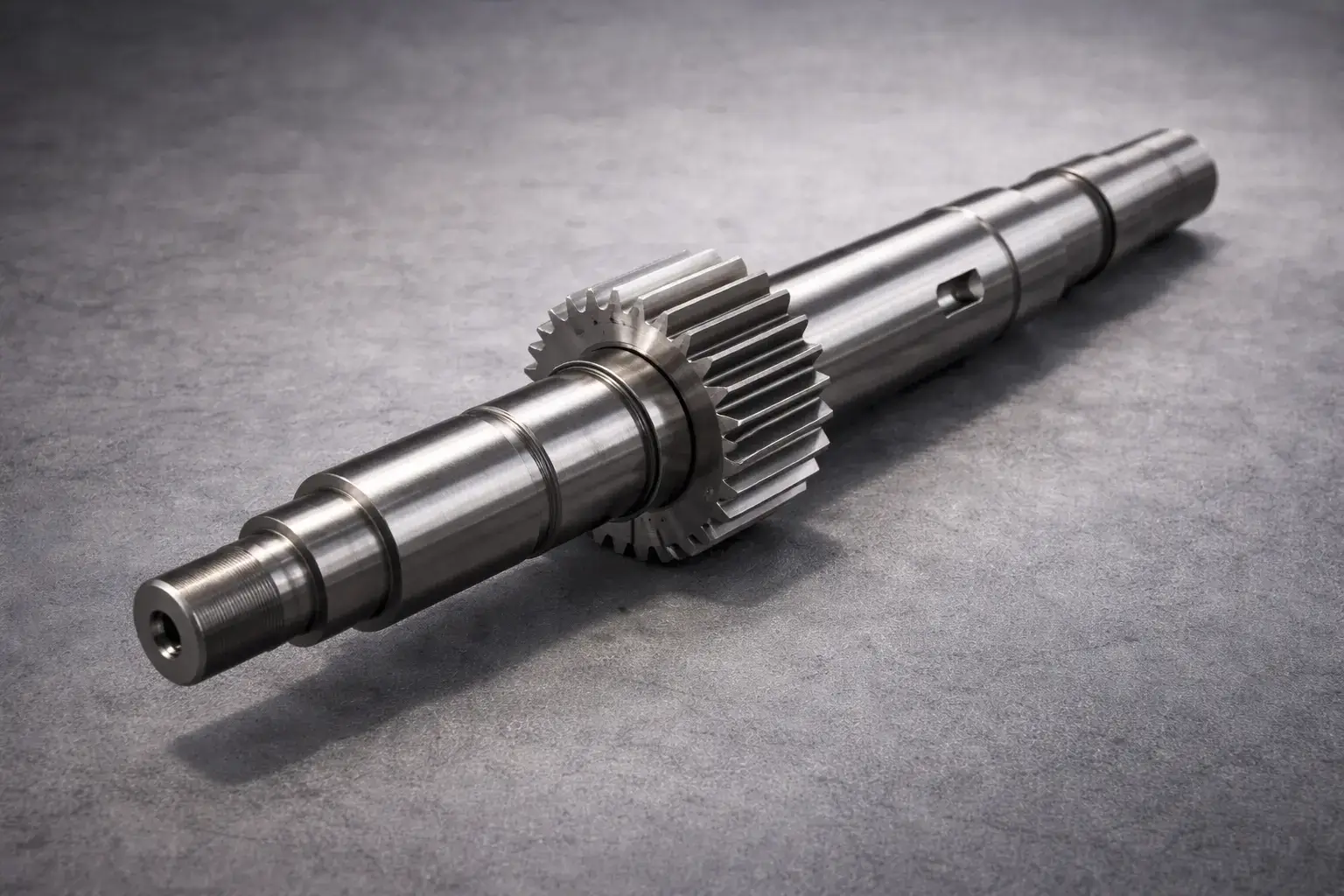
Where transmission shafts connect separate systems, machine shafts are components within a machine that transmit power internally.
Machine shaft examples include crankshafts that convert reciprocating motion into rotational motion and camshafts that control valve motion.
Axle Shafts
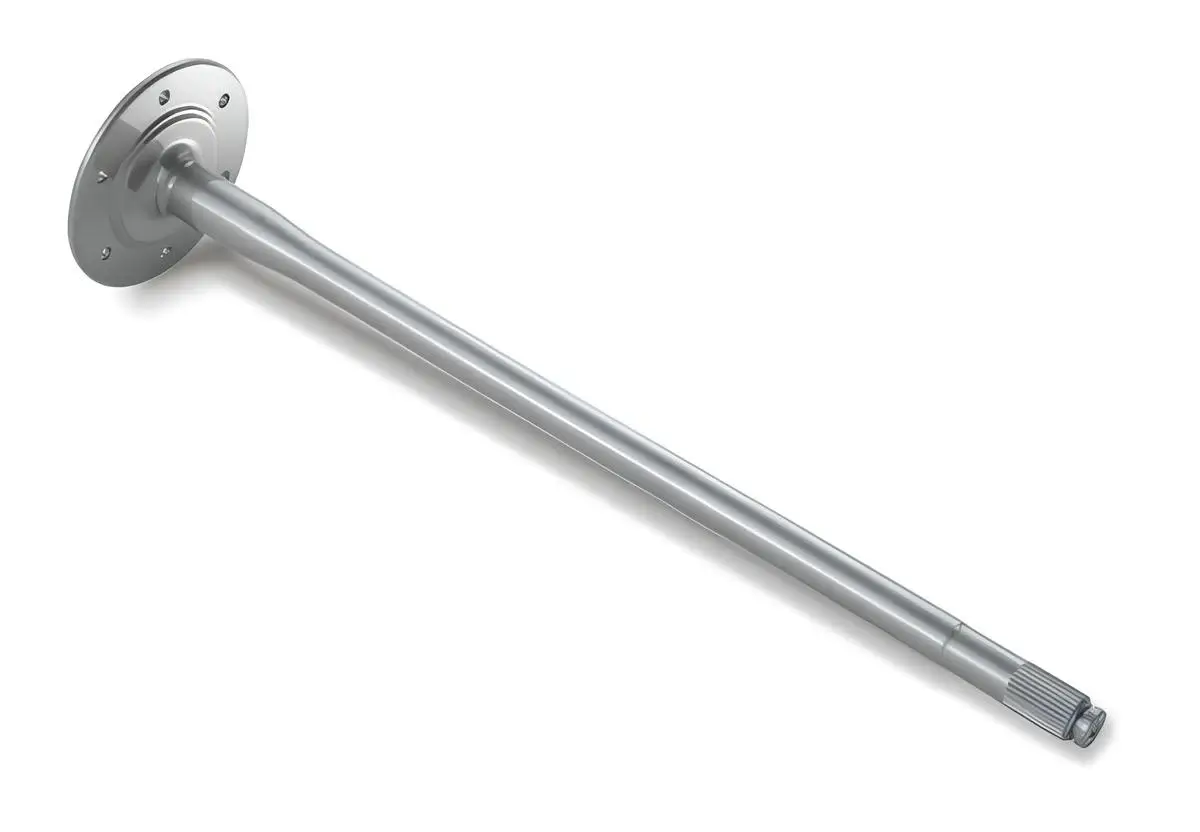
Axles may be considered a separate type of shaft, typically used to drive wheels on automobiles and bear the vehicle’s weight.
On a rear-wheel-drive car, the axle is connected to the differential, which gets its power from the engine via a driveshaft.
Different Shaft Shapes and Forms
The table below differentiates different shaft types by their shape and design, noting the main benefits and purpose of each.
| Shaft Shape | Cross-section | Description |
|---|---|---|
| Round (cylindrical) | ○ | Most common shaft; smooth rotation, easy to machine, fits bearings well. |
| Solid square | □ | Good torque transmission without keyways. |
| Hex shaft | ⬡ | Good torque transmission, easy tool engagement. |
| Keyed shaft | ⚆ | Transmits torque to hubs and gears using a machined keyway and key. |
| Splined shaft | ⚙ | Longitudinal grooves for high torque capacity. |
| D-shaft (flat) | ◖ | Prevents slip in simple hubs. |
| Stepped shaft | ◎ | Provides locating surfaces for bearings and gears; varying diameters along its length. |
| Tapered shaft | ◎ | Diameter gradually decreases toward one end; strong locking for hubs. |
| Eccentric shaft | ❍ | Cylinder with protruding egg-shaped “lobes” for actuation of engine valves. |
| Hollow shaft | ⊙ | Similar to round shaft but with lower mass. |


Comment
0 comments
Got thoughts or experiences to share? We’d love to hear from you!