
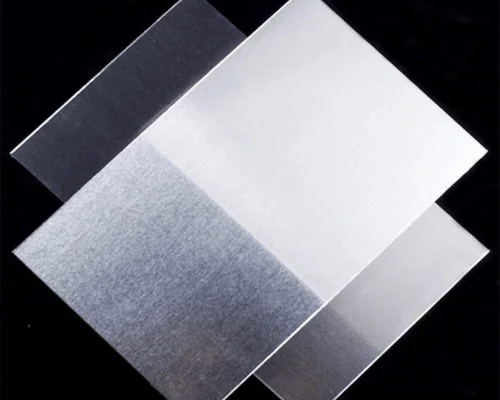
Plain mirror
Polished aluminum with the highest reflectivity in the range, for interior and lighting work.
Lighting reflectors, interior panelsRaw Materials · Aluminum Products
A mirror sheet is a polished surface on a metal substrate, and its value is reflectivity plus flatness. A sheet that reflects well but is not flat shows every distortion, which is why the two are specified together.
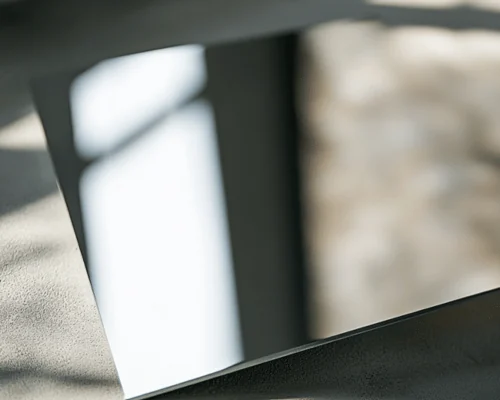
Four routes cover most of what we quote. Each is a different mill or process route, so the size window and the lead time differ even where the grade looks similar.
Polished aluminum with the highest reflectivity in the range, for interior and lighting work.
Lighting reflectors, interior panels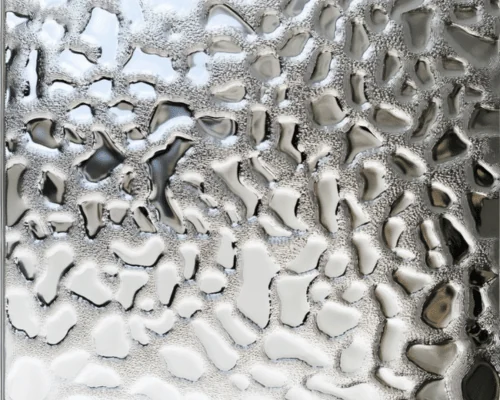
A harder surface over the polish, for panels that are handled or cleaned regularly.
Appliances, display, cabinetry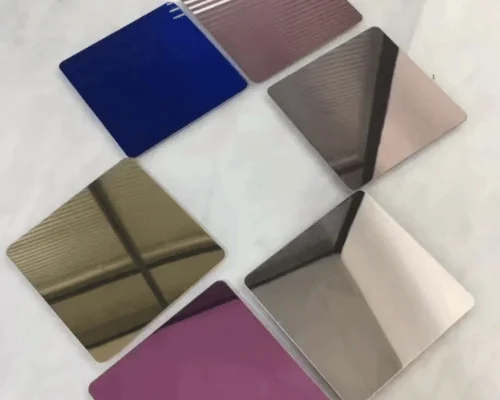
A textured reflective surface that hides handling marks and reads as a pattern rather than a perfect image.
Decorative panels, ceilings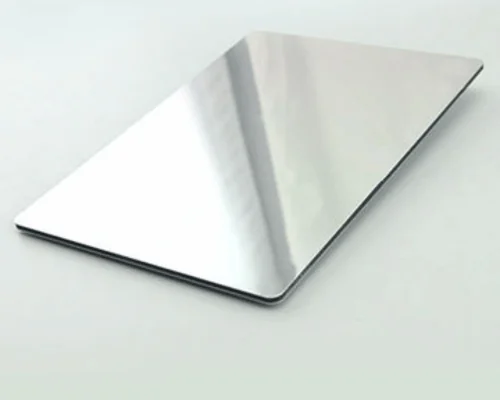
Gold, bronze and coated finishes on the same substrate, for decorative work where a silver mirror would be wrong.
Feature walls, signage, interiorsMirror sheet is quoted by alloy, thickness and finish. Where the panel is visible, a sample is the only honest way to approve the surface.
Swipe the table sideways for the notes →
| Parameter | Range | What decides it |
|---|---|---|
| Thickness | 0.3 – 3.0 mm | Thin mirror sheet needs a flat substrate behind it; thicker sheet holds its own flatness. |
| Alloys | 1050, 1060, 3003, 5052, 3105 | 1050 and 1060 polish to the brightest finish; 3003 and 5052 hold up better outdoors. |
| Finish | Mirror polished, anodized mirror, embossed, colour coated | Anodized mirror keeps its reflectivity with a harder surface. |
| Sheet size | 1000×2000, 1220×2440 mm, cut to size | Cut size follows the panel module, with the grain direction allowed for. |
| Reflectivity | Quoted per batch against a sample | Reflectivity is a measured value, and it is approved on a sample rather than a photo. |
| Protection | PVC film, interleaving paper | Film protects during fabrication; paper suits sheets that are cut immediately. |
Mirror sheet is bought for four reasons, and the fourth is what usually decides the specification.
High reflectance matters in lighting and solar work, where the sheet is part of the optical system rather than decoration.
A visible mirror panel shows distortion before it shows a scratch, so flatness is inspected as part of the finish.
Aluminum mirror does not shatter, weighs less than glass, and can be cut and drilled on site.
Gold, bronze and coated finishes extend the same substrate into decorative work where a silver mirror would be wrong.
Mirror sheet orders are decided by alloy, thickness and finish, with flatness and protection agreed at the same time.
1050 and 1060 for the brightest interior finish, 3003 and 5052 where moisture or exterior exposure is involved.
Thin sheet needs a flat backing; thick sheet can be self-supporting. That decision changes the specification.
Plain, anodized, embossed or coated, with film or interleaving so the surface arrives intact.
Both are judged against a physical sample, since neither photographs reliably.
Mirror sheet is used wherever a reflective surface has to be lighter, safer or more formable than glass.
Mirror panels that make a space feel larger, in a material that can be cut and fixed like sheet metal.
Reflector stock where reflectivity and flatness decide the efficiency of the fitting.
Display backs and feature walls in plain, gold or bronze finishes.
Decorative panels where a glass mirror would be too heavy or too fragile.
Need mirror sheet quoted by alloy, thickness and finish? Send the specification, quantity and any certification requirement and we will come back with what we can supply.
Get Instant Quote