
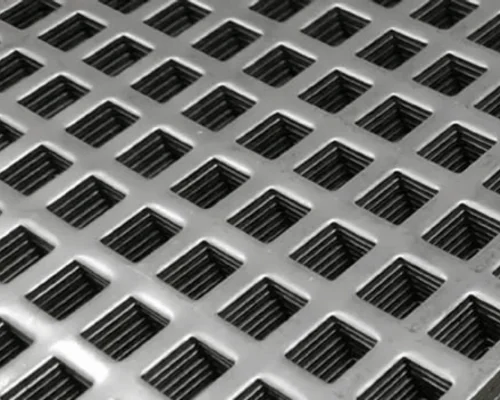
Round hole
The general-purpose pattern: even airflow, predictable open area and the cheapest tooling per square metre.
Ventilation, filtration, guardsRaw Materials · Aluminum Products
A perforated sheet is defined by three numbers: hole size, pitch and thickness. Together they set the open area, the strength left in the sheet, and whether it can be rolled or bent without distorting the pattern.
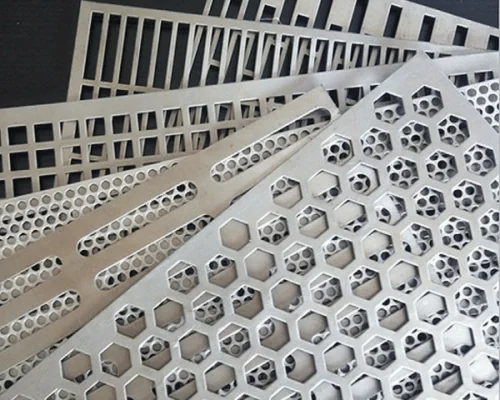
Four routes cover most of what we quote. Each is a different mill or process route, so the size window and the lead time differ even where the grade looks similar.
The general-purpose pattern: even airflow, predictable open area and the cheapest tooling per square metre.
Ventilation, filtration, guards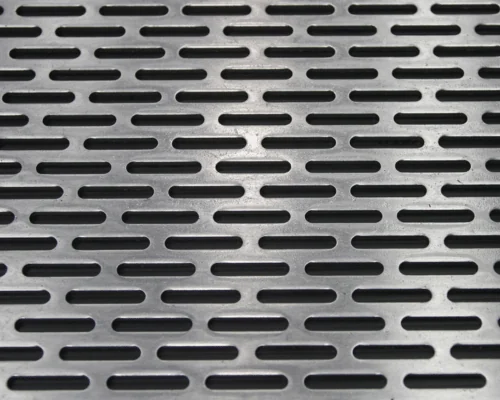
A more architectural pattern with a higher open area at the same pitch, and a directional look.
Facades, screens, diffusers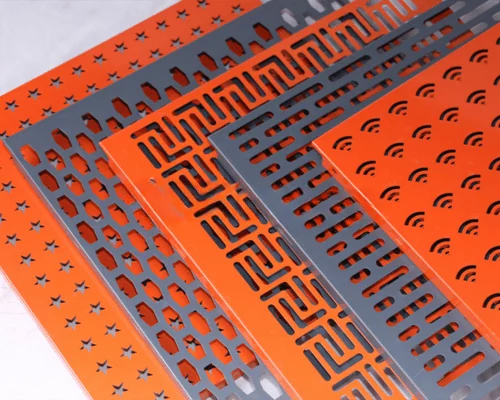
Elongated holes that stiffen the sheet along one axis and give a directional visual line.
Acoustic panels, sunshades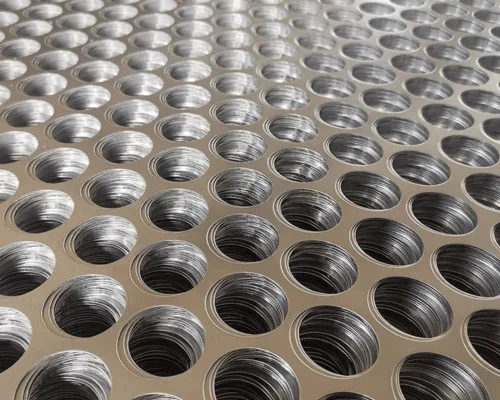
Custom and decorative layouts where the pattern is the design, punched to the drawing rather than chosen from a catalogue.
Feature walls, retail, signagePerforated sheet is quoted by hole size, pitch, thickness and sheet size. The open area follows from the first two, and it is the number to compare across quotes.
Swipe the table sideways for the notes →
| Parameter | Range | What decides it |
|---|---|---|
| Thickness | 0.3 – 6.0 mm | Thin sheet is punched on a turret; thick sheet needs a different tool and a larger margin. |
| Hole size | 1 – 50 mm | Hole size against thickness sets the punch life and the burr on the underside. |
| Pitch | 5 – 50 mm | Pitch with hole size sets the open area, from about 20% to over 60%. |
| Sheet size | 1000×2000, 1220×2440, 1500×3000 mm, cut to size | Edge margins are part of the pattern; a cut panel needs them allowed for. |
| Hole patterns | Round, square, slot, decorative | Slot and square patterns are directional and stiffen the sheet along one axis. |
| Alloys | 1100, 3003, 5052, 6061 | 3003 for general work, 5052 for marine and exterior, 6061 where strength is needed. |
Four properties decide whether a perforated panel is right for an application, and the third one is usually overlooked.
Perforating removes material, so the panel gets lighter and less stiff at the same time. Both are predicted from the open area, not measured after the fact.
Open area drives airflow and visibility; a screen that looks right can still strangle a fan if the pitch is too fine.
Every hole is an edge, and edges are where corrosion starts. Anodizing or coating after perforating covers them; coating before perforating does not.
A perforated sheet bends differently from a solid one, and the bend line relative to the hole rows decides whether the pattern distorts.
Perforated sheet enquiries are answered by three numbers plus the application. We confirm them before quoting.
These three set the open area and the strength left in the sheet. Everything else follows.
Airflow, screening, filtration or decoration. The same visual pattern performs differently across those jobs.
The margin is part of the pattern, so the cut size and the hole layout are agreed together.
Anodizing or powder coating applied to the perforated sheet covers the hole edges, which is where corrosion starts.
Perforated sheet works where a surface has to let something through and still be a surface.
Sunshades and privacy screens where the pattern is the design and the open area controls the shade.
Diffusers, grilles and machine covers where airflow and noise reduction are set by the open area.
Coarse screens and guards where hole size defines what passes and what does not.
Guards that let an operator see the process while keeping hands out, in a documented open area.
Need a perforated pattern priced by hole, pitch and thickness? Send the specification, quantity and any certification requirement and we will come back with what we can supply.
Get Instant Quote