
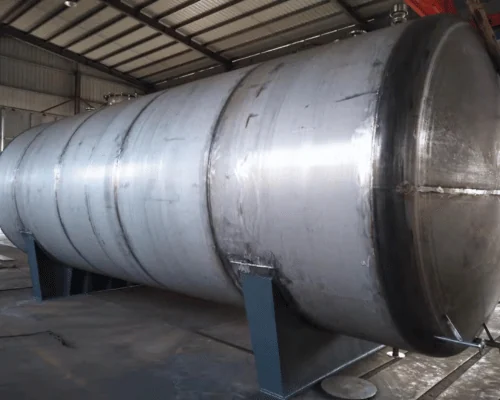
Grade A
The lowest strength grade in the family, for large low-pressure vessels where the wall is set by geometry rather than by stress.
Storage tanks, large vesselsRaw Materials · Carbon Steel Products
A285 is the low-strength end of the pressure vessel plate family: three grades, modest tensile, and good weldability. It is the right plate where the design pressure is low and the vessel is large, and the wrong plate where the calculation needs more strength.
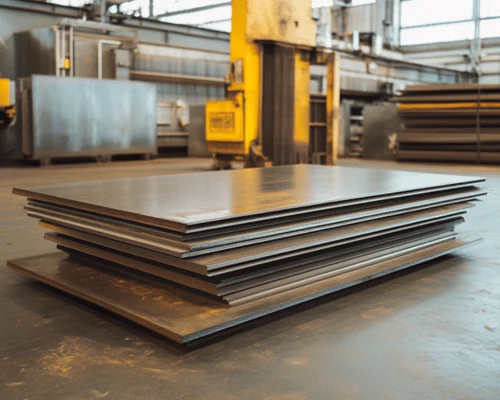
Four routes cover most of what we quote. Each is a different mill or process route, so the size window and the lead time differ even where the grade looks similar.
The lowest strength grade in the family, for large low-pressure vessels where the wall is set by geometry rather than by stress.
Storage tanks, large vessels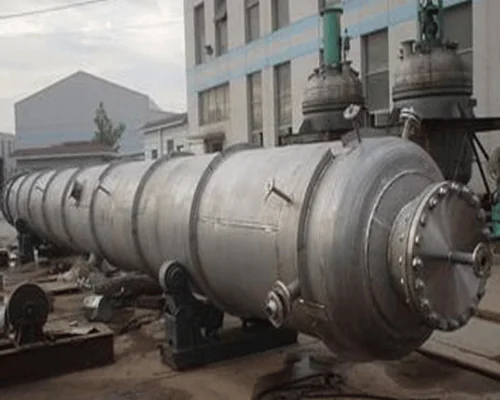
The middle grade, covering most A285 work where a modest step in yield allows a thinner wall.
Tanks, heat exchangers, boilers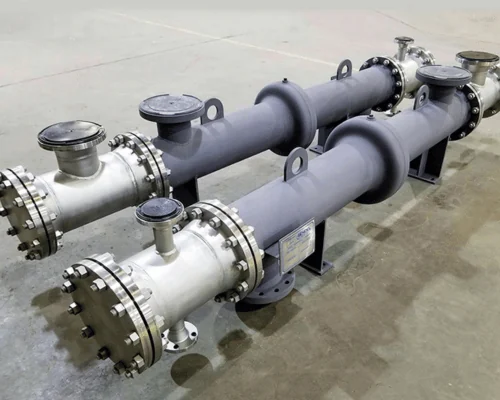
The highest strength in the family, for vessels that are close to the limit of what A285 can carry.
Pressure vessels, gas cylinders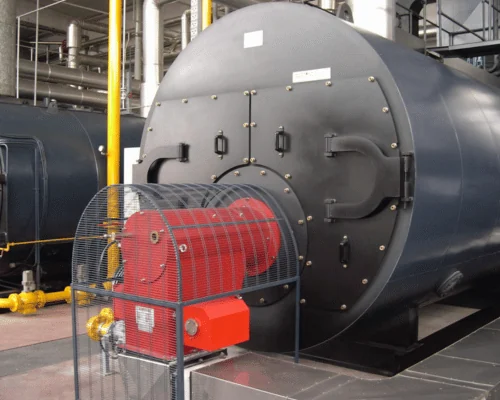
Shell and head blanks nested to the drawing, so the seam count and the inspection cost come down with the offcut.
Shell courses, heads, bafflesA285 is quoted by grade, thickness and condition. The grade sets the allowable stress; the thickness sets the impact and welding requirements.
Swipe the table sideways for the notes →
| Parameter | Range | What decides it |
|---|---|---|
| Grades | A, B, C | The grade steps the minimum yield from roughly 24 to 30 ksi. |
| Tensile strength | 45 – 75 ksi depending on grade | Grade A is the lowest, Grade C the highest within the family. |
| Thickness | 1.2 – 60 mm | Thin plate for small vessels and baffles, thicker plate for shells. |
| Length | 500 – 4500 mm, or cut to size | Cut size follows the shell development and reduces offcut. |
| Surface | Mill, varnished, pre-painted, checkered | Surface treatment is chosen for the environment and the finish coat. |
| Condition | As-rolled, normalized on request | Normalizing is specified when the design temperature or thickness requires it. |
A285 is chosen for four reasons, and the fourth is why it stays in the catalogue.
Where the design pressure is modest and the diameter is large, A285 gives the wall without paying for strength that is not needed.
Low carbon and manganese keep the welding procedure simple, which matters on a vessel with many seams.
The same grade is available from thin plate to heavy shell plate, so a vessel does not need three different materials.
A285 is cheaper than A516 at equivalent thickness, and on a large tank the difference is significant.
A285 orders are decided by grade and thickness. We confirm the design temperature as well, because it decides whether as-rolled plate is acceptable.
Grade A, B or C, as required by the allowable stress in the design.
It decides whether as-rolled plate is acceptable or normalizing and impact testing are needed.
Shell development and head blanks nested on the plate to keep the seam count down.
Mill finish, varnished or pre-painted, with the certificate traceable to the heat.
A285 plate is used for the vessels where strength is not the constraint but pressure tightness and weldability are.
Crude, water and chemical tanks where the grade is set by a low design pressure and a large diameter.
Shells and baffles where the plate is thin and the seam count matters more than the strength.
Lower-pressure boiler plate, where A285's weldability keeps the fabrication straightforward.
Cylinders for welding gases, cooking gas and diving air, where the standard and the test regime are specified.
Need A285 plate priced by grade and thickness? Send the specification, quantity and any certification requirement and we will come back with what we can supply.
Get Instant Quote