
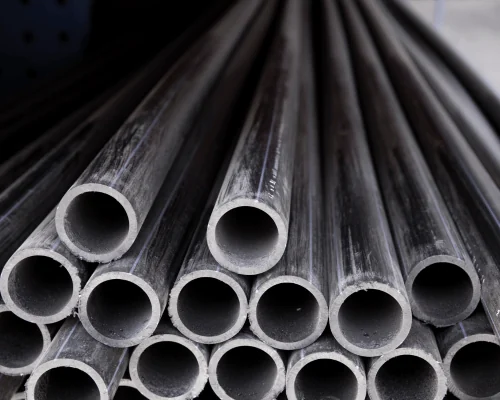
Seamless pipe
The route for pressure, small bore and heavy wall, where a longitudinal weld would be the weakest point in the line.
High-pressure process, boiler, small boreRaw Materials · Carbon Steel Products
Carbon steel pipe is specified by standard, grade and manufacturing route, and the route is not cosmetic: a seamless pipe and an ERW pipe of the same size and grade are not interchangeable in pressure service. The standard decides the test regime that proves it.
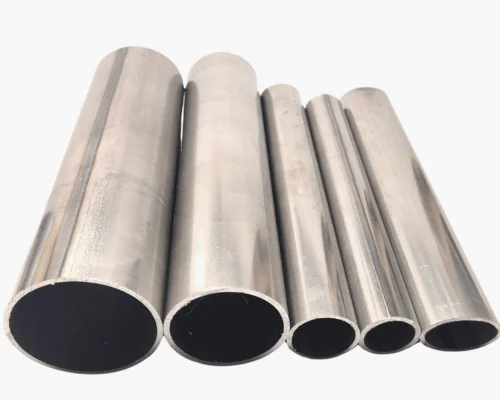
Four routes cover most of what we quote. Each is a different mill or process route, so the size window and the lead time differ even where the grade looks similar.
The route for pressure, small bore and heavy wall, where a longitudinal weld would be the weakest point in the line.
High-pressure process, boiler, small bore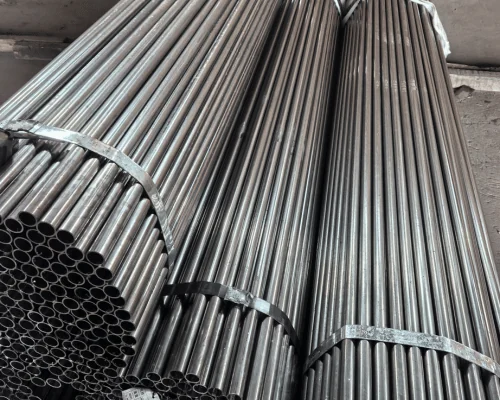
Electric-resistance welded pipe for the sizes and pressures where a weld seam is acceptable and the cost difference matters.
Water, air, structural, general service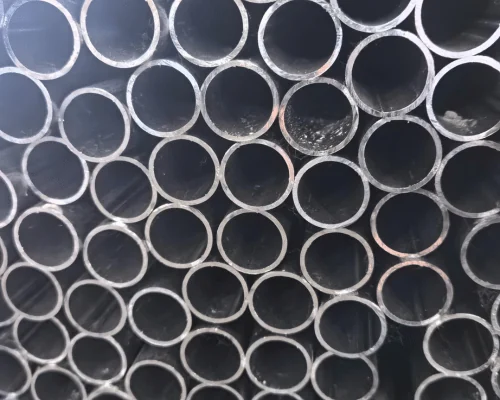
Large-diameter line pipe formed from plate and welded along a seam, for transmission mains and piling.
Water mains, piling, large-diameter lines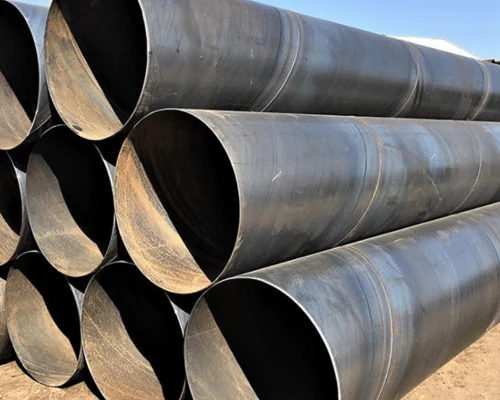
FBE, 3PE, galvanized or cement lined, applied before dispatch so protection is not a separate purchase on site.
Buried lines, marine, abrasive slurryCarbon pipe is quoted by standard, grade, size and route. Two pipes of the same diameter and wall can differ by a factor in price depending on whether they are seamless or welded.
Swipe the table sideways for the notes →
| Parameter | Range | What decides it |
|---|---|---|
| Standards | ASTM A53, A106, A252, A500, A672, API 5L | The standard sets the chemistry, the test and the tolerance table used. |
| Grades | A53 A/B, A106 A/B/C, A252, A500, API 5L B/X42/X52/X60 | Grade follows the pressure and the temperature, not the availability. |
| Route | Seamless, ERW, LSAW, spiral welded | Seamless for high pressure and small bore; welded for large diameter and length. |
| Size | From 1/8" to 48" depending on route | Large diameters are welded; small heavy-wall sizes are seamless. |
| Ends | Beveled, plain, threaded, grooved | The end preparation follows the joining method on site. |
| Coating | Bare, varnished, FBE, 3PE, galvanized, cement lined | Coating is chosen for the soil, the fluid or the atmosphere, and adds lead time. |
Four properties decide which carbon pipe is right, and the fourth is where most projects lose money.
Carbon steel carries high pressure in a modest wall, which is why it dominates process and line pipe work.
From low-temperature grades to boiler and superheater service, the grade and the heat treatment decide the limit.
A beveled end and a matching filler metal decide whether the joint passes inspection the first time.
Carbon steel corrodes; the coating, lining or cathodic protection is part of the material selection, not an accessory.
Pipe enquiries are answered by standard, grade, route and end preparation. We confirm the four before quoting, because each changes both price and lead time.
A53, A106, A672 and API 5L are not interchangeable: they differ in chemistry, test and application.
Seamless, ERW, LSAW or spiral. The route follows the pressure, the diameter and the standard.
Beveled for welding, threaded for screwed joints, grooved for mechanical couplings.
FBE, 3PE, galvanizing or paint, with the mill certificate and the test report traceable to the heat.
Carbon pipe carries water, gas, steam and process fluids, and it also carries structure.
Line pipe and process pipe in API 5L and A106 grades, where pressure and weld quality decide the specification.
Large-diameter welded pipe with internal lining, where flow capacity and service life drive the choice.
A106 and A672 pipe for steam and hot-water service, where temperature sets the grade.
A252 and A500 pipe used as piles, columns and frames, where the pipe is a structural section rather than a pressure vessel.
Need carbon pipe priced by standard, grade and route? Send the specification, quantity and any certification requirement and we will come back with what we can supply.
Get Instant Quote