

Experiencing premature tool wear, poor surface finishes, or a shop floor smelling of rancid fluid usually points directly to an unoptimized machining coolant strategy. Ignoring these fluid dynamics not only destroys expensive tooling but drastically increases your total cost of operations through unplanned downtime and hazardous waste disposal. We have analyzed thousands of precision manufacturing projects to identify the exact fluid mechanics and maintenance protocols that drive peak CNC efficiency. For engineers and procurement managers looking to extend tool life and stabilize their production environment, this breakdown provides the exact specifications you need.
CNC Machine Coolant Selection by Material and Process
| Material / Process | Recommended Coolant Type | Target Concentration | Primary Benefit |
| Aluminum (High Speed) | Synthetic / Semi-Synthetic | 8% – 10% | Maximum cooling, clean surface finish |
| Carbon/Stainless Steel | Semi-Synthetic / Soluble | 10% – 12% | Balanced lubrication and cooling |
| Titanium / Inconel | Straight Oil | 100% (Do not dilute) | Extreme pressure lubrication |
| Plastics | Air Only (No Fluid) | N/A | Prevents thermal shock and material stress |
The 4 Primary Types of CNC Machine Coolant
Choosing the right cnc machine coolant dictates your material removal rates and tooling budget. Every fluid is a compromise between cooling capacity and lubricity.
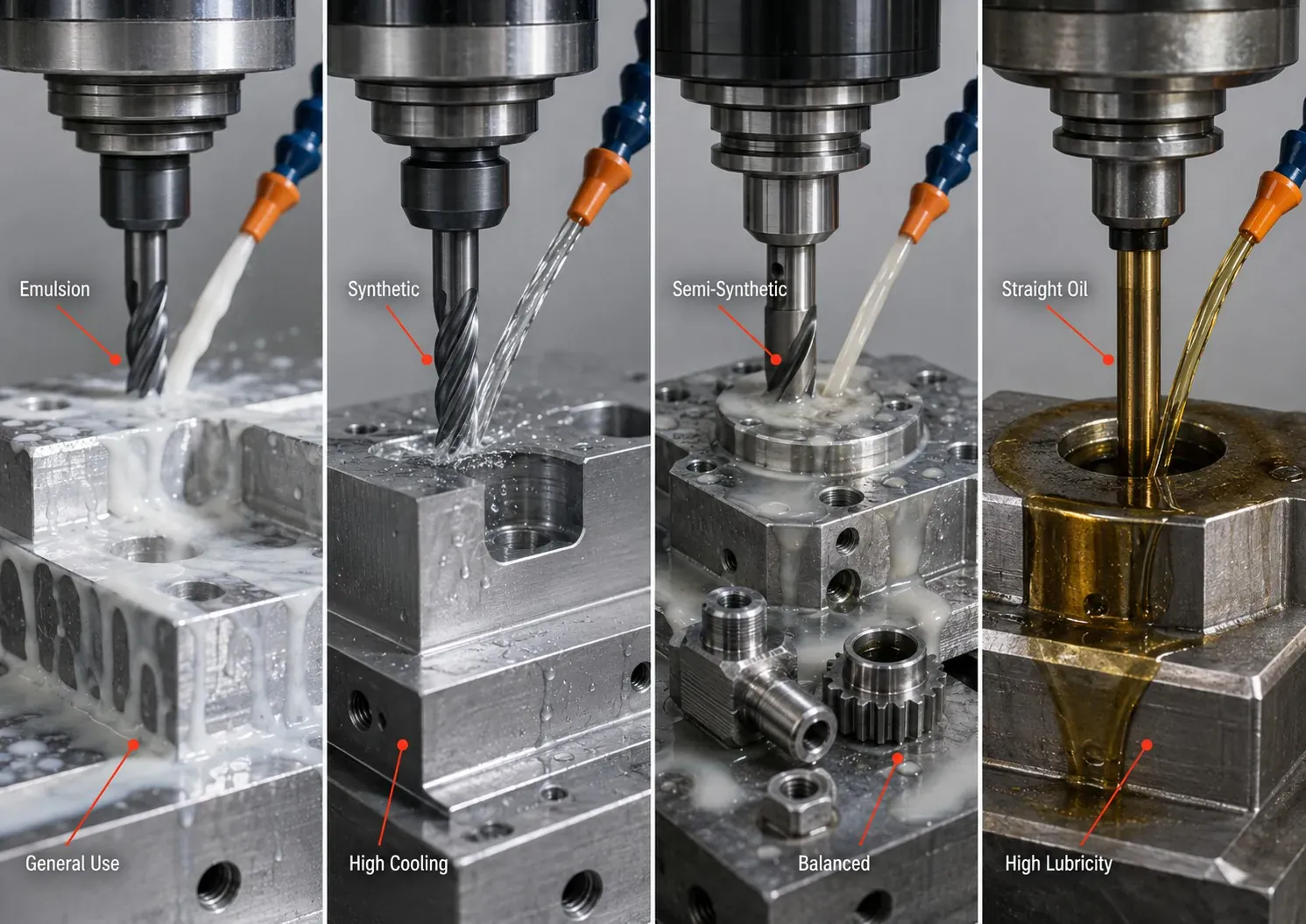
1. Water-Soluble (Emulsion)
Water-soluble fluids are a mixture of water and emulsified mineral oil. They offer excellent cooling capabilities and moderate cost. This makes them highly versatile for standard milling and turning operations on aluminum and carbon steel. Their main drawback is biological instability. If not maintained, they easily breed bacteria and fungus, leading to a rancid odor.
2. Synthetic
Synthetic coolants contain pure water-based formulas with zero mineral oil, relying entirely on chemical additives for lubrication. They deliver the absolute highest cooling capacity and keep the machine tool impeccably clean. They resist bacterial growth exceptionally well. Their primary weakness is poor lubricity during heavy-load operations, which causes rapid tool wear on hard steels.
3. Semi-Synthetic
Semi-synthetics blend a smaller amount of mineral oil with chemical synthetic additives. This creates a highly balanced machine coolant. They provide better cooling than soluble oils and better lubrication than pure synthetics. This versatility makes them the standard choice for mixed-production CNC shops handling everything from hardware to medical components.
4. Straight Oil
Straight oils consist of 100% mineral or plant oil mixed with extreme pressure additives like sulfur or chlorine. You never dilute them with water. They offer the absolute best lubrication for maximizing tool life and achieving mirror-like surface finishes. Because their cooling capacity is terrible, they are strictly reserved for low-speed, high-friction operations like deep-hole drilling or machining titanium.
CNC Machining Coolant Delivery Systems
Getting the fluid to the cutting edge is just as critical as the fluid chemistry.
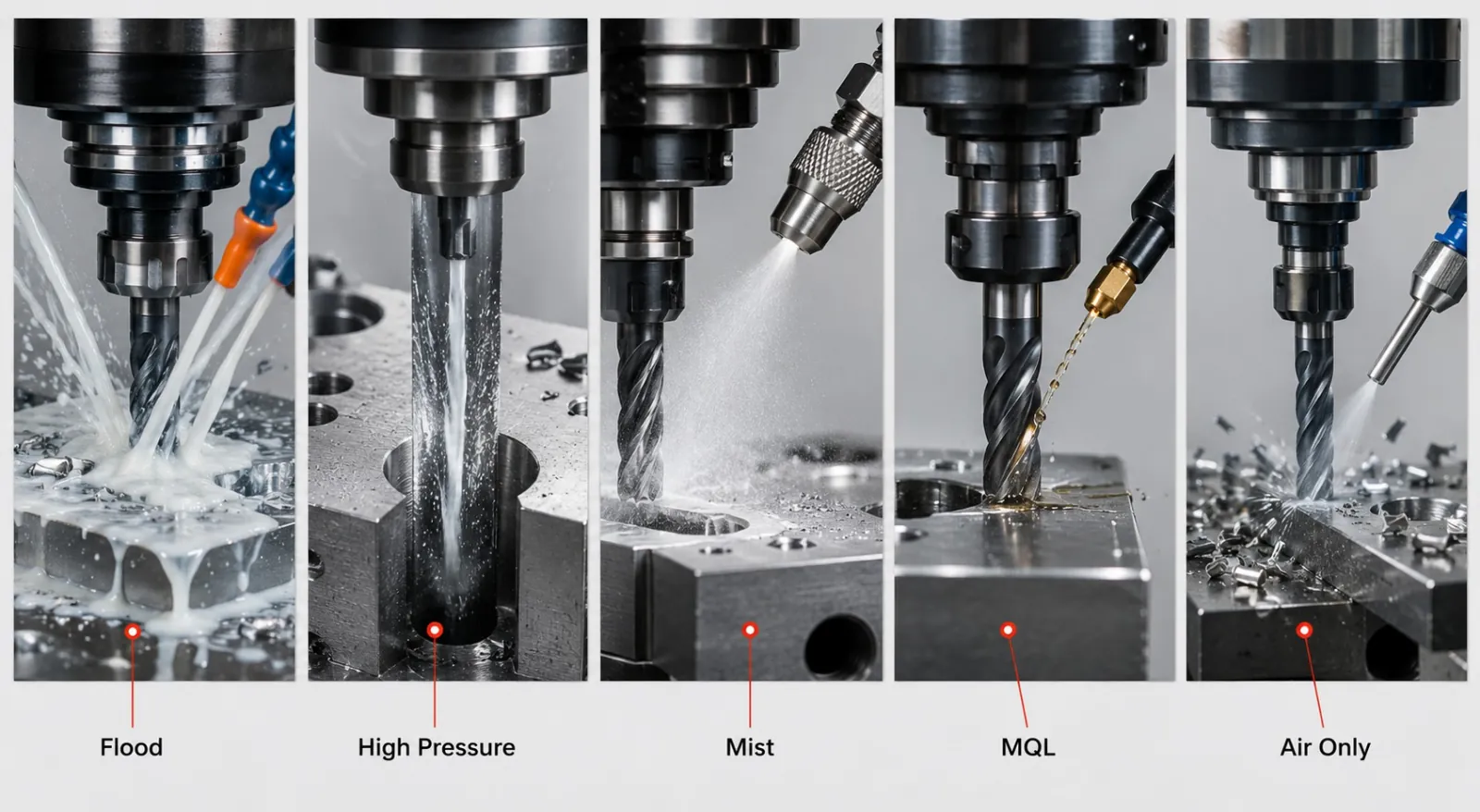
- Flood Delivery: This is the most common method, using low pressure and high volume to soak the cutting zone. It excels at flushing chips away in enclosed CNC machines.
- High-Pressure: Operating at >1000 PSI, these systems blast fluid directly into deep cavities. This is mandatory for deep-hole drilling to evacuate packed chips.
- Mist: This system atomizes a small amount of coolant. It is useful for operations where massive fluid volume is impractical.
- Minimum Quantity Lubrication (MQL): MQL delivers a microscopic amount of oil directly to the cutting edge. It leaves parts nearly dry and drastically cuts down on hazardous waste.
- Air Only: Compressed air blasts clear chips without inducing thermal shock. This is the required method for temperature-sensitive plastics.
CNC Machine Tool Coolant Filtration and Hardware
Contaminated fluid destroys pumps and ruins part finishes. Implementing proper machine tool coolant filtration extends fluid life from weeks to months.
Filtration Selection
- Bag Filters: Highly cost-effective for capturing standard chips and debris.
- Cyclone Separators: Ideal for high-volume production environments generating fine metallic dust.
- Magnetic Filters: Mandatory when machining ferrous metals. They pull microscopic iron particles out of the suspension.
Pro Tip: Always employ multi-stage machine coolant filtration. Use a coarse screen to catch large chips, followed by a magnetic or bag filter to protect the pump impeller from fine abrasive dust.
Hardware Optimization
Ensure your nozzles point exactly at the shear zone where the chip separates from the workpiece. Articulating nozzles provide the best flexibility. For deep-cavity work, upgrading to through-spindle coolant drastically improves chip evacuation and tool life.
Core Maintenance Rules for Your CNC Coolant Machine
Neglecting fluid maintenance guarantees production delays. Treat your coolant machine sump with strict chemical discipline.
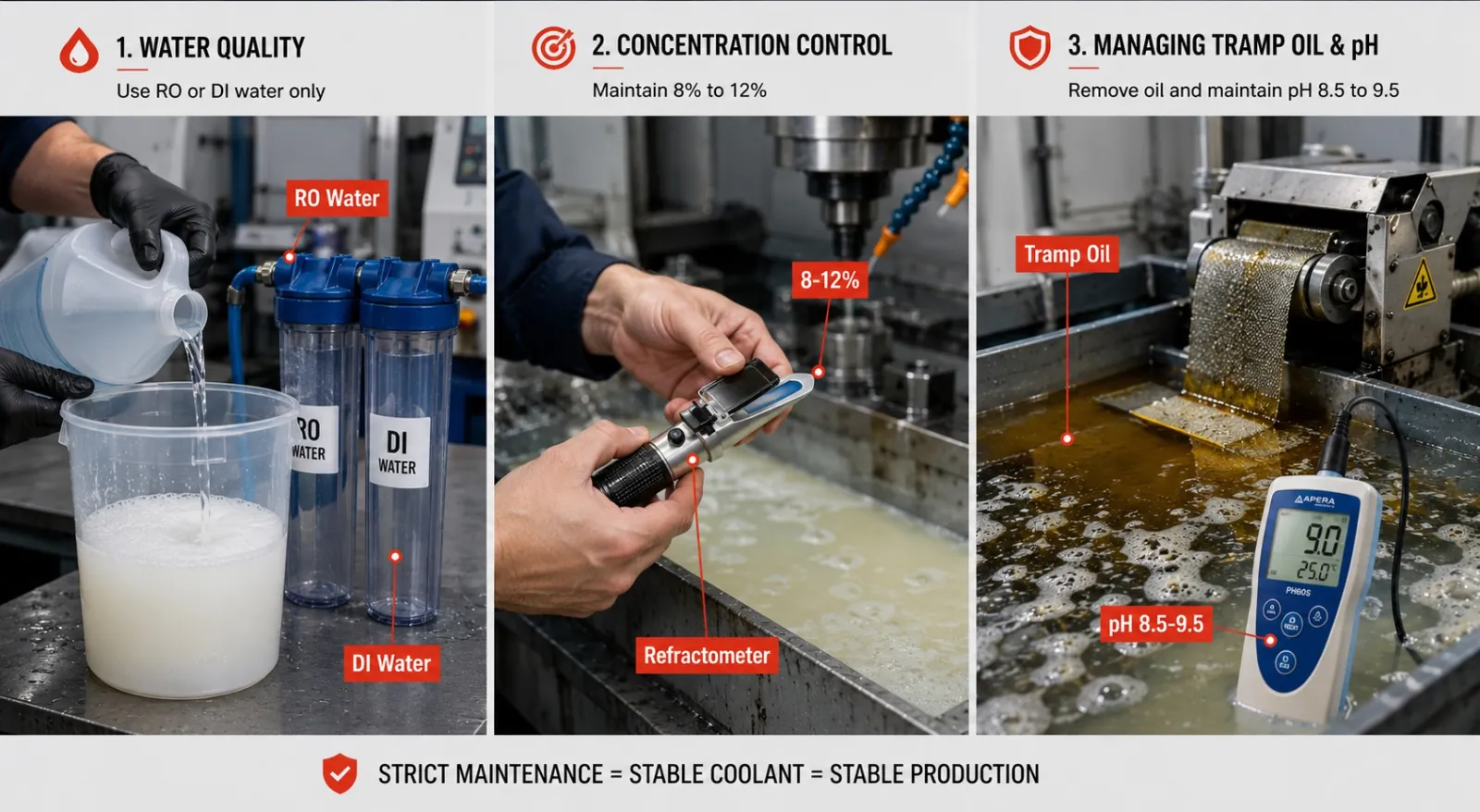
Water Quality is Critical
Always mix concentrates with Reverse Osmosis (RO) or Deionized (DI) water. Never use hard tap water. The minerals in hard water destabilize the emulsion, cause severe scaling on machine components, and leave hard-to-remove stains on finished parts.
Concentration Control
Maintain a standard concentration of 8% to 12%. Use a handheld refractometer daily to check this metric. Fluid evaporates and gets carried off on parts, causing daily fluctuations of 5% to 20%.
Managing Tramp Oil and pH
Tramp oil refers to hydraulic or way lube leaking into your sump. It floats on top, suffocating the water and causing anaerobic bacteria to multiply rapidly. Install a belt skimmer to remove this oil constantly. Concurrently, maintain a fluid pH between 8.5 and 9.5 to inhibit bacterial growth naturally.
CNC Machining Coolant Troubleshooting Common Issues
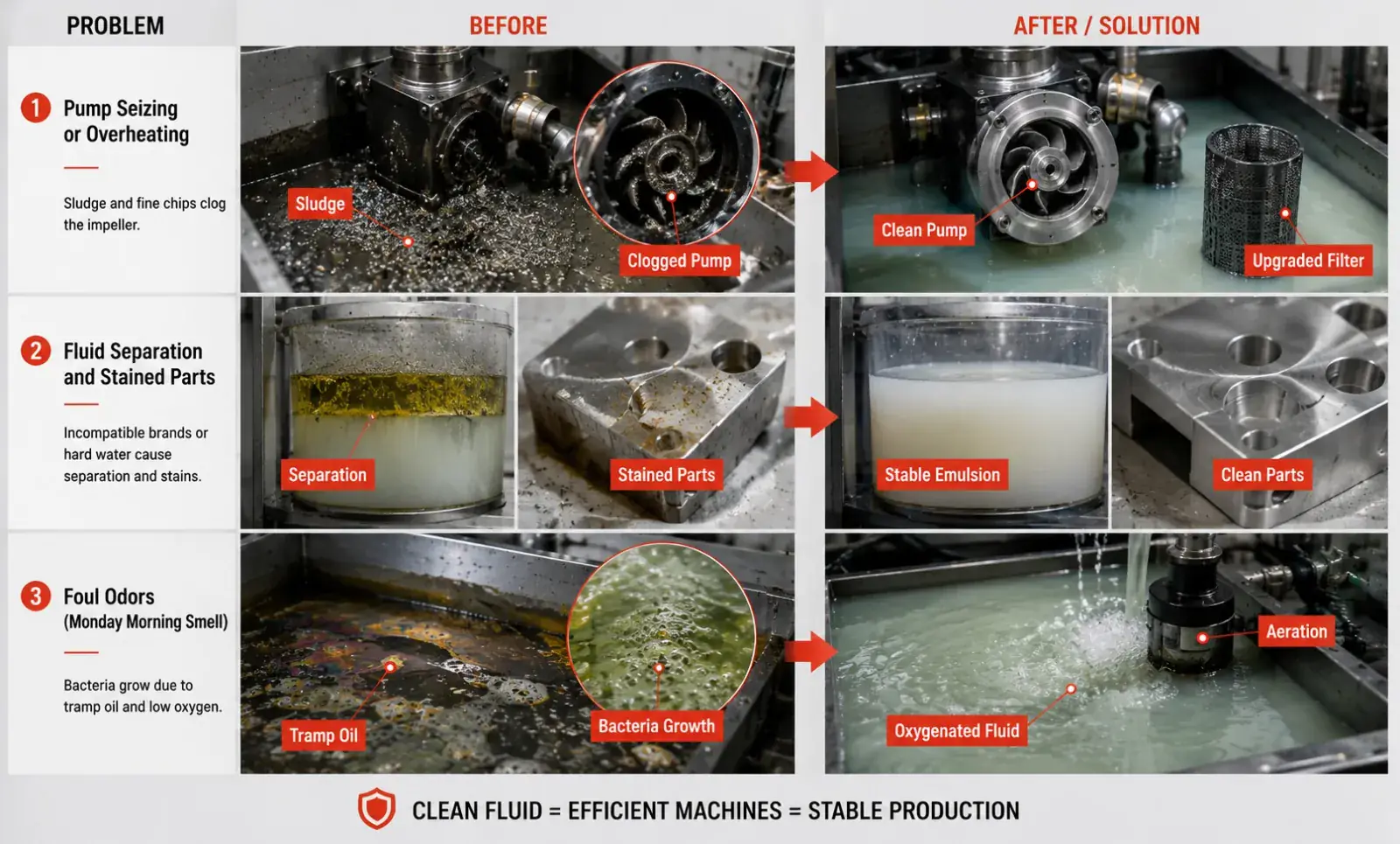
- Pump Seizing or Overheating: This is caused by sludge and fine chips bypassing the filter and clogging the impeller. You must drain the tank, clean it thoroughly, and upgrade your primary filtration mesh.
- Fluid Separation and Stained Parts: This occurs when mixing incompatible fluid brands or using hard water. Always flush the entire system before introducing a new coolant brand.
- Foul Odors (Monday Morning Smell): This means bacteria have taken over due to excess tramp oil and low oxygen. Skim the oil immediately and add an aerator to the sump to oxygenate the fluid.
CNC Machine Coolant Safety and Environmental Compliance
High-pressure delivery atomizes fluid into a fine mist. Breathing this oil mist constantly poses severe respiratory risks. You must install adequate mist collectors and proper ventilation in the shop.
Operators handling fluids must wear nitrile gloves and barrier creams. Prolonged exposure strips natural oils from the skin, leading to severe contact dermatitis. Old, contaminated fluids are highly acidic and exponentially more irritating. Treat all exhausted coolant as hazardous waste and dispose of it through certified environmental contractors.
Partnering with SHBD Metal
Managing fluid chemistry, tool wear, and machine calibration requires immense overhead. SHBD Metal removes this manufacturing friction entirely. Our intelligent online platform provides instant quotes and free DFM feedback. We maintain strict fluid and quality controls across our facilities, operating under ISO 9001, 13485, and IATF 16949 certifications.
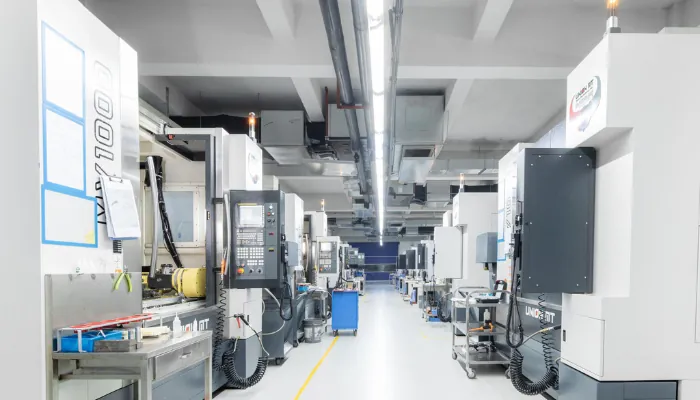
Whether you need a prototype in 3-5 days or full-scale production runs, our engineers ensure optimal machining strategies are applied. We handle the complex process routing and chemistry, delivering precision parts directly to your dock.
FAQs
Use pure RO/DI water for mixing, continuously skim tramp oil from the surface, and install an aerator in the sump to prevent anaerobic bacteria growth.
With rigorous filtration and maintenance, a high-quality fluid can last 3 to 6 months. You must change it immediately if it develops a rancid odor, separates, or if you notice unexplained rapid tool wear.
Water-soluble fluids are better for high-speed machining of aluminum and steel because they dissipate heat rapidly. Straight oils are required for low-speed, high-friction tasks on hard metals like titanium where extreme lubrication is necessary.
No. Adding pure water drastically dilutes the chemical rust inhibitors and lubricants. Always top off with a properly mixed, lower-concentration fluid to account for evaporation while maintaining chemical stability.


Comment
0 comments
Got thoughts or experiences to share? We’d love to hear from you!