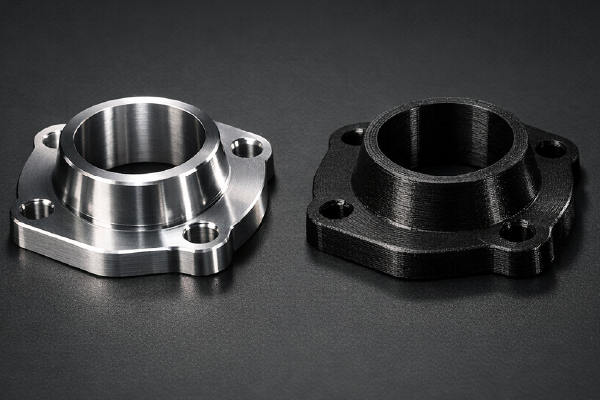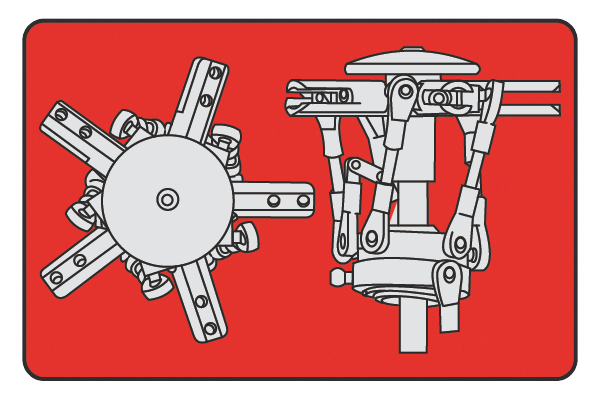

Every precision component that ships from a modern machine shop begins as a block of raw material and a digital model. Between those two states lies a family of subtractive manufacturing processes that engineers specify more often than almost anything else: CNC milling and CNC machining. Understanding how these processes work, where they overlap, and when to choose one over the other is essential for procurement managers, design engineers, and anyone responsible for getting custom parts produced reliably and on budget.
At SHBD Metal, our CNC machining services cover everything from single prototypes to full production runs, supported by in-house 3-axis, 4-axis, and 5-axis machining centers.
This guide breaks down the fundamentals, compares the two dominant approaches, and walks through the practical decisions — from material selection to surface treatment and quality validation — that separate a smooth production run from a costly revision loop.
What is CNC Machining?
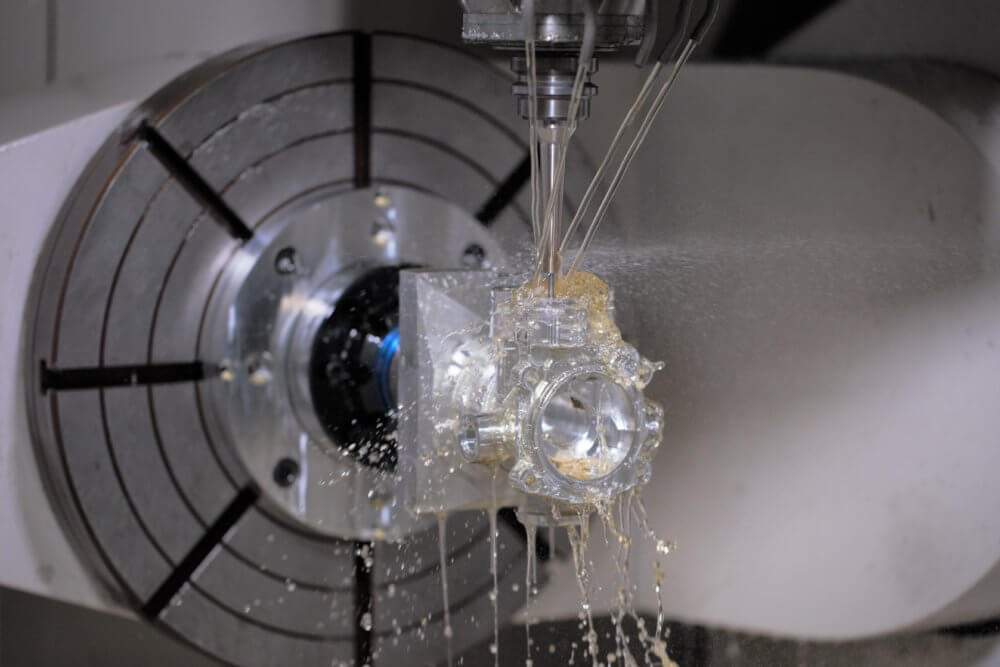
CNC machining (Computer Numerical Control machining) is a subtractive manufacturing process in which pre-programmed software directs the movement of cutting tools. The machine removes material from a solid block — known as the workpiece or stock — until the part matches the dimensions defined in a CAD model. Because the entire sequence is controlled by code, CNC machining delivers a level of repeatability that manual machining simply cannot match, even across thousands of identical parts.
The process covers several distinct operations, including milling, turning, drilling, and grinding. Each operation uses a different cutting geometry and machine configuration, but all share the same core principle: controlled removal of material to achieve precise dimensions, tolerances, and surface finishes.
What is a CNC Milling Machine?
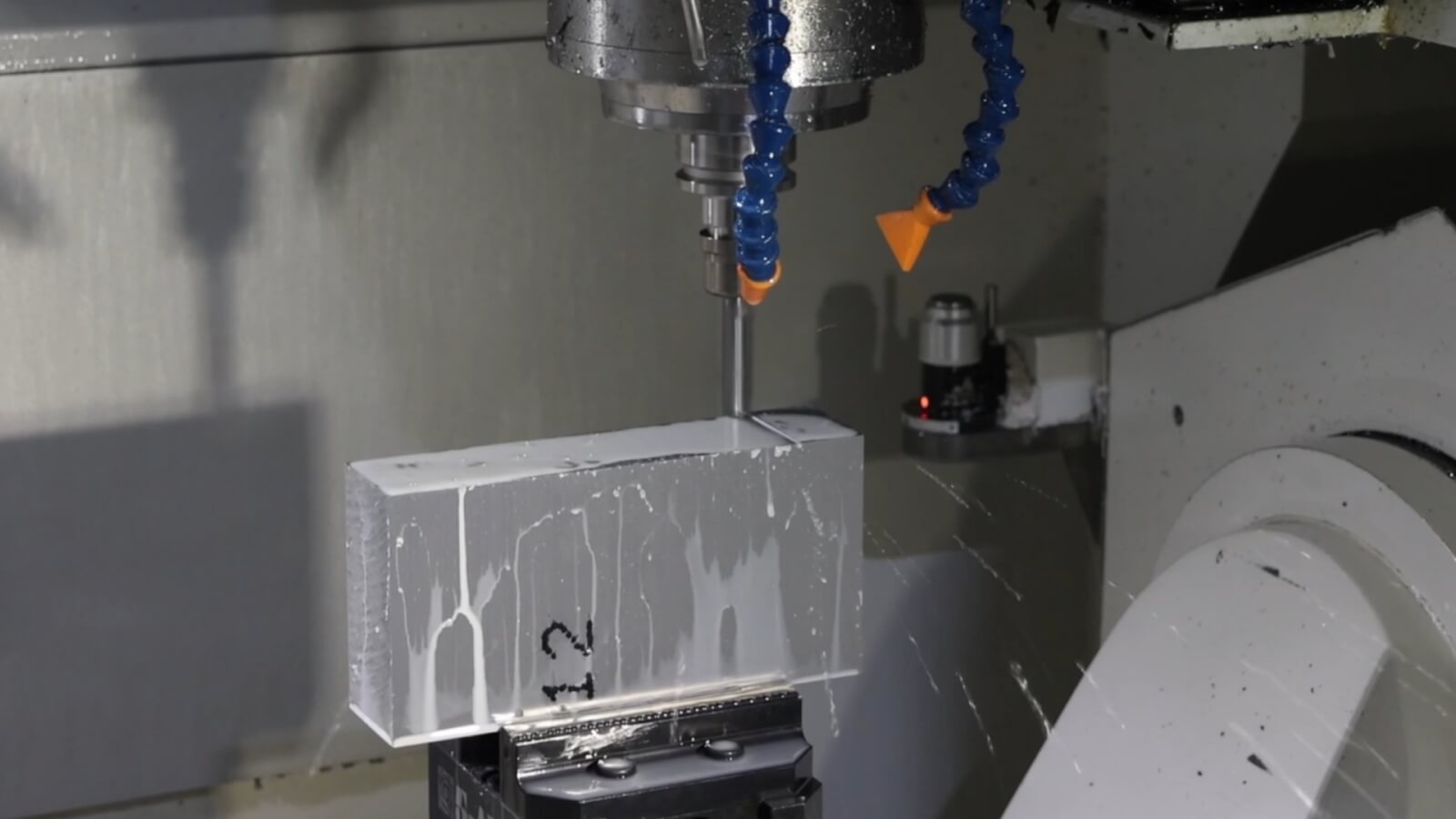
A CNC milling machine is a specific type of CNC machine that uses rotating multi-point cutting tools to remove material from the workpiece. Unlike a lathe — where the workpiece spins and the tool stays stationary — a milling machine holds the workpiece in place on a table while the spindle-driven cutter moves across multiple axes.
Modern CNC milling machines are classified by the number of axes they can move along. A 3-axis mill positions the spindle in the X, Y, and Z directions. A 5-axis machine adds two rotational axes, allowing the tool to approach the part from virtually any angle. This capability is what makes 5-axis milling the preferred choice for complex geometries such as impellers, turbine blades, and medical implants, because the part can be machined in a single setup rather than being re-fixtured several times.
CNC Milling vs CNC Machining: What's the Difference?
Strictly speaking, CNC milling is a subset of CNC machining. When engineers use the broader term, they are usually referring to the entire family of computer-controlled subtractive processes — milling, turning, drilling, and EDM included. When they say CNC milling specifically, they mean the rotating-cutter, multi-axis process described above.
For practical purposes, the distinction matters most when you are choosing a supplier. A machine shop that advertises general CNC machining capabilities may route your cylindrical parts to a lathe and your prismatic parts to a mill. Understanding the difference helps you communicate requirements clearly and anticipate lead times and cost drivers.
Copper CNC Machining: Key Considerations
Not all metals machine the same way, and copper CNC machining is a case in point. Copper offers outstanding electrical and thermal conductivity, which makes it invaluable for bus bars, heat sinks, electrical connectors, and RF components. However, its softness and high ductility create real challenges on the shop floor.
- Chip control: Copper produces long, stringy chips that can wrap around the tool and cause breakage. Experienced shops use chip breakers and aggressive feed rates to manage this.
- Tool wear: Despite being soft, copper work-hardens quickly. Sharp tools and proper coolant flow are non-negotiable.
- Surface finish: Achieving a mirror finish on copper requires fine finishing passes and, in many cases, a dedicated polishing step afterward.
When you work with a manufacturer that machines copper regularly, these variables are already built into the process plan — which translates directly into faster delivery and fewer scrapped parts.
Selective Laser Sintering: An Additive Alternative
Not every part should be machined. Selective laser sintering (SLS) is an additive manufacturing process in which a laser fuses powdered polymer material layer by layer into a solid part. Where CNC machining removes material from a larger block, SLS builds material up from nothing.
SLS is a strong candidate for functional prototypes, low-volume production runs, and geometries that are impossible to reach with a cutting tool — such as internal lattice structures and conformal cooling channels. Its main trade-offs are surface roughness, material properties, and per-part cost at higher volumes. Many smart engineering teams use SLS to validate a design before committing to CNC machining for the production version.
How to Choose the Right CNC Process
Selecting between processes — and between suppliers — comes down to four questions: What is the part geometry? What material must it be? What volume do you need? And what quality level must be verified? The answers point you toward a specific process family, and the quality of your supplier's answers determines whether the project stays on schedule.
Metal Fabrication Design
Good metal fabrication design starts before any machine runs. Wall thicknesses should be uniform, internal corners should carry appropriate radii, and features should be positioned so that standard tooling can reach them. A DFM (Design for Manufacturability) review by your supplier's engineering team can catch issues that would otherwise surface as expensive rework.
For parts that combine machined features with formed sheet metal or welded assemblies, the fabrication strategy matters just as much as the machining strategy. The order of operations — cut, form, machine, treat, assemble — affects tolerance stacking and final part quality.
Electroplating for Machined Parts
Machining gets a part to the right shape; electroplating gives it the right surface behavior. Electroplating deposits a thin metal layer — nickel, zinc, chrome, or gold, for example — onto the machined surface through an electrochemical process.
The reasons to plate a machined part are varied: corrosion resistance, wear resistance, solderability, conductivity, or simply appearance. Because plating adds material in the micron range, it can affect tight tolerances on critical dimensions. A reputable supplier accounts for this during the design review rather than after parts have been plated.
Non-Destructive Testing
Quality assurance does not end when the last tool path completes. Non-destructive testing (NDT) methods verify the integrity of a part without damaging it. Common NDT techniques in precision manufacturing include dimensional inspection with CMM (coordinate measuring machines), dye penetrant testing for surface cracks, ultrasonic testing for internal voids, and X-ray inspection for complex or cast components.
For aerospace, medical, and safety-critical industrial parts, NDT documentation is often a contractual requirement. When evaluating a machining partner, ask directly about their inspection capability: what equipment they have in-house, which certifications they hold, and whether they provide full inspection reports with every shipment. You can review our quality assurance process to see how we verify dimensional accuracy on every order.
Frequently Asked Questions
What is a CNC milling machine?
A CNC milling machine is a computer-controlled machine tool that removes material with rotating multi-point cutters. The workpiece is held on a table while the spindle moves the cutter along multiple axes to shape the part. It is ideal for producing prismatic parts, slots, holes, pockets, and complex 3D geometries with high repeatability.
What is the difference between CNC milling and CNC machining?
CNC machining is the umbrella term for all computer-controlled subtractive manufacturing processes, including milling, turning, drilling, and grinding. CNC milling is one specific process within that family, characterized by rotating cutting tools moving across a stationary workpiece. You can think of milling as the most widely used member of the machining family.
Which materials can be CNC machined?
Nearly any engineering material can be machined. Common choices include aluminum alloys, stainless steel, carbon steel, brass, bronze, copper, titanium, and engineering plastics such as PEEK, Delrin, and nylon. The machinability of each material affects tooling, cycle time, and cost. Browse our materials guide to compare the mechanical properties of the most commonly specified metals and plastics.
How do I choose between CNC machining and SLS 3D printing?
Use CNC machining when you need production-grade material properties, tight tolerances, and high repeatability. Use selective laser sintering (SLS) for rapid prototyping, complex internal geometries, and short runs where speed matters more than surface finish. Many projects use both — SLS for the first iterations, machining for the final parts.
Why is electroplating recommended for some machined parts?
Electroplating adds a protective or functional metal layer that improves corrosion resistance, wear resistance, electrical conductivity, or appearance. It is commonly specified for components exposed to moisture, chemicals, or repeated friction.
Get Your CNC Machining Quote
At SHBD Metal, we combine 3-axis, 4-axis, and 5-axis CNC milling centers with CNC turning, Swiss-type machining, and a full range of secondary processes — including heat treatment, electroplating, and complete inspection with documented reports. Our engineering team reviews every design for manufacturability before a single chip is cut, so you get parts that fit, function, and arrive on time.
Upload your CAD files today and receive a detailed quote within hours. Whether you need a single prototype or a production run of thousands, we are ready to help you bring your design to life.