
Injection molding large parts is a battle against thermodynamics, massive hydraulic forces, and polymer flow physics. Simply scaling up a design leads to catastrophic failures like severe warpage and internal stress concentrations. Successful execution requires high-tonnage machinery, often ranging from 1,000 to 3,000+ tons, to manage the massive shot capacity required for industrial-scale components.
SHBD Metal’s 20,000㎡ factory floor is equipped with this heavy-duty infrastructure, providing the specialized capacity most general manufacturers lack. We integrate AI-driven DFM analysis to mitigate defects before a single block of steel is machined, ensuring your project meets strict tolerances from the first shot.
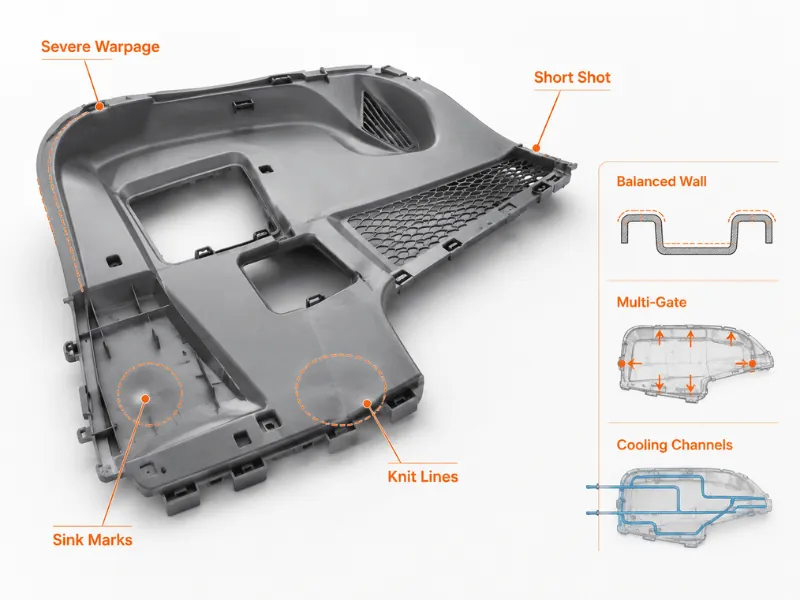
Large Part DFM Troubleshooting Matrix
Utilize this matrix to identify and address common failures in large-format plastic components during the early design phase. This automated check saves engineers weeks of iterative redesigns.
| Common Defect | Cause in Large Parts | Advanced Engineering Fix |
| Severe Warpage | Uneven cooling across large surface areas | Conformal cooling channels; balanced wall thickness |
| Short Shots | High flow resistance; insufficient melt pressure | Multi-gate hot runner systems; increased clamp force |
| Sink Marks | Volumetric shrinkage in thick sections | Gas-assisted injection; optimized rib-to-wall ratios |
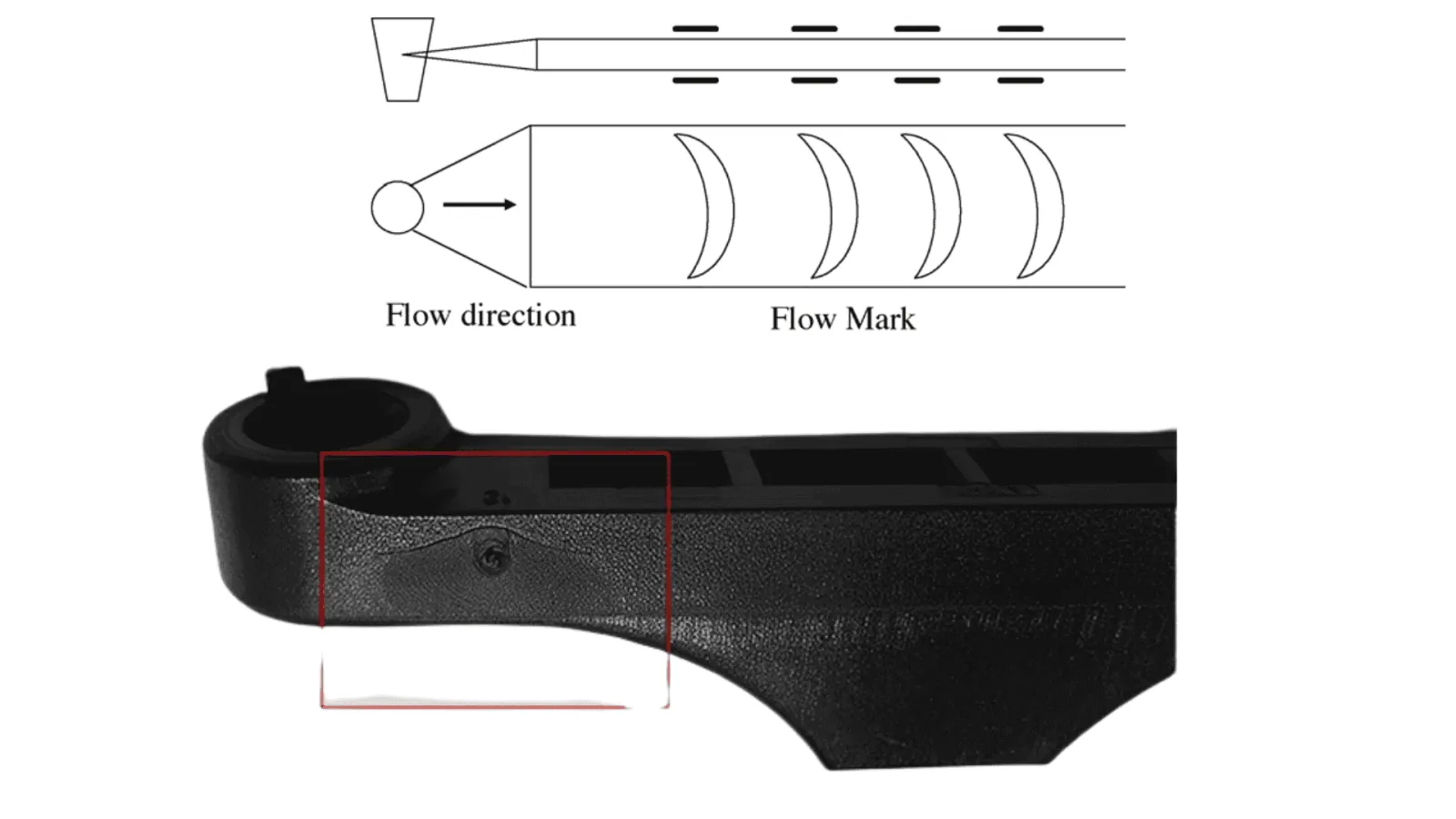
| Knit Lines | Premature solidification of flow fronts | Sequential valve gating; optimized melt temperature |
The Physics of Scale: Addressing DFM Nightmares
Large components present unique physical challenges that standard injection molding processes cannot resolve. High-volume manufacturing requires managing complex flow paths and cooling gradients to avoid mechanical failure.
- Material Flow and Short Shots: In many cases, the resin cools before reaching the extremities of the mold, resulting in incomplete filling. We resolve this by implementing hot runner systems with multi-point gating, which maintain melt temperature and pressure throughout the long flow path.
- Controlling Massive Warpage: Differential shrinkage due to varying wall thicknesses results in uneven stress distribution. Our engineers utilize Moldflow analysis to predict cooling behavior, applying conformal cooling to normalize heat extraction across the part surface.
- Managing Sink Marks: Large, thick-walled parts are prone to vacuum voids and surface depressions. We optimize geometry by limiting rib thickness to 60% of the nominal wall thickness, preventing structural collapse during cooling.
Advanced Technologies for Heavy-Duty Production
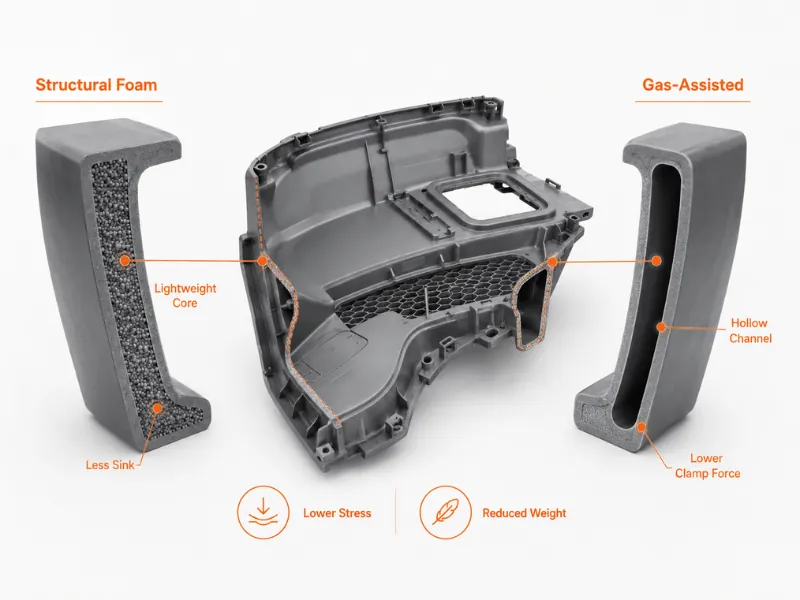
Lowering the high CapEx associated with large steel tooling requires leveraging specialized molding techniques. These processes reduce internal stress and lower required clamp tonnage.
- Structural Foam Molding: By introducing inert gases into the resin, we create a microcellular structure that maintains rigidity while significantly reducing weight. This process eliminates sink marks and allows for the production of massive industrial components with lower internal pressure.
- Gas-Assisted Injection Molding (GAIM): For thick-walled parts, GAIM uses high-pressure nitrogen to create internal hollow channels. This reduces material volume, prevents surface defects, and significantly lowers the required clamping force, extending the life of your mold.
Strategic Sourcing: The China Advantage
Tooling for large parts typically commands a high investment, often reaching $50,000 to $150,000 USD. Sourcing these massive steel tools through SHBD Metal’s China-based facility reduces initial CapEx by 30-50% while maintaining ISO-certified quality standards.
We provide a complete “turnkey” solution. Our fleet of high-tonnage injection machines and in-house massive CNC mold-making capabilities allow us to manage the entire lifecycle from initial design validation to mass production. By integrating our AI-driven DFM reporting at the quoting stage, we identify and correct geometric risks before production, preventing costly tooling rework.
Engineering Success: Moving from Prototype to Scale
Successful large-part production is rarely about the machine tonnage alone; it is about the integration of design verification and manufacturing capacity. By utilizing SHBD Metal’s digital factory platform, you bypass the opaque markups of traditional brokers and connect directly to the facility floor. Our AI engine flags thin-wall risks and draft angle issues in minutes, transforming potential production disasters into controlled, repeatable manufacturing steps.
Focus your resources on high-level innovation while we manage the complexities of material traceability, ISO-compliant quality inspections, and massive tooling logistics. Secure your project’s success by bridging the gap between your CAD file and the shop floor with a Tier-1 manufacturing partner.
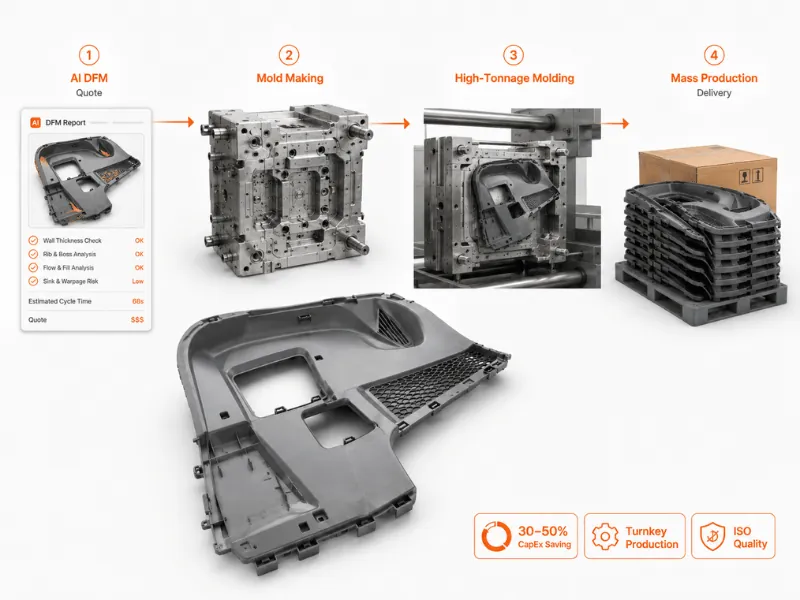
How do I get an accurate quote for a large part project?
To receive an instant quote and a free DFM report, upload your CAD files to our platform. Our AI-driven engine provides immediate cost feedback and identifies potential manufacturing risks to help you refine your design before ordering.
Frequently Asked Questions (FAQ)
For large components, 3D printing is typically reserved for functional prototyping and validation. Once production volume exceeds 50–100 units, the material costs and cycle times of injection molding become significantly more economical, despite the higher initial tooling CapEx.
Our operations are governed by ISO 9001 and IATF 16949 standards. Every stage of the manufacturing process is documented, providing full material lot traceability and dimensional inspection reports via CMM and XRF equipment for every production run.
We operate a 20,000㎡ self-owned facility in Shenzhen, providing direct control over quality and lead times. By eliminating the middleman, we reduce overhead costs by 30% and ensure transparent communication, avoiding the quality inconsistencies often associated with anonymous brokerage networks.
Large-format molds involve significant steel cutting and complex cooling channels. Typically, lead times range from 6 to 10 weeks, depending on the complexity of the mold design and the specified surface finish.
Comment
0 comments
Got thoughts or experiences to share? We’d love to hear from you!