Laser Marking vs Engraving vs Etching: When choosing between these methods, it mainly comes down to how deep the mark needs to be and how much you want to affect the surface.
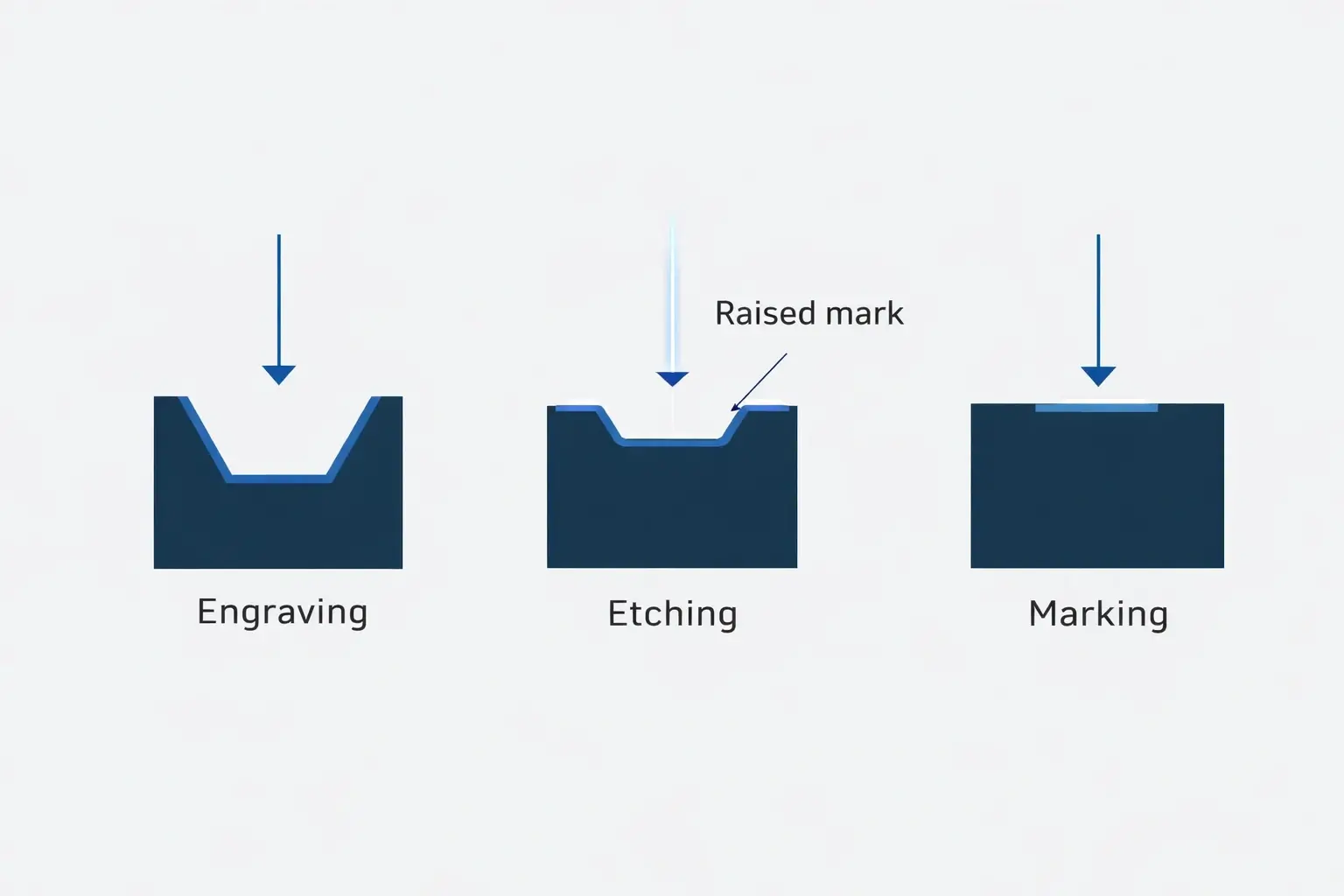
At the most superficial level, laser marking techniques like laser coloration alter the appearance of the material without removing sections of it. Instead, the laser changes the surface through processes such as oxidation, annealing, or color change. Laser etching goes a step further by melting the material’s surface, causing it to expand slightly and form a textured mark. Laser engraving, by contrast, removes material entirely, carving a deeper recess that can often be felt with a fingertip.
The terms laser marking, laser etching, and laser engraving are often used interchangeably, each describing the process of creating permanent marks on a part using a computer-controlled laser beam. However, the terms actually refer to three distinct processes that deploy a laser slightly different ways, producing marks of different depths and tones.
All of these processes work via different mechanisms, but each produces a similar result: a clear, durable marking that allows manufacturers to tag parts with barcodes, serial numbers, logos, and other important information. This article discusses the main differences between laser processes, helping you decide which you will need on your next order with SHBD Metal.
What is Laser Marking?
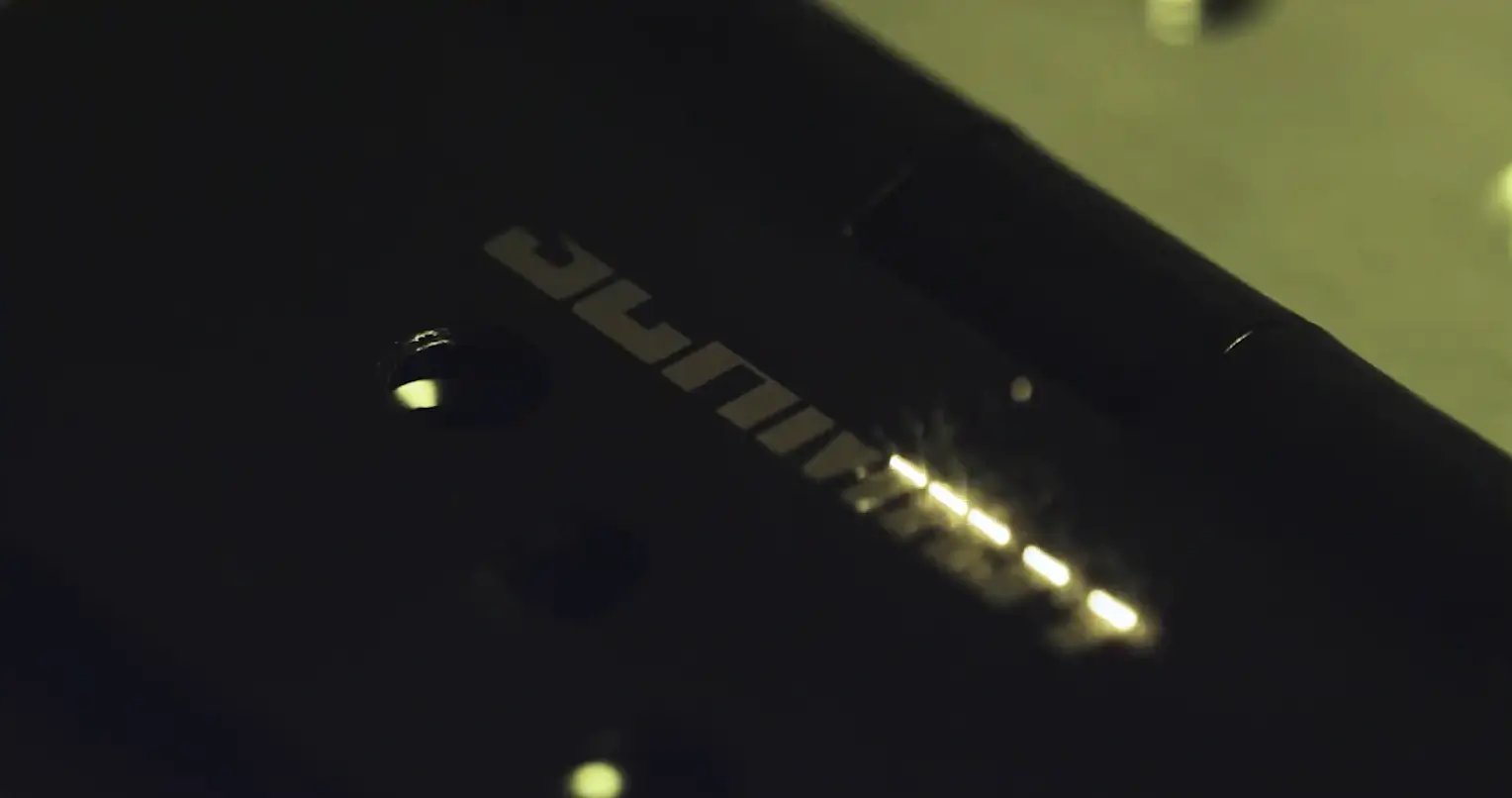
Laser marking or laser labeling is a family of non-contact marking processes that use a beam of light to create a permanent black or dark mark—a barcode, for example—on the surface of a material. The high heat of the laser causes a visible change in the material surface, allowing for high-contrast marking that is durable compared to ink-based marking.
Although laser marking may be used to refer to all laser-based marking processes (including engraving and etching), here we will use it—as many engineering companies do—to refer to laser marking processes that do not create significant geometrical changes to the material surface.
Unlike laser engraving, this type of laser marking does not involve the removal of any material. Instead, high heat causes a process of discoloration, oxidation, carbonization, foaming, or annealing on the surface, resulting in dark marks but typically no change to the surface geometry.
Subtypes of laser marking include laser coloration, laser foaming, and laser annealing.
Because laser marking can create durable markings without surface penetration, it is useful for high-speed part identification (serial numbers, barcodes) or branding, or for parts where any level of surface penetration could be unacceptable, such as in sensitive industries like aerospace and medical.
Laser Marking Benefits:
- Fast
- Cost-efficient due to low power usage
- Non-invasive and non-destructive
- High-contrast and good readability
- Suitable for thin substrates
- Does not require consumables like ink
- Low waste
- More durable than ink marking
What is Laser Engraving?
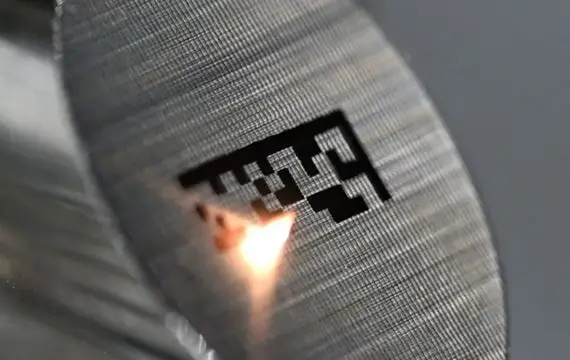
Laser engraving is a laser-based non-contact marking method that uses a focused laser beam to vaporize or burn away the surface of a material, which effectively removes material from the surface, leaving an engraved mark. The process is very fast, very accurate, and does not require consumables like ink. It is also compatible with a wide range of materials.
Because laser engraving creates deep, tactile marks rather than a surface-level marking, it offers unmatched durability. Since engraving removes material to create a recessed cavity, light surface wear to an engraved part will not remove the visibility of the mark, making the process suitable for parts exposed to harsh environments or friction.
Common laser engraving applications include industrial marking and tracking—particularly for the kind of parts described above—as well as signage and decorative or personalized consumer goods.
Laser Engraving Benefits:
- Fast
- Very accurate
- High level of industrial durability, even compared to other laser methods
- Suitable for parts exposed to harsh environments or friction
- Wide material versatility
- Does not require consumables like ink
- Low waste despite material removal
What is Laser Etching?
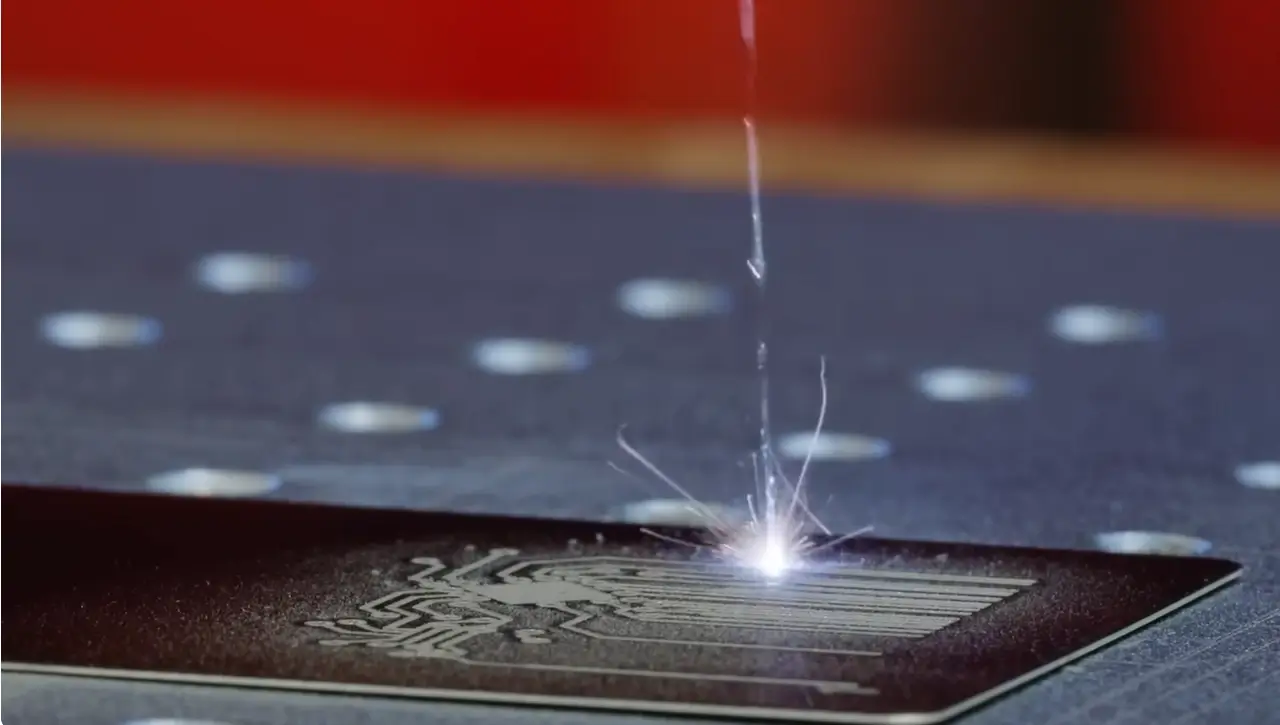
The laser etching process is a non-contact, high-speed marking method that uses a laser beam to melt the surface of a material, creating a visible mark with shallow penetration into the material. Because melting causes material expansion, the mark may be raised slightly above the material surface.
Laser etching creates a clearer mark than laser engraving, though it is less durable as it does not create a deep crevice.
Counterintuitively, micro laser etching can occasionally pose a greater risk to the structure of the part than laser engraving. A good alternative technique is the “coat and mark” form of laser etching, which involves applying a coating to the surface of the base material (via electroplating, for example) then laser etching into that coating but not into the base material.
Laser Etching Benefits:
- Fast
- Can be used on thinner substrates than laser engraving
- “Coat and mark” does not affect geometry of base material
- Suitable for fairly thin substrates
- Does not require consumables like ink
- Low waste
Key Differences: Laser Marking vs Engraving vs Etching
The table below highlights the key differences between one of the most common surface-level laser marking processes (laser coloration), laser engraving, and laser etching.
| Aspect | Laser marking (coloration) | Laser engraving | Laser etching |
| Description | Laser heats the surface to cause oxidation or chemical change, producing a color change without removing material | Laser selectively vaporizes channels of material, removing it to create a recessed cavity | Laser melts the surface layer, which re-solidifies to form a shallow or slightly raised mark |
| Typical laser type | Fiber (metals), UV, or green lasers for some plastics | CO₂ lasers (wood, acrylic) or fiber lasers (metals) | Fiber lasers (metals), sometimes CO₂ for coated materials |
| Suitable materials | Metals (especially stainless steel and titanium), some plastics | Metals, wood, plastics, glass, stone, leather | Metals, plated metals, ceramics, some plastics |
| Mark depth | 0 mm (surface-only process), making it suitable for ultra-thin substrates | 0.1–0.5 mm practical engraving depth | 0.02–0.08 mm typical penetration, making it suitable for thin substrates |
| Mark visibility | Moderate–high contrast and color change | Moderate contrast but strongly tactile due to depth | High contrast, often grey or black with slight texture |
| Mark durability | Moderate but can fade with abrasion | Very high as recessed marks resist wear | Moderate as shallow or raised marks can wear over time |
| Main benefit | No material removal and clean marks ideal for traceability | Deep, permanent marks for harsh environments | Fast, high-contrast marks with minimal material removal |
Comment
0 comments
Got thoughts or experiences to share? We’d love to hear from you!