
Testing flexible seals on an engine dynamometer requires components that survive thermal shock, not just visual prototypes. Traditional extrusion fails to process the extreme viscosity of liquid silicone rubber, forcing engineering teams to stall out while searching for functional elastomers. We manage the complex thermodynamics of photopolymerization and urethane casting so you can validate designs and accelerate your clinical trials without draining your R&D budget.
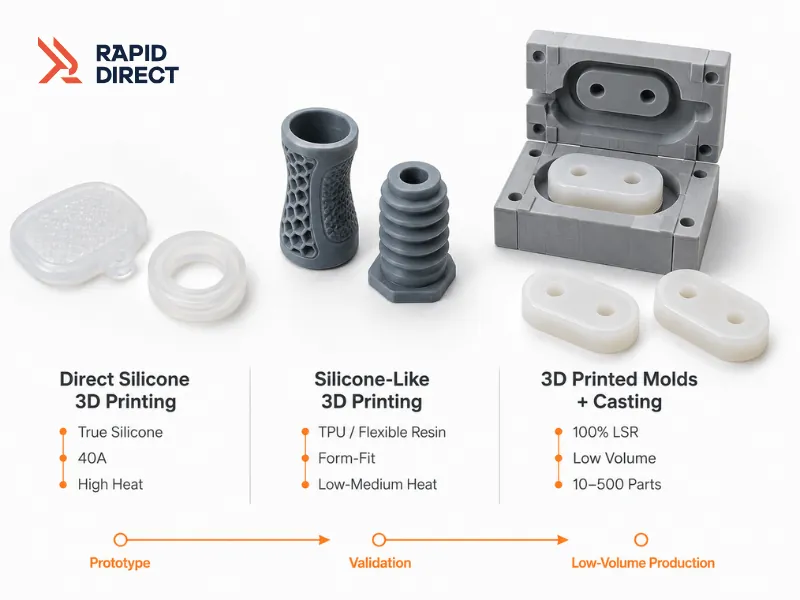
Elastomeric Manufacturing Matrix: Direct Print vs. Casting
Referencing this matrix eliminates weeks of material trial and error on the test bench. It instantly aligns your thermal requirements and order volume with the most cost-effective elastomeric manufacturing process.
| Manufacturing Method | Base Material | Thermal/Chemical Resistance | Ideal NPI Stage |
| Direct Silicone 3D Printing | True Silicone Resin (e.g., 40A) | High (Up to 150°C) | Prototyping, Custom Medical |
| Silicone-Like 3D Printing | TPU / Flexible SLA Resin | Low to Medium | Form/Fit Validation |
| 3D Printed Molds + Casting | 100% LSR(Liquid Silicone) | High | Low-Volume (10-500 parts) |
The Physics of Viscosity and Photopolymerization
Standard extrusion 3D printers rely on melting rigid thermoplastic filaments and pushing them through a heated brass nozzle. Liquid silicone rubber exists as a highly viscous, two-part thermoset that cannot be melted or extruded in this manner. You must bypass extrusion entirely and rely on specific light-curing technologies.
Specialized P3 DLP machines project precise ultraviolet light into a vat of engineered silicone photopolymer. This light triggers immediate molecular cross-linking, solidifying the liquid into a highly resilient elastomer. The resulting component possesses fully isotropic properties, ensuring it will not split along the Z-axis when subjected to heavy mechanical tension.
Enduring Extreme Thermal and Chemical Stress
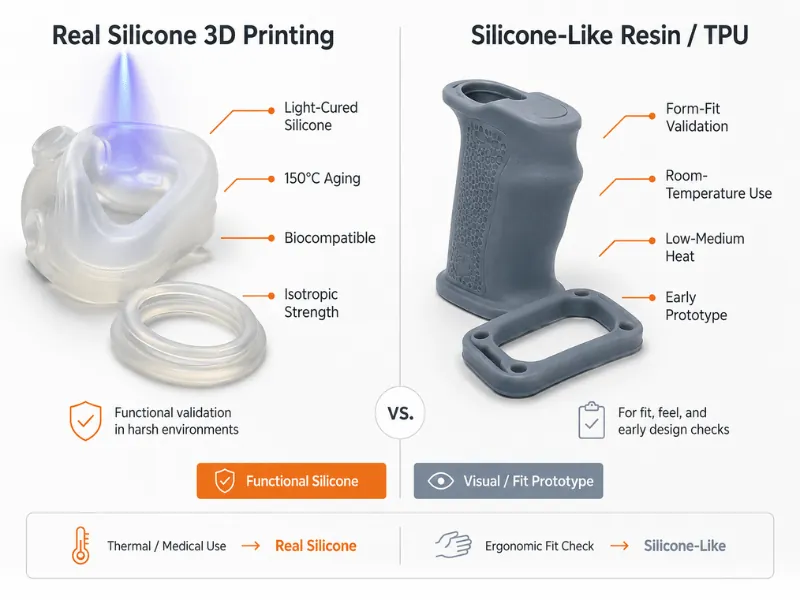
Automotive engineers testing under-hood components face brutal operating environments. If you place a standard TPU seal near a hot exhaust manifold, it melts and compromises the entire fluid system. Direct printing a true 40A silicone resin provides absolute flame-retardant compliance.
These printed silicone resins survive 1,000-hour aging tests at 150°C. This exceptional thermal stability allows your team to bolt functional prototypes directly onto an active engine block. You can validate complex geometries and fluid dynamics immediately without committing massive capital to metal tooling.
Custom Medical Devices and Biocompatibility
Direct silicone printing excels when you need 1 to 20 highly customized units. Producing patient-specific hearing aids or custom continuous positive airway pressure (CPAP) masks demands perfect anatomical fit and strict biocompatibility.
Printing these components directly from medical-grade silicone resins completely bypasses the tooling phase. You deliver testable, skin-safe medical devices to trial patients in days rather than months.
Silicone-Like Materials: When to Compromise
Many hardware projects do not require the extreme thermal resistance of pure liquid silicone. Developing standard shock absorbers or ergonomic handles means you can print TPU or flexible SLA resins. These materials replicate the Shore A touch at room temperature, allowing your design team to quickly validate ergonomics and housing fits.
Flexible SLA resins fail rapidly under severe environmental stress. If you leave a flexible resin enclosure gasket exposed to harsh UV light or industrial solvents, the polymer chains break down and crack within days. Reserve these silicone-like materials strictly for early, indoor ergonomic validation.
Pro Tip: Unsure if your design requires true silicone or a flexible alternative? Request SHBD Metal’s [Free Material Sample Box] today. Physically stretch our TPU elastomers and cast LSR to make risk-free decisions for your specific assembly.
The Industrial Hack: 3D Printed Molds for Casting
Waiting for clinical trial approvals while sinking $10,000 into a machined steel mold locks your R&D budget completely. The optimal low-volume manufacturing strategy involves printing a highly precise, rigid SLA mold and injecting true Liquid Silicone Rubber (LSR). This workflow bypasses the massive capital expense of metal tooling entirely.
Casting LSR into a printed master mold ensures your test pads possess the exact identical tear strength as final mass-produced components. You gain the mechanical performance of injection-molded silicone at a fraction of the cost and lead time. Automotive NPI teams use this exact method to source vibration-dampening boots for early suspension validation.
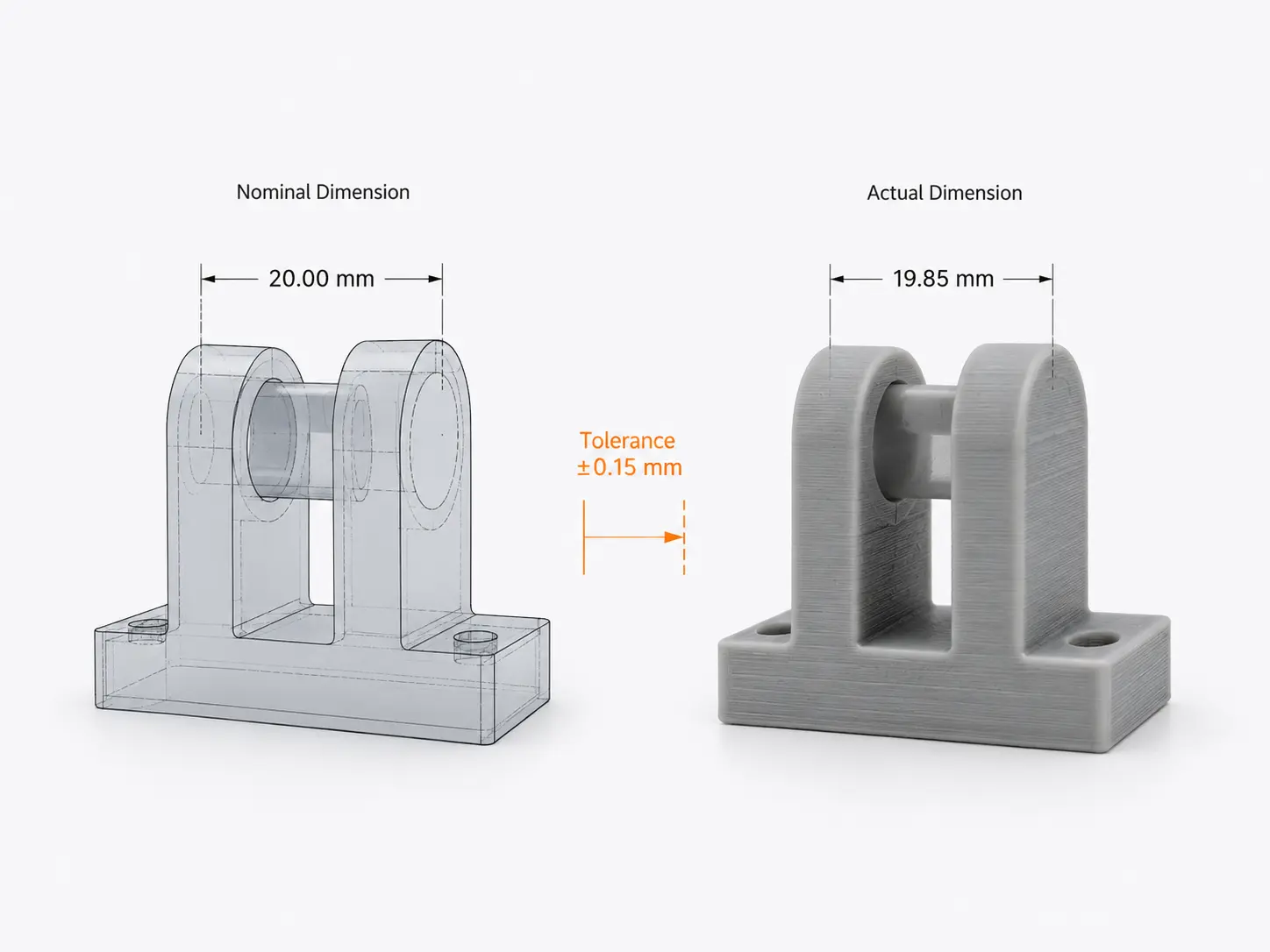
Printing the master mold on industrial SLA machines with 0.05mm layer heights yields exceptionally tight core geometry. The final cast silicone parts consistently hold tolerances of ±0.1mm to ±0.15mm. This precision easily satisfies the strict sealing requirements for high-performance fluid manifolds and complex medical catheters.
Mastering Durometer and Fluid Containment
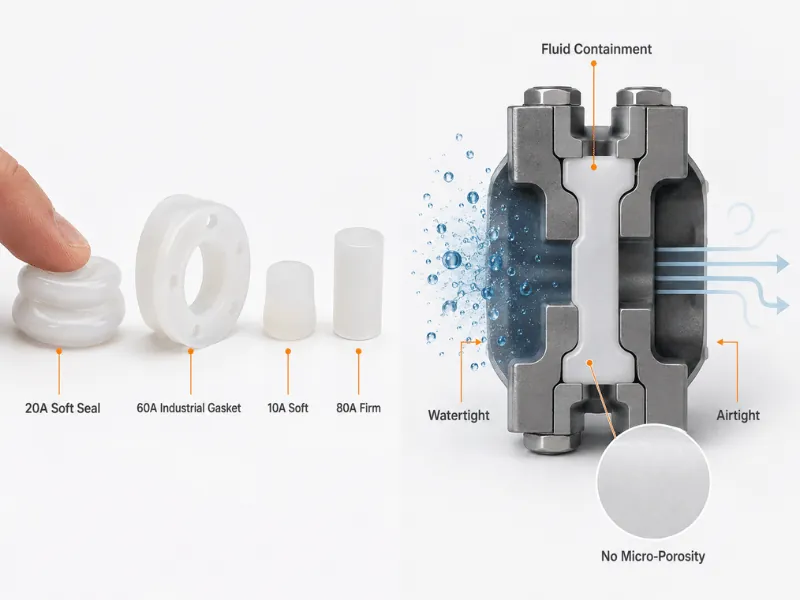
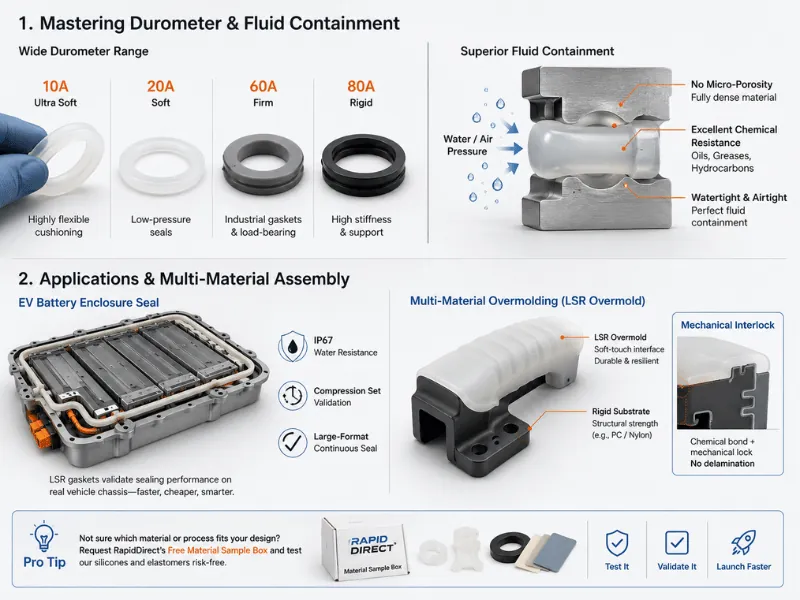
Urethane casting supports a massive range of true LSR durometers, from ultra-soft 10A up to rigid 80A. Choosing a 20A silicone yields highly compressible seals ideal for low-pressure custom enclosures. Specifying a 60A LSR delivers the stiffness required for heavy-duty industrial gaskets and load-bearing vibration isolators.
Cast LSR parts inherently resist oils, greases, and aliphatic hydrocarbons common in factory environments. If your pneumatic system requires absolute fluid containment, cast silicone prevents the micro-porosity issues commonly found in standard 3D printed parts. The liquid silicone fills every microscopic void in the mold, achieving perfect watertight and airtight performance.
Testing EV Battery Enclosures
Electric vehicle battery enclosures require massive, continuous seals to prevent water ingress and catastrophic short circuits. Validating these large-format gaskets using traditional tooling costs tens of thousands of dollars before the first test drive.
Casting LSR into a large-format SLA printed mold allows NPI teams to test IP67 water resistance on actual vehicle chassis. You validate the compression set of the gasket in days, keeping the vehicle launch schedule strictly on track.
Multi-Material Assemblies and Overmolding
Modern hardware often requires soft-touch interfaces bonded directly to rigid structural housings. Manually gluing a printed silicone grip to a polycarbonate shell introduces weak points and alignment errors on your assembly line. Our facility supports two-part casting and overmolding to permanently bond these materials.
You print the rigid substrate first, place it inside the SLA mold, and inject the LSR directly over it. Injecting LSR over a printed rigid substrate creates chemical bonds that survive brutal impact testing on the factory floor. Designing proper mechanical interlocking features between the rigid plastic and the soft LSR guarantees your ergonomic grips will never peel.
Engineering DFM for Printed Silicone Molds
Designing a rigid mold for LSR casting requires specific engineering heuristics to prevent part failure. Thick silicone sections shrink differently from thin walls during the thermal curing process. You must maintain uniform wall thicknesses to prevent severe sink marks that ruin your critical sealing surfaces.
Trapped air inside a printed mold causes voids and structural weaknesses in the final cast elastomer. Always engineer generous venting channels and strategically placed escape holes at the highest points of your mold cavity. Sizing your gates correctly ensures the highly viscous LSR fills the entire geometry before the curing process begins.
Accelerate Production with Factory-Direct 3D Printing
Routing your designs through third-party marketplaces introduces hidden markups and leaves you blind to actual factory conditions. SHBD Metal operates a 20,000㎡ self-owned facility to manage strict quality control internally, giving your procurement team a direct 30% cost advantage. You eliminate middleman errors by speaking directly to the engineers manufacturing your components.
Upload your elastomer CAD files to our platform for instant Design for Manufacturability (DFM) feedback that automatically catches thin-wall risks. Try our 3d printing service today to bypass the delays of manual quoting and secure your validated parts in just 3-5 days. We manage the production compliance so you can focus entirely on engineering life-changing medical and automotive devices.
Strategic Frequently Asked Questions
Directly printing silicone resins is economically viable for 1 to 20 highly customized units, such as patient-specific orthotics. Once your requirement scales between 20 and 500 units, printing a rigid SLA mold for LSR casting drastically drops the per-unit cost. Scaling beyond 1,500 unitsrequires transitioning to our traditional injection molding service for maximum capital efficiency.
Our factory operates under strict ISO 9001and ISO 13485 quality management systems. We meticulously control the vacuum degassing and thermal curing profiles on our factory floor. We provide transparent CMM inspection reports and material data sheets to ensure every production batch passes your rigorous medical or automotive safety audits.
Yes. Injecting medical-grade LSR into a properly prepared 3D printed mold meets strict ISO 10993 standards. We strictly manage the mold release agents and curing environments to prevent cytotoxicity failures. This process delivers safe, customized orthopedic pads and surgical components without the long lead time of machining medical-grade steel.
Comment
0 comments
Got thoughts or experiences to share? We’d love to hear from you!