

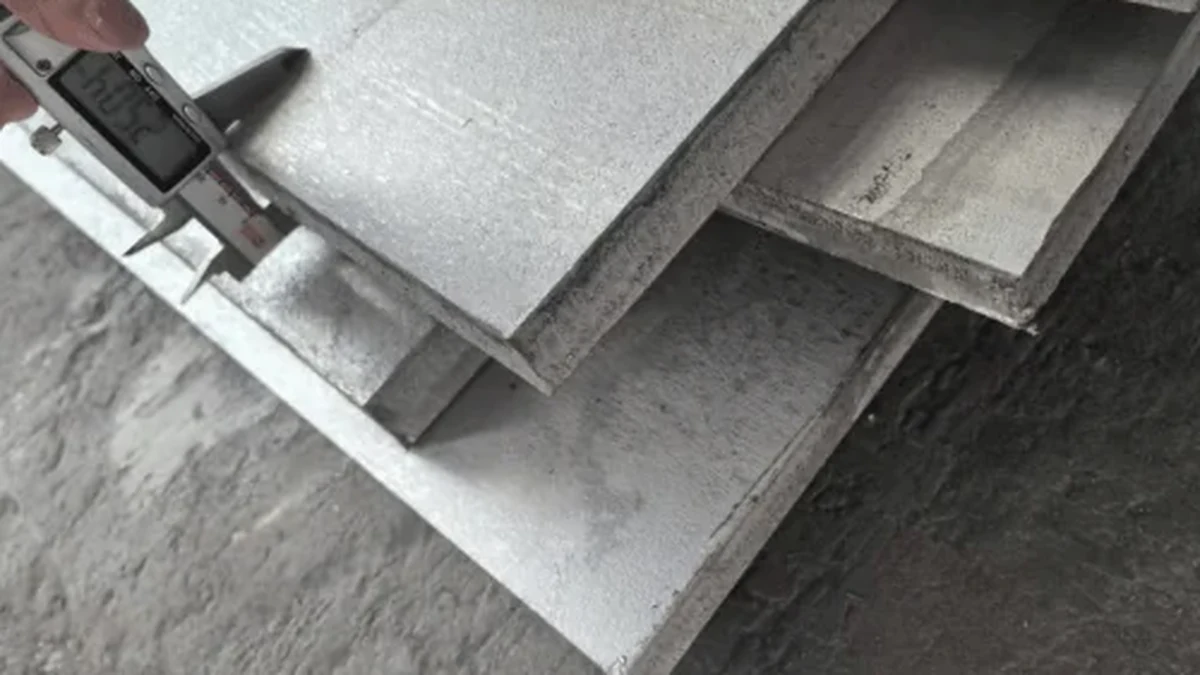
Measuring a plate confirms its thickness, not its analysis: the certificate is what separates one alloy from another.
A Balance, Not a Recipe
Stainless steel is an iron alloy in which chromium is present at a level high enough to change how the surface behaves. Iron still makes up the bulk of it — commonly half to three-quarters by weight — and the rest is a small set of elements added in controlled amounts, each doing a specific job. A composition is therefore a balance rather than a recipe: raising one element usually forces a decision about another, and the standard for a grade is written as a range because the balance can be struck in more than one place.
What the ranges buy is predictability. Two mills can supply 316L with slightly different nickel and molybdenum figures and both be conforming, provided the analysis sits inside the specification and the condition and finish are as ordered. Reading a certificate is mostly about knowing which element is doing which job.
Chromium and the Passive Film
Chromium is the defining element. Above roughly 10.5% the surface forms a thin chromium-rich oxide film within minutes of exposure to air; the film is stable, adherent and self-repairing where oxygen is available, and it is what separates stainless from ordinary steel. It is also why stainless performs badly in sealed, deaerated systems: with no oxygen to repair the film, the protection fails even though the analysis has not changed.
More chromium raises the ceiling on oxidation resistance, which is why the high-chromium ferritics and the super-austenitics are chosen for furnace and chemical service. The cost is not only price: higher chromium tends to stabilise the ferritic structure, so the nickel has to rise with it if an austenitic grade is wanted.
Nickel: Structure and Toughness
Nickel is an austenite stabiliser. Adding it keeps the face-centred cubic structure at room temperature, which is why the 300 series is tough, formable and weldable, and why it stays ductile at cryogenic temperatures where a ferritic grade would turn brittle. Nickel also improves performance in mildly acidic and chloride-bearing environments, though less dramatically than chromium or molybdenum do.
Content runs from about 8% in 304 to 10–14% in 316, and higher again in the super-austenitics. Duplex grades deliberately use less — roughly 5% — and accept a mixed structure to get yield strength that the austenitics cannot reach. That is the useful way to read nickel: as a structural choice, not a measure of quality.
Carbon: Strength at a Cost
Carbon is the cheapest strengthening element and the one that causes the most trouble. In the austenitic grades it is held low — 0.08% maximum in the standard grades, 0.03% in the L grades — because carbon that is free to combine with chromium at grain boundaries during welding leaves the adjacent metal short of chromium and open to intergranular attack. That is sensitisation, and the L grades exist to avoid it.
In the martensitic grades the logic reverses: carbon at 0.3–1.2% is what makes the alloy hardenable, and 420 or 440C are bought precisely because they can be quenched and tempered to a working hardness. The cost is toughness, weldability and some corrosion resistance. Between those two ends sit the ferritic grades, which keep carbon low because they cannot dissolve much of it.
Molybdenum, Nitrogen and the Supporting Cast
Molybdenum is the chloride element. Two to three percent in 316 raises resistance to pitting and crevice attack in chloride-bearing water; 317L carries more, and the super-austenitics more again. Where a part sees seawater, brine or chloride process streams, molybdenum does more for service life than extra nickel.
Nitrogen strengthens the austenitic grades and raises pitting resistance, and it is what makes the high-nitrogen austenitics and duplex grades practical. Manganese partly substitutes for nickel in the 200 series and improves hardenability in some grades. Silicon helps oxidation resistance and is present at under 1% in most grades. Sulphur and phosphorus are residuals kept low, except in the free-machining grades where sulphur is added deliberately — at a cost in corrosion resistance and weldability.
| Element | What it does | Typical level |
|---|---|---|
| Iron | Base metal | Balance, roughly 50–75% |
| Chromium | Passive film, corrosion resistance | 10.5–30% |
| Nickel | Austenite stability, toughness, formability | 0–20% (8–14% in 300 series) |
| Carbon | Strength and hardness | ≤0.03% (L) to 1.2% (440C) |
| Molybdenum | Pitting and crevice resistance | 2–3% (316), up to 6%+ |
| Nitrogen | Strength, pitting resistance | 0.1–0.2%, higher in duplex |
| Manganese | Strength, nickel substitution | 1–2% |
| Silicon | Oxidation resistance | 0.5–1% |
| Sulphur, phosphorus | Residuals, or deliberate for machinability | Low; S up to 0.3% in free-machining |
Reading a Composition by Family
The same table, read across, tells you which family a grade belongs to: chromium with little or no nickel and low carbon is ferritic; chromium with carbon high enough to harden is martensitic; chromium and 8% or more nickel is austenitic; chromium with about 5% nickel and 3% molybdenum is duplex. A few typical analyses make the pattern visible.
| Grade | Family | Cr | Ni | Mo | C max | N |
|---|---|---|---|---|---|---|
| 430 | Ferritic | 16.0–18.0 | — | — | 0.12 | — |
| 304 / 304L | Austenitic | 18.0–20.0 | 8.0–10.5 | — | 0.08 / 0.035 | — |
| 316L | Austenitic | 16.0–18.0 | 10.0–14.0 | 2.0–3.0 | 0.035 | — |
| 2205 | Duplex | 21.0–23.0 | 4.5–6.5 | 2.5–3.5 | 0.030 | 0.08–0.20 |
| 904L | Super-austenitic | 19.0–23.0 | 23.0–28.0 | 4.0–5.0 | 0.020 | — |
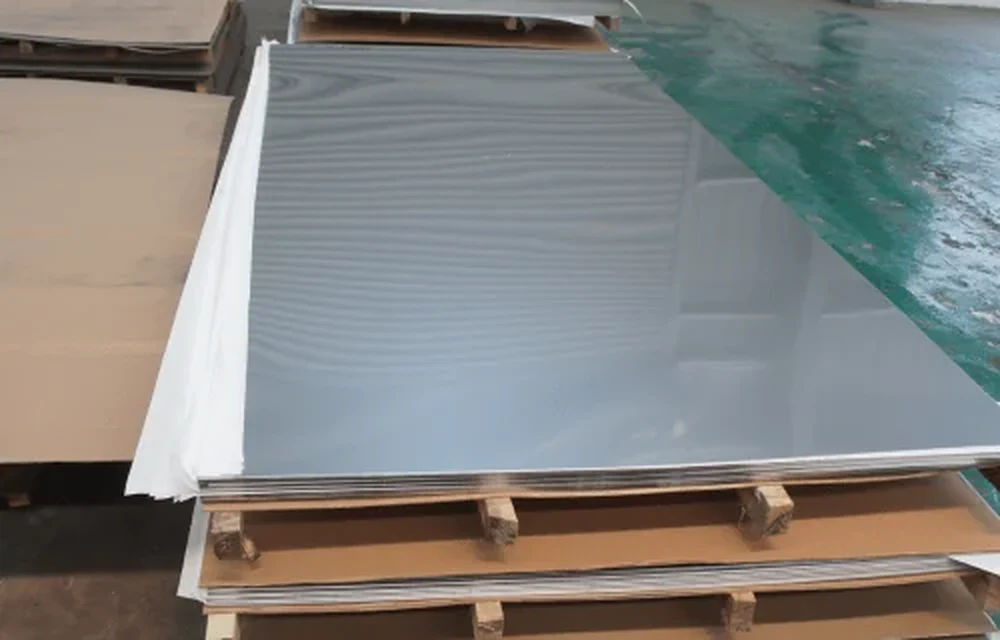
The same 2B finish can be any of the analyses above; finish and composition are separate decisions.
Two reading habits save time. First, look at chromium and molybdenum together: they set the corrosion ceiling, and most service failures are a chloride problem rather than a strength problem. Second, look at carbon before comparing strength figures: a 440C and a 304 are not alternatives at different prices, they are different products that happen to share a family name.
Composition Checks on a Certificate
A mill certificate reports the analysis of a heat, and the report is only useful if it is read against the right standard. Four checks cover most of it.
The standard, not just the grade. "316L" without a specification leaves the acceptance criteria open; ASTM A240 for sheet and plate and A276 for bar are different documents.
Heat analysis or product analysis. A heat analysis is taken during production, a product analysis from the delivered piece. They can differ slightly, and for critical work it is worth knowing which is reported.
The condition and the finish. The same analysis supplied annealed or cold worked behaves differently, and the certificate should state what was supplied.
Independent confirmation. A positive material identification scan on the delivered piece costs little and catches a mixed-up bundle before it becomes a weld that fails inspection.
We supply sheet, bar and pipe against the standard named on the order, with the certificate and heat number on the paperwork. If the service condition is the open question rather than the grade, send the environment and we will say which analysis we would put forward — the materials page lists what is normally held, and machining can be quoted on the same order.
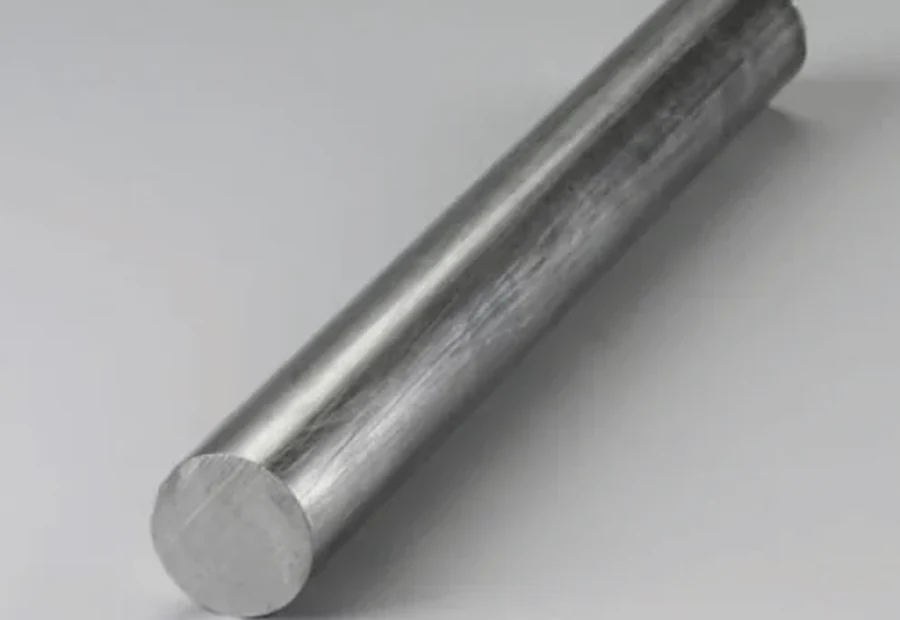
Bar is bought to a different standard from sheet, and the certificate has to name which one.
Comment
0 comments
Got thoughts or experiences to share? We’d love to hear from you!