

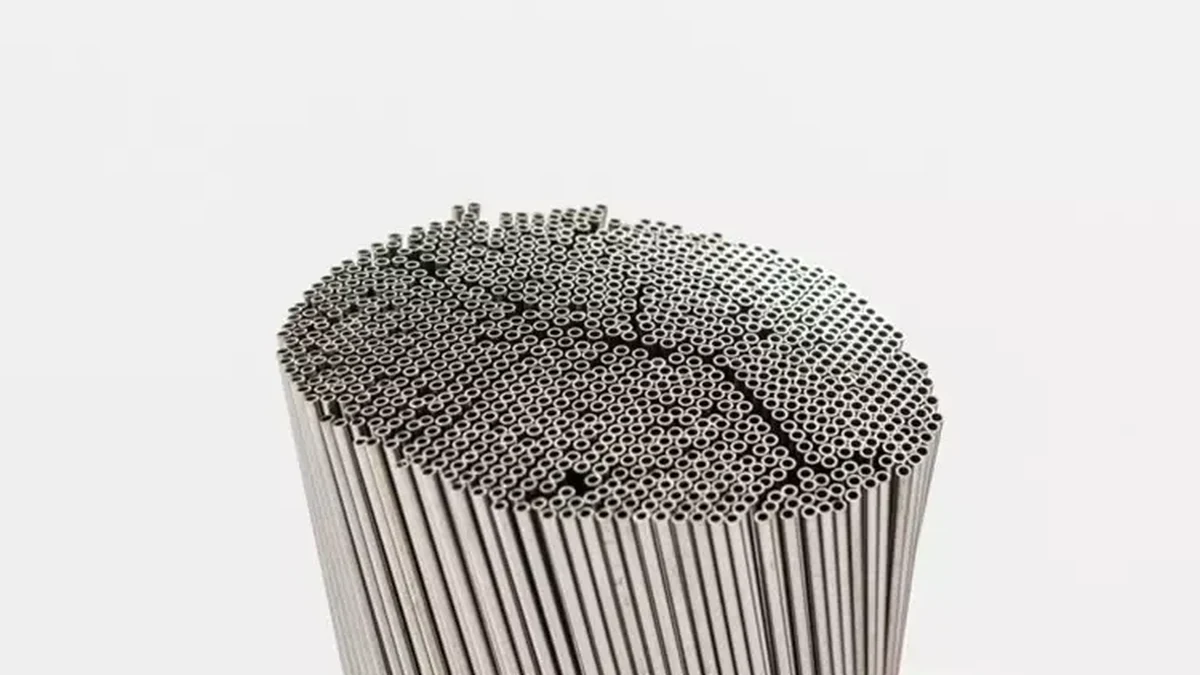
End-on, the bore is the product: the outside diameter locates the fitting, the inside diameter sets the flow.
What Counts as Capillary Tube
A capillary tube is a small-diameter stainless tube with a bore narrow enough to control flow by friction over a defined length. In practice that means an inside diameter of roughly 0.1 to 3 mm, an outside diameter of about 0.3 to 6 mm, and a bore that stays consistent along the whole length. The name comes from the resemblance to a blood vessel; the function is closer to a fixed orifice that happens to be several metres long.
Two consequences follow. The first is that the bore, not the outside diameter, is the functional feature — it is what the process depends on, and it is the dimension worth tightening. The second is that cleanliness is part of the specification. A tube with a 0.4 mm bore and a speck of drawing lubricant inside it is a blocked tube, and the blockage will appear downstream in a customer's instrument rather than in the mill's inspection.
Grades, and What Each One Buys
Three austenitic grades cover most of the market, and the choice between them is about environment, not strength: at this size the mechanical values are almost identical.
304 and 304L are the default for clean, dry, indoor service — instrument air, laboratory lines, general sensing. They form and weld easily and are the cheapest way into the product.
316 and 316L add molybdenum, which raises resistance to pitting in chlorides. Where the tube sees cooling water, coastal air, saline or cleaning chemicals, this is the grade to specify. Most medical and analytical applications default here for that reason, not because the strength is different.
321 is stabilised with titanium, which ties up the carbon that would otherwise form chromium carbides during welding or elevated-temperature service. It belongs on exhaust sensing lines, heat-exchanger work and anywhere the tube will run hot enough for sensitisation to matter.
Beyond the three, 904L and the duplex grades appear in chloride-heavy or acidic service, and 316L with a low sulphur content is specified where the bore has to stay clean. If the environment is aggressive enough to raise the question, say so at enquiry: the answer changes the mill route, not just the label.
Chemistry and Mechanical Values
Typical ranges for the three standard grades, consistent with the ASTM tubing specifications. As always, the order should name the standard and the condition, and the certificate should be read against both.
| Grade | C max | Mn max | Si max | Cr | Ni | Mo | Other |
|---|---|---|---|---|---|---|---|
| 304 / 304L | 0.08 / 0.035 | 2.00 | 0.75 | 18.0–20.0 | 8.0–10.5 | — | — |
| 316 / 316L | 0.08 / 0.035 | 2.00 | 0.75 | 16.0–18.0 | 10.0–14.0 | 2.0–3.0 | — |
| 321 | 0.08 | 2.00 | 0.75 | 17.0–19.0 | 9.0–12.0 | — | Ti 5×C min |
| Grade | Tensile strength | Yield strength | Elongation | Hardness |
|---|---|---|---|---|
| 304 / 304L | 515 MPa min | 205 MPa min | 35% min | 90 HRB max |
| 316 / 316L | 515 MPa min | 205 MPa min | 35% min | 90 HRB max |
| 321 | 515 MPa min | 205 MPa min | 35% min | 90 HRB max |
Those are minimums in the annealed condition. Drawing raises them and lowers elongation, which is why the temper on the order matters as much as the grade: a hard-drawn tube and an annealed tube of the same analysis are different products.
How the Tube Is Drawn
Fine capillary is made by reduction, not by forming to size in one step. The starting point is either a welded tube made from strip, or a seamless hollow; from there the tube is pulled through a die, over a mandrel or a plug that controls the bore, and the outside and inside come down together. Each pass reduces the section by a set amount, and the work-hardening from that pass has to be removed before the next one.
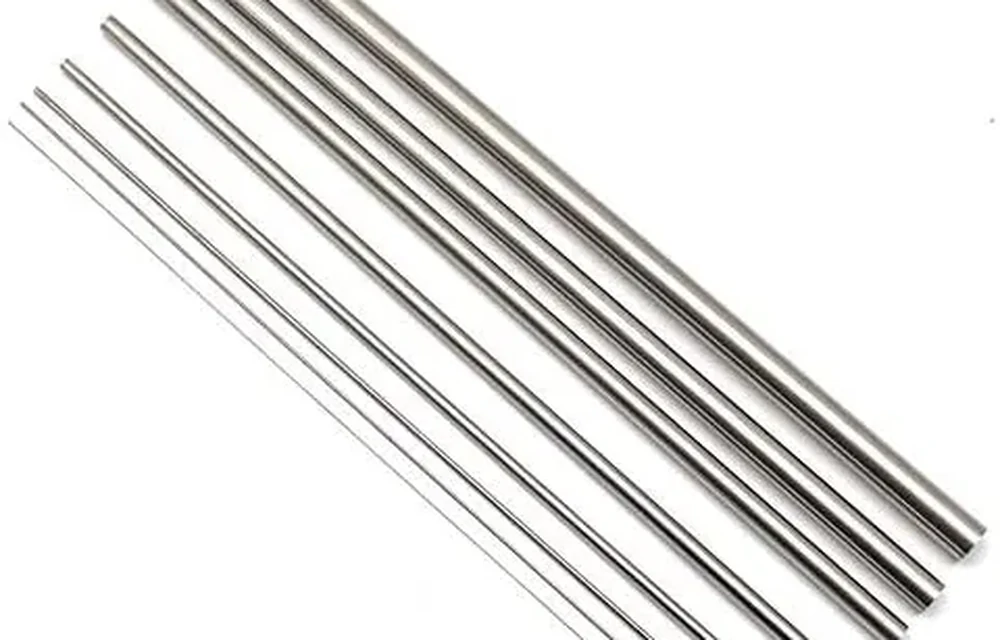
Straightening is a separate operation from drawing, and it is where straightness and residual stress are decided.
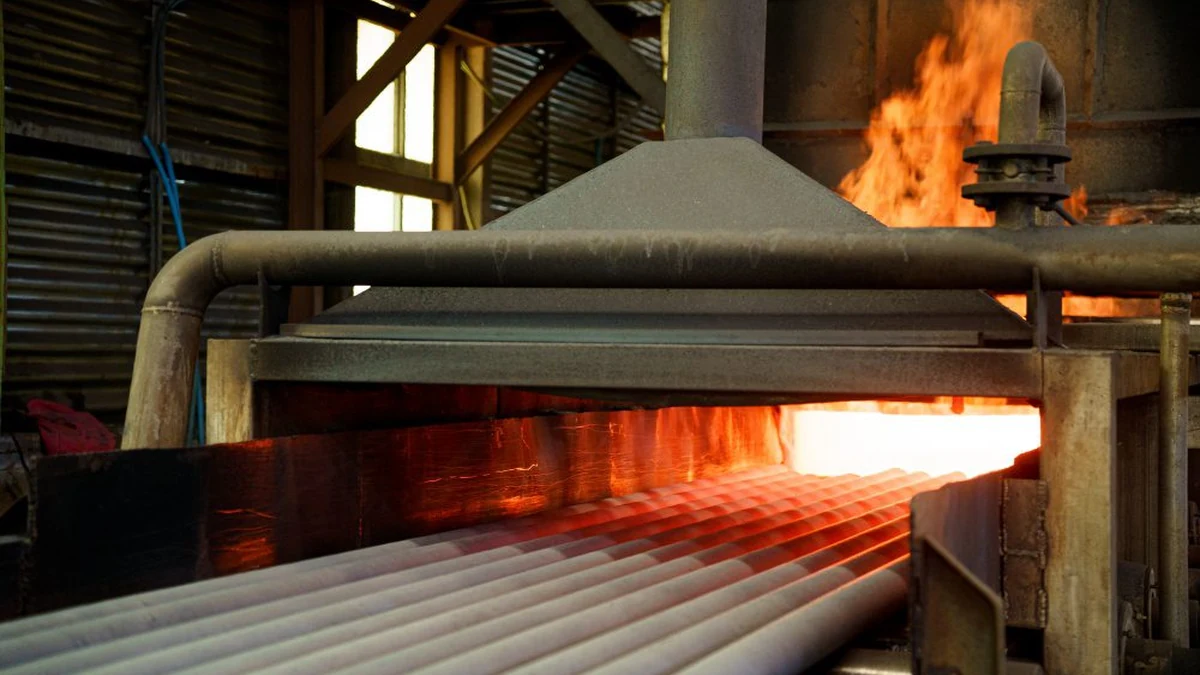
Annealing between passes is what makes the sequence possible: it restores ductility, and on fine bore tube it is normally a bright anneal in a reducing atmosphere or in vacuum, because a scaled bore cannot be pickled out afterwards. Where pickling is used, it is followed by a thorough rinse, and the rinse is the step that decides whether the bore is clean.
The sequence ends with straightening, cutting to length and a cleaning step — often ultrasonic, sometimes with a solvent flush — then inspection. Coiled tube is wound after the final anneal, and the coil diameter is chosen so the tube does not take a permanent set that shows up when it is unwound.
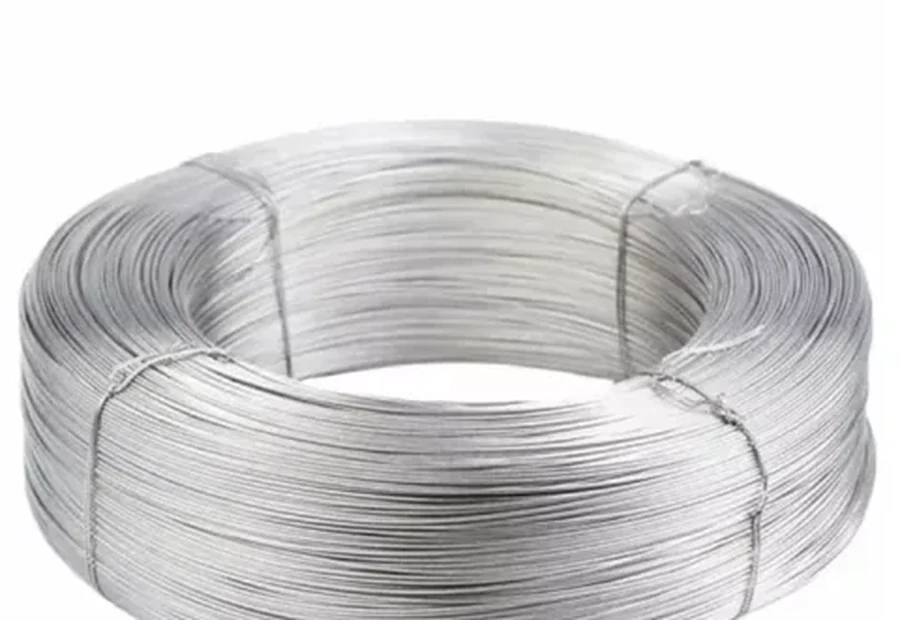
Coils are wound after annealing; the coil diameter should be large enough that the tube does not take a set in storage.
What the Drawing Has to State
Most disputes on this product trace back to a purchase order that named a grade and a size but not a tolerance. The drawing or the order should carry all of the following.
| Feature | Typical value for fine bore | Why it matters |
|---|---|---|
| Outside diameter | ±0.05 mm | Fitting fit and ferrule grip |
| Inside diameter | ±0.03 mm | Flow rate and pressure drop |
| Wall thickness | ±10% | Pressure duty, bendability |
| Concentricity | 10% of wall | Burst margin and clean bore |
| Straightness | 1 mm per metre | Feeding into fittings and instruments |
| Temper | Annealed | Bendability; hard temper will crack |
| Surface | Bright annealed, clean bore | Corrosion resistance, no blockage |
Two more lines are worth adding where the application is demanding: the standard the tube is made to — ASTM A269 for general service, A213 for heat exchanger and high-temperature work, A632 for small diameter seamless — and the cleanliness level for the bore, expressed as a method rather than an adjective.
Testing and Paperwork
At this size, dimensional inspection is not enough: a bore can be within tolerance and still have an internal defect that only shows up as a leak or a blockage. The usual checks are an eddy-current test along the full length, a hydrostatic or pneumatic pressure test where pressure duty applies, a flattening test to confirm ductility, and hardness or tensile tests on a sample from the lot. Where the tube will be welded or run hot, an intergranular corrosion test to the relevant practice of ASTM A262 is added.
The certificate should name the standard, the grade, the heat number, the mechanical results, the test pressures and the condition. A 3.1 certificate is the mill's own declaration; a 3.2 certificate adds an independent inspector's signature. On critical instrument work, a dimensional report on the actual coil or length, not a generic lot report, is worth asking for.
Where It Goes
- Medical and laboratory: sampling lines, catheter components and analytical plumbing, where a defined bore and a clean interior both matter.
- Refrigeration and HVAC: the expansion restrictor between condenser and evaporator, where the bore sets the metering rate and a few hundredths of a millimetre changes the charge.
- Instrumentation: impulse lines and sensing runs, where the bore damps pressure pulses and the tube has to survive the process environment.
- Analytical instruments: chromatography and gas-analysis plumbing, where dead volume and cleanliness decide the result.
- Aerospace and automotive: sensing and control lines near hot sections, where the stabilised grades earn their place.
- Industrial automation: pneumatic sensing and small hydraulic runs on compact machinery.
Failure Modes Worth Designing Out
A blocked bore. Debris, drawing lubricant or a poor rinse will plug a fine tube, and the symptom appears at the customer. Specify a cleaning method and ask for a flow or borescope check on critical lots.
Ovality at a bend. A hand bend flattens the bore, and the flow through the bend no longer matches the calculation. Use a mandrel bender and keep the radius above about three times the outside diameter.
Chloride pitting on 304. The grade is the wrong one for washdown, coastal air or chlorinated water. Moving to 316 costs less than replacing the instrument it feeds.
Vibration fatigue. A long, unsupported capillary run will crack at a fitting. Support it, or use a coil with a larger bend radius, so the vibration is not concentrated at one point.
Wrong temper. Hard-drawn tube cracks when it is bent on site; annealed tube is what a line that will be formed in the field should be ordered in.
We supply capillary tube in 304, 316 and 321, straight or coiled, to the tolerance and the standard named on the order, with the mill certificate and heat number on the paperwork. Where the tube feeds a part machined here, the machining route can be quoted with it; the materials page lists what is normally held, and the seamless and welded pages cover the larger sizes.
Comment
0 comments
Got thoughts or experiences to share? We’d love to hear from you!