

While 18-8, 304, and 316 are all types of austenitic stainless steels known for their excellent corrosion resistance, their primary differences lie in their chemical composition and specific applications. 18-8 is a general designation referring to stainless steels with approximately 18% chromium and 8% nickel (which includes 304), while 304 is the most common and versatile grade. 316 stainless steel, however, adds molybdenum, significantly enhancing its resistance to pitting and crevice corrosion, particularly in chloride environments.
Customers ordering stainless steel parts can easily get tripped up by the sheer variety of stainless steel grades. Today, there are more than 50 common grades of the material, spanning different material families.
That is a lot of variation in itself, but matters are complicated further by the different designation systems used around the world. The United States uses both the UNS (Unified Numbering System) and AISI/SAE (Society of Automotive Engineers) naming systems, while ISO (the International Organization for Standardization) has its own system, as does the European Union, Japan, and other locations.
That basically means that a single grade of stainless steel can have many different names depending on where it is manufactured and sold. For example, the names 430, 1.4016, X12Cr17, and Z10CD17 can all be used to refer to the same alloy. As a company with a presence in both the United States and China, we regularly encounter customers confused by this.
This article focuses on 18-8 vs. 316 vs. 304 stainless steels, as this is a question that regularly surfaces. However, the answer involves both differences in chemical composition and differences between alloy naming systems.
How Are Stainless Steel Grades Named?
The best place to start when discussing 18-8 vs. 316 vs. 304 stainless steels is not the physical differences between those materials or the differences in how they are used. First, we need to look at what exactly we are talking about when we use those numbers.
All three of those stainless steel grades are regularly specified by customers in their technical drawings. However, you will notice that they do not follow the same format. 304 and 316 appear to belong to the same category, but 18-8 does not.
This is because:
- 304and 316 are both designations given by the SAE steel grades system used in the United States. These two stainless steel grades have three-digit codes beginning with the number “3” because they are both austenitic chromium-nickel alloys, making them part of the SAE “300 Series.”
- 18-8(sometimes written 18/8), on the other hand, is not a designation given by the SAE steel grade system. Passed down from older naming conventions, it is a general and descriptive term for a stainless steel that contains 18% chromium and 8% nickel.
As it so happens, SAE 304 contains 18–20% chromium and 8–11% nickel, making it effectively the same thing as 18-8.
Why only effectively the same? Because other stainless steels with SAE designations can technically also contain 18% chromium and 8% nickel. For example, SAE 302 allows for a range of 17–19% chromium and 8–10% nickel.
This is just the tip of the iceberg, as different naming systems refer to these materials in their own ways.
18-8 vs. 316 vs. 304 Stainless Steels Comparison
The section above touched on the differences and similarities between stainless steels with different names. This section offers a direct comparison of our three stainless steel grades—both in terms of their naming conventions and their actual physical and chemical properties.
Note that this section does not include a direct comparison between 18-8 vs 316 stainless steel, as 18-8 is chemically the same as 304. For a de facto 316 vs 18-8 stainless steel comparison, see the section “304 vs 316 Stainless Steel.”
18-8 vs 304 Stainless Steel: Semantic Differences
First off, what is the difference between 18-8 and 304 stainless steel? As we have discussed, 18-8 stainless steel vs 304 is primarily a distinction between different naming conventions.
- 18-8is a general term for a stainless steel that contains 18% chromium and 8% nickel.
- 304is an SAE designation for a stainless steel that contains 18–20% chromium and 8–11% nickel.
That means that “18-8” and “304” essentially refer to identical grades of stainless steel. In practice, they are often used interchangeably.
However, there is no perfect overlap between the two. 18-8 could also include SAE grades like 302 (which has a higher maximum carbon content than 304 but similar chromium and nickel content), while 304 could also fall under the umbrella of 18-10 stainless steel (a grade with 10% nickel content rather than 8%).
304 vs 316 Stainless Steel: Real Differences
304 and 316 are chemically different grades of stainless steel within the SAE 300 Series of austenitic chromium-nickel alloys.
- 304, also known as A2 stainless steel or 18-8, is the most common grade of austenitic stainless steel.
- 316, sometimes known as marine-grade stainless steel, is the second most common grade and contains molybdenum to prevent corrosion.
In terms of chemical composition, the key difference between 304 and 316 stainless steel is the presence of molybdenum in 316.
Practically speaking, the main difference between 316 stainless steel and 304 is the former’s superior corrosion resistance. However, despite its “marine-grade” tag, 316 does show brown staining after prolonged exposure to seawater.
The stainless steel 304 vs 316 strength differences are minor, but the presence of molybdenum in 316 gives it a greater level of hardness.
The 304 stainless steel temperature limits are about 870 °C in intermittent service. For 316, the limit is about the same. Grades 304H and 316H, both of which have higher carbon content, have higher strength at elevated temperatures than their regular counterparts.
In the food processing and household goods industries, food-grade stainless steel 304 vs 316 comes down to whether the product requires extra corrosion resistance due to salt or chemical exposure. Use of stainless steel 304 is widespread for kitchen equipment and utensils.
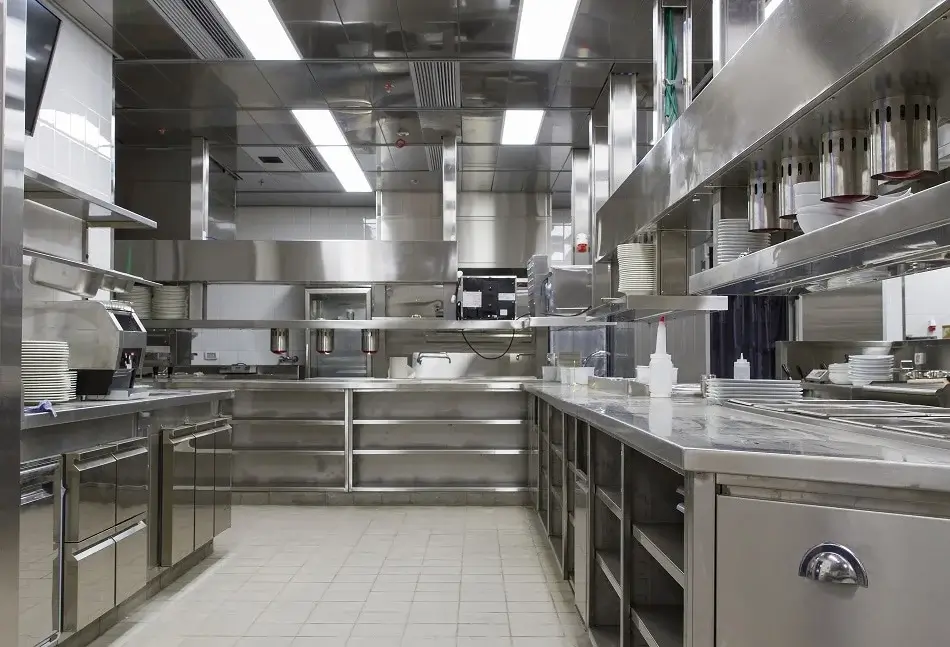
304 Stainless Steel Application – Kitchen Utensils

Comment
0 comments
Got thoughts or experiences to share? We’d love to hear from you!