
Suppliers and OEMs often grow by scaling their manufacturing. By producing parts in greater numbers, a company can sell to more buyers while also exploiting economies of scale, reducing their unit costs.
However, scale is not the be-all and end-all of modern production. In many industries, companies value agility and variation just as much as production volume. This means focusing on speed, flexibility, and ability to respond to changing demands rather than prioritizing the biggest and cheapest orders.
To maintain that agility, companies are increasingly turning to high-mix low-volume manufacturing (HMLV), a production strategy based on making a variety of high-quality products in small quantities. Parts may be customized for specific customers or made in modular forms that allow for flexibility at the assembly stage.
This article goes over the basics of high-mix low-volume manufacturing, discussing its main advantages, key manufacturing technologies, and suitable industries and products.
What Exactly is High-Mix Low-Volume (HMLV) Manufacturing?
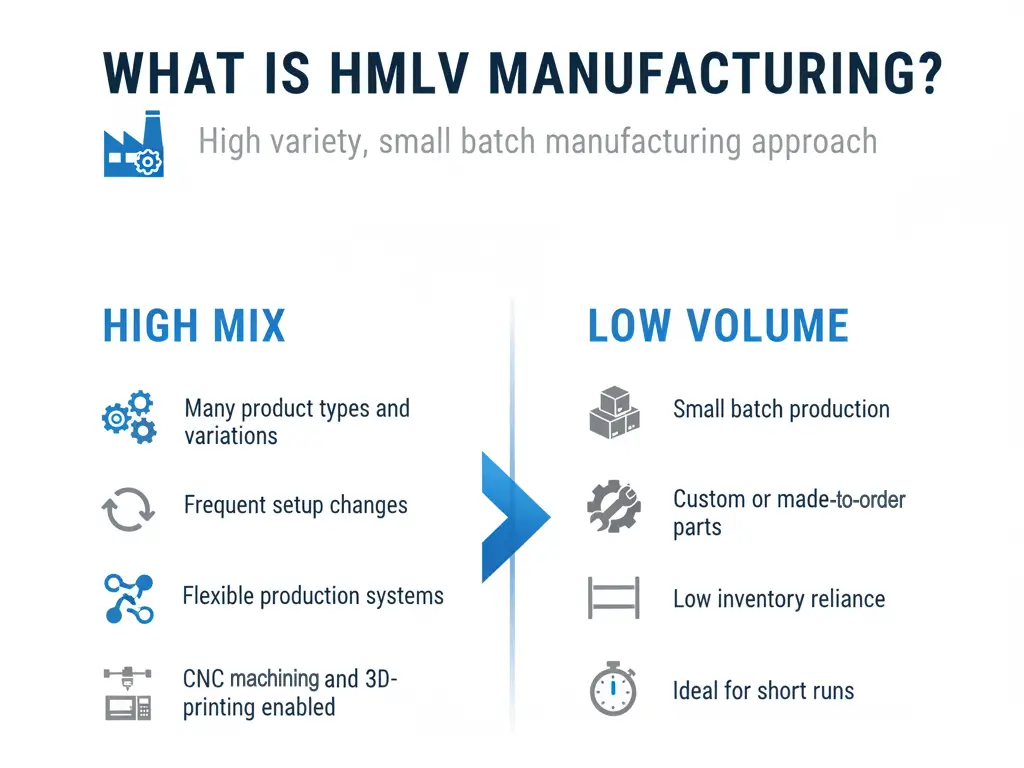
High-mix low-volume manufacturing is a production strategy that stands in contrast to low-mix high-volume manufacturing or the ordinary mass production of identical parts.
The aim of HMLV is to create a wide variety of high-quality parts in small quantities. The strategy can involve producing parts to order, producing customized parts for individual buyers, and deploying lean manufacturing technologies.
With a focus on speed and agility over scale, HMLV manufacturing can closely resemble rapid prototyping, though the end-use parts are made for commercial use.
HMLV may also be considered an industry in itself, comprising modern manufacturers, SHBD Metal included, that provide a broad range of digital production techniques while offering short lead times on low-volume orders.
High Mix: Variety and Customization
The first important aspect of HMLV manufacturing is the so-called “high mix.” This refers to the range of different parts being produced—typically a diverse product array featuring a variety of designs, materials, colors, sizes, or modifications.
A high mix low volume manufacturing environment is built to accommodate this diverse product array, typically involving a range of machines and production lines that can be easily scheduled, monitored, and reconfigured, with a focus on simple tool changes to enable operators to move from one part on to the next.
Although most manufacturing technologies can be deployed during HMLV production, high-mix manufacturing may entail the use of machines that do not require tool changes at all, such as 3D printers or multi-axis CNC machining centers.
Low Volume: Scalable Small-Batch Production
The other key element of HMLV manufacturing is its focus on jobs of “low volume.” This means the production of parts in small quantities, as opposed to mass production.
In practice, low-volume manufacturing might mean 100 parts built for a specific buyer or several thousand units to serve a slightly wider customer base, depending on the industry and product. Either way, the focus is on meeting the needs of customers that require specificity rather than quantity.
A commitment to small-batch production often involves the use of tool-free technologies like 3D printing and CNC machining or low-cost tooling such as aluminum injection molds. These technologies are suited to on-demand manufacturing of made-to-order parts, rather than the mass production of parts to be stored in warehouses.
Why Do Companies Choose HMLV Manufacturing? Benefits for OEMs and Buyers
HMLV manufacturing reflects the requirements and possibilities of the modern age, enabling OEMs to serve buyers with what they need immediately, potentially skipping years of development, production, and supply chain dependence.
HMLV benefits for OEMs
- Fast time-to-market: Shorter, smaller production runs enable faster time-to-market, enabling companies to leapfrog competitors with new products.
- Rapid adaptability: Smaller jobs with shorter lead times allow companies to respond to market shifts.
- Redesign and customization: On-demand manufacturing technologies and short supply chains allow OEMs to customize products right until the moment of shipment, giving them the option to provide high-value customized product configurations.
- Low setup costs: Lean manufacturing and a reduced dependence on expensive high-volume tooling reduces initial investment for manufacturers.
- Low inventory risk: On-demand manufacturing eliminates the risks of over-production, product obsolescence, warehousing costs, and inventory damage.
HMLV benefits for buyers
- Product customization: Made-to-order manufacturing lets customers choose different product configurations based on standard assemblies or purchase entirely unique custom parts.
- Lower MOQs: Since parts are manufactured on a small scale, suppliers place less demand on buyers to meet minimum order quantities, allowing smaller entities to gain access to high-quality products.
- Quality assurance: Low-volume or custom parts may undergo more thorough testing and quality assurance procedures than parts produced in high volumes, where only a percentage of each batch is closely examined.
- Low inventory risk: Buyers only need to purchase the inventory required, reducing overstocking risk and storage costs in the same way experienced by the supplier.
- Bridge manufacturing: Most HMLV suppliers will offer some level of scalability, allowing buyers to ramp up their order quantities over time without initial financial risk.
Strategies and Technologies for HMLV Manufacturing
HMLV manufacturing requires a different approach to traditional manufacturing, with a focus on fast production technologies, reconfigurable production lines, short supply chains, and a high level of buyer communication to address changing requirements.
One important concept in HMLV manufacturing is “Industry 4.0,” which describes the era of digitally connected smart factories. An Industry 4.0 factory may facilitate HMLV manufacturing by deploying automation, robotics, AI, machine learning, and hybrid manufacturing, allowing for high mix scheduling with minimal machine downtime, seamless changeovers between short production runs, and maintenance of part quality via automatic process control.
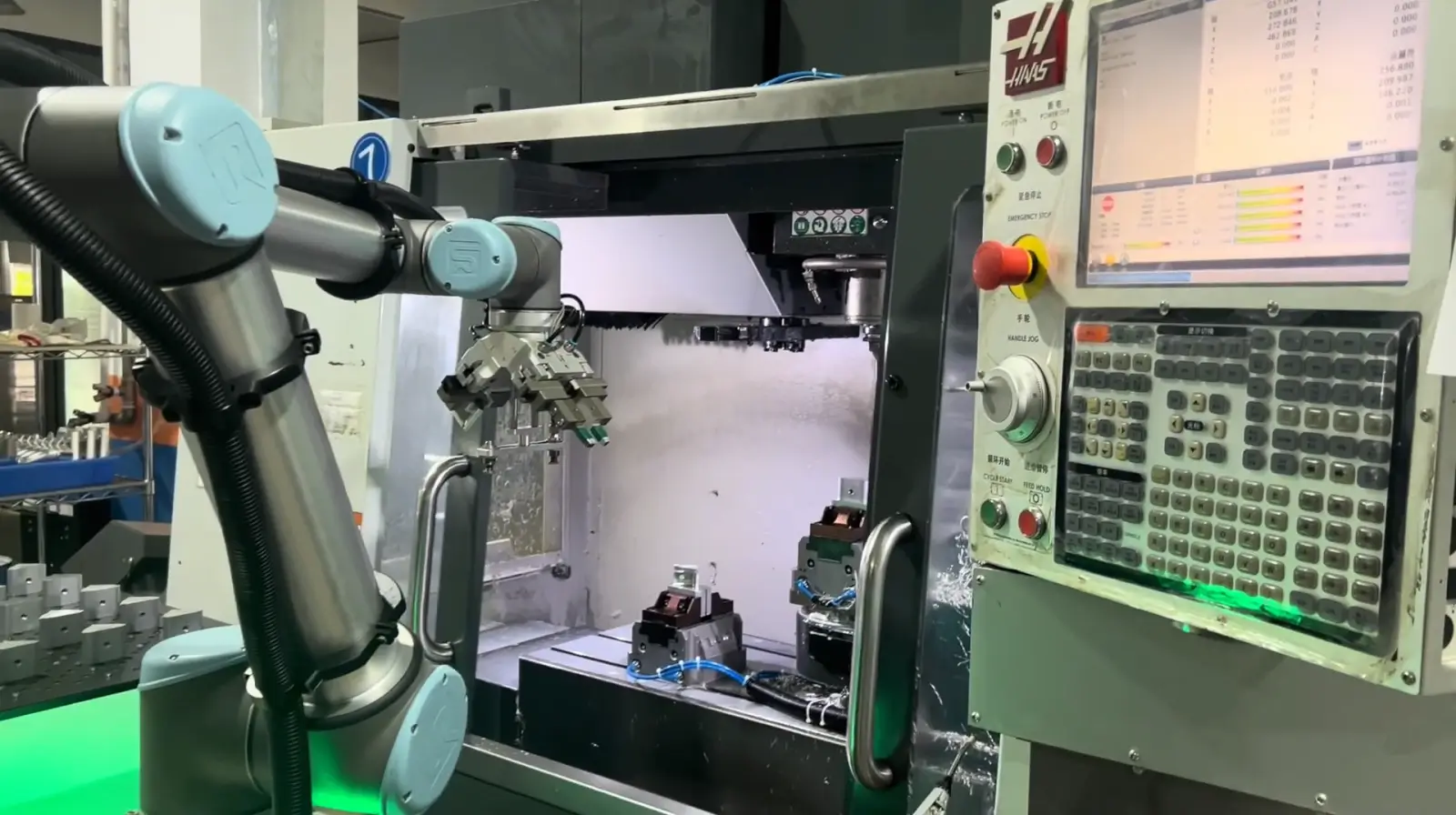
Additionally, manufacturers specializing in HMLV production may offer a broader range of competencies than traditional job shops. This may involve combining expertise in subtractive and additive manufacturing, as well as other technologies, and deploying a number of different machines rather than a large factory of identical systems.
Different processes have different advantages in the HMLV space. The table below compares different manufacturing technologies in terms of their suitability for HMLV manufacturing.
| CNC Machining | 3D Printing | Injection Molding | Urethane Casting | Sheet Metal Fabrication | |
| Machine Cost | High | Medium* | High | Low** | Medium–High |
| Low-Volume Job Cost | Medium | Low | High | Low | Medium |
| Setup Speed | Medium | Fast | Slow | Medium | Medium |
| Production Speed | Medium | Slow | Very fast | Fast | Fast |
| Customizability | High | Very high | Low | Low–Medium | Medium |
| Scalability | Medium | Low | Very high | Low | High |

Comment
0 comments
Got thoughts or experiences to share? We’d love to hear from you!