
Choosing a PCB manufacturing company is less about finding the “best” factory and more about finding the one that fits your process, volume, and stage. A vendor that ships a million consumer boards a month may reject your 5-piece prototype; a platform built for rapid iteration may not hold tolerance on a 20-layer RF board.
This list ranks ten suppliers by fit, not by affiliate slot or vague score. Each entry states what it does well from public information and where it runs out of road, so you can shortlist without burning a re-spin.
How to Evaluate a PCB Manufacturing Company
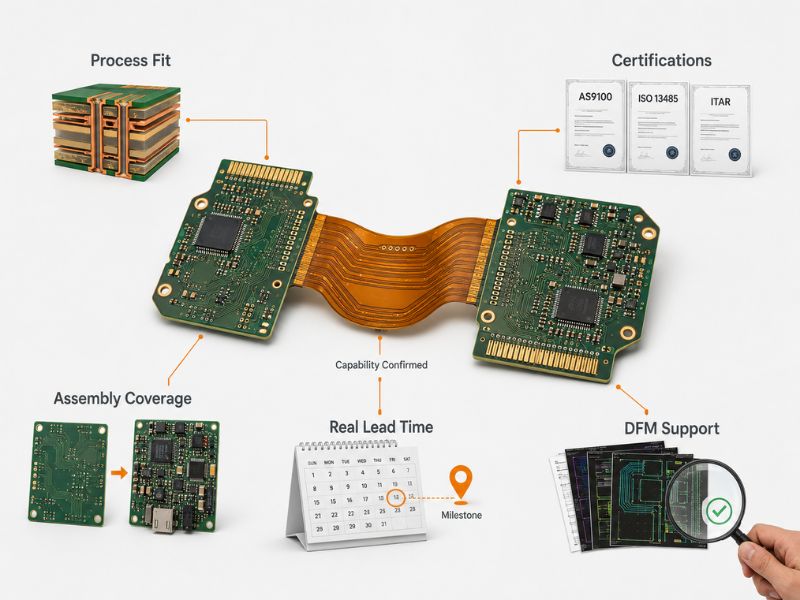
Before comparing names, fix the criteria. The factors below decide whether a supplier is usable for your build:
- Process coverage — layer count, HDI, flex/rigid-flex, metal-core, high-frequency (Rogers/PTFE). Match this to your stack-up before anything else.
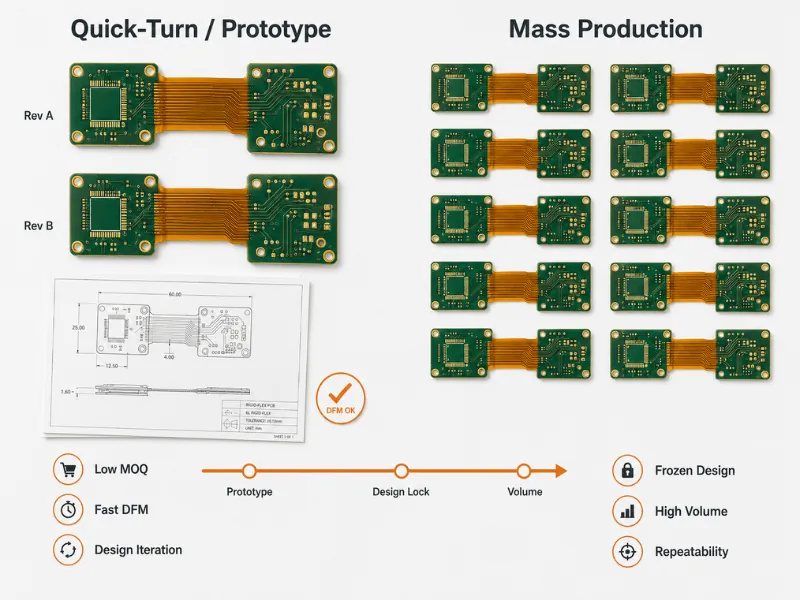
- MOQ flexibility — can you order 1–10 pieces, or is there a panel minimum?
- Lead time — standard vs. rush. Rush under 24 h exists, but only at some vendors and only for standard stacks.
- Certifications — UL, IATF 16949 (automotive), ISO 13485 (medical), ISO 9001. These matter once you leave the lab.
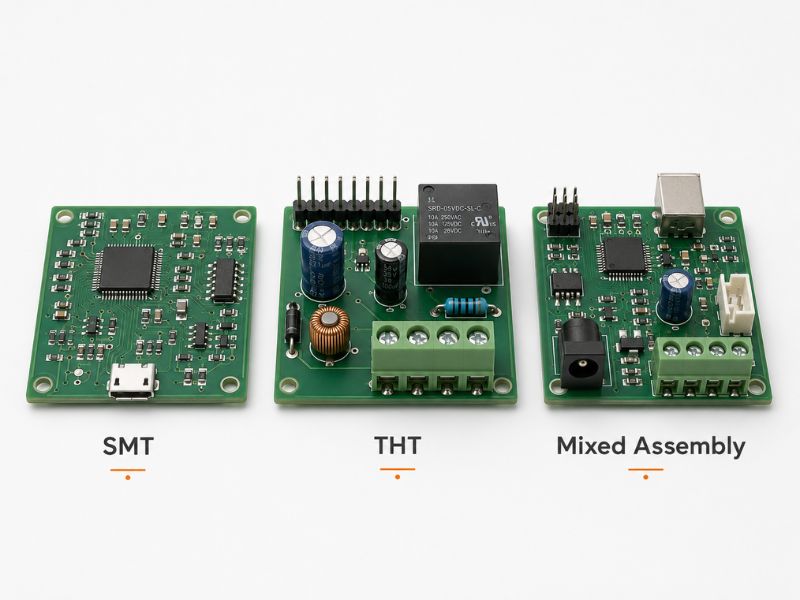
- Assembly capability — bare board only, or SMT/THT, BOM sourcing, and functional test (turnkey)?
- Engineering support — built-in DFM review, component obsolescence help, and a human who answers.
Score your project against these six, then read the table.
Top 10 PCB Manufacturing Companies 2026 — At a Glance
| Vendor | Best for | MOQ | Lead time | Assembly | Key process |
| JLCPCB | Cheap fast prototypes + ecosystem | None | 24–48 h | Yes (SMT + turnkey) | 1–64L, Alu, HF |
| PCBWay | Full-service turnkey, broad process | None | Rush + steady small batch | Yes (SMT/THT + BOM + FCT) | HDI / FPC / rigid-flex / HF / metal core |
| ALLPCB | Certified industrial / IoT / medical | None | 12–24 h rush (limited) | Yes (turnkey) | Multi-L, heavy Cu, impedance |
| Seeed Studio | Open-source / IoT small-batch | Low | Small-batch turnkey | Yes (turnkey) | Light custom, FPC |
| A-Tech Circuits | High-reliability medical / auto | — | Standard | Yes (reliable) | PTFE / HDI / metal core |
| HQPCB | Traceable smart-factory small-batch | None | Weaker extreme rush | Yes (SMT + turnkey) | Rigid / HDI / metal core / heavy Cu |
| JDBPCB | 24 h rush prototypes | None | 24 h | Yes (small-batch turnkey) | Rigid / flex / alu |
| MOKO PCB | Industrial-grade, EU/US-standard QC | — | Weaker rush | Yes (precision SMT + FCT) | Industrial / smart-hardware |
| WinSource PCB | PCB + component integration | — | Small-batch | Yes (BOM + PCBA turnkey) | Standard multi-L |
| SHBD Metal | Board + enclosure mechatronics | None | 12 h prototype | Yes (turnkey PCBA) | 1–32L rigid / HDI / flex-rigid-flex / metal core / ceramic / HF |
The Top 10, Profile by Profile
JLCPCB
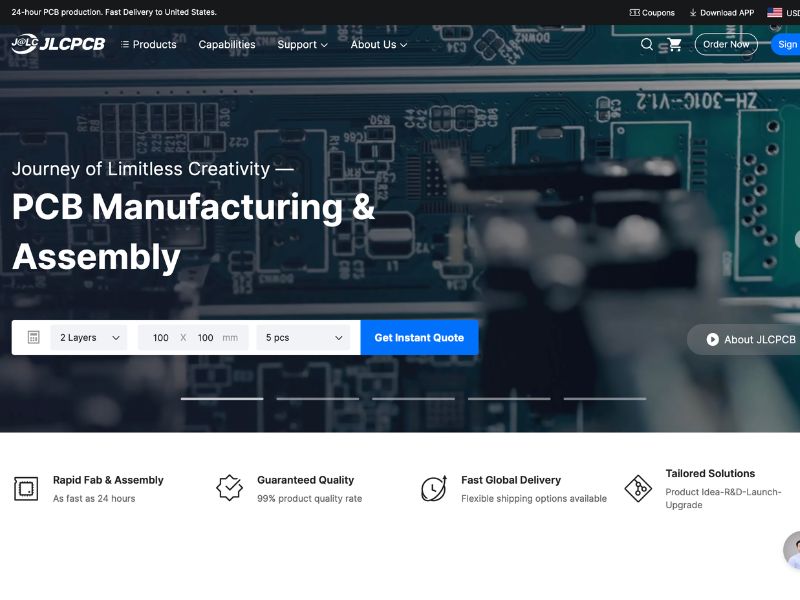
The default choice for cheap, fast prototyping. Supports 1–64 layer boards, aluminum substrates, and standard high-frequency material, with no MOQ and 24–48 h turnaround. The platform wraps fabrication in its own EDA tool, a million-line component library, and turnkey assembly, so a solo engineer can go from schematic to stuffed board without leaving one account.
The trade-off is process ceiling. High-end HDI, blind/buried microvias, tight impedance control, and specialty RF laminates are out of scope. It is also electronic-only — there is no mechanical counterpart, so enclosures and brackets come from a second supplier.
PCBWay
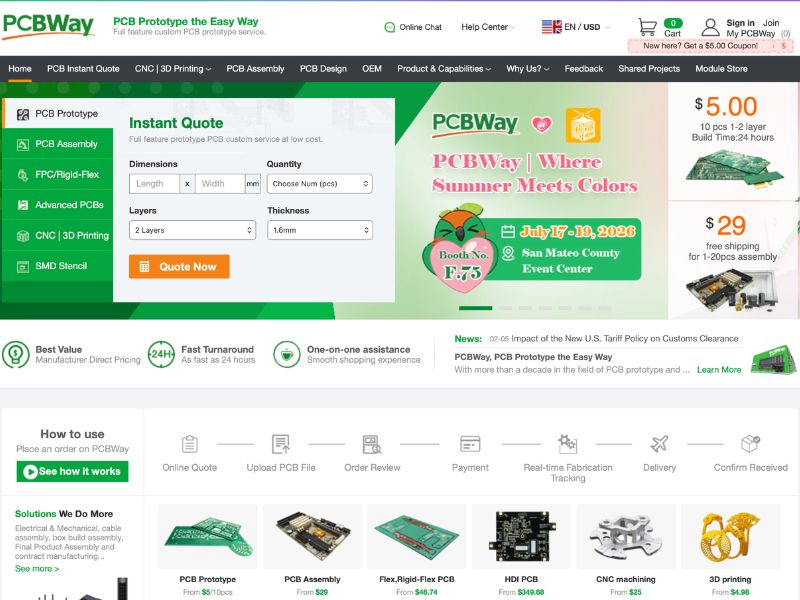
The broadest one-stop in this list. Regular rigid, FPC, rigid-flex, high HDI, high-frequency, and metal-core boards are all on the table, backed by SMT/THT assembly, BOM sourcing, functional test, and turnkey delivery. Multilingual support and mature global logistics make it a common pick for teams that need both a quick prototype and a qualified small batch.
Standard bare boards cost more than JLCPCB, and like most pure electronics platforms it has no mechanical manufacturing arm.
ALLPCB
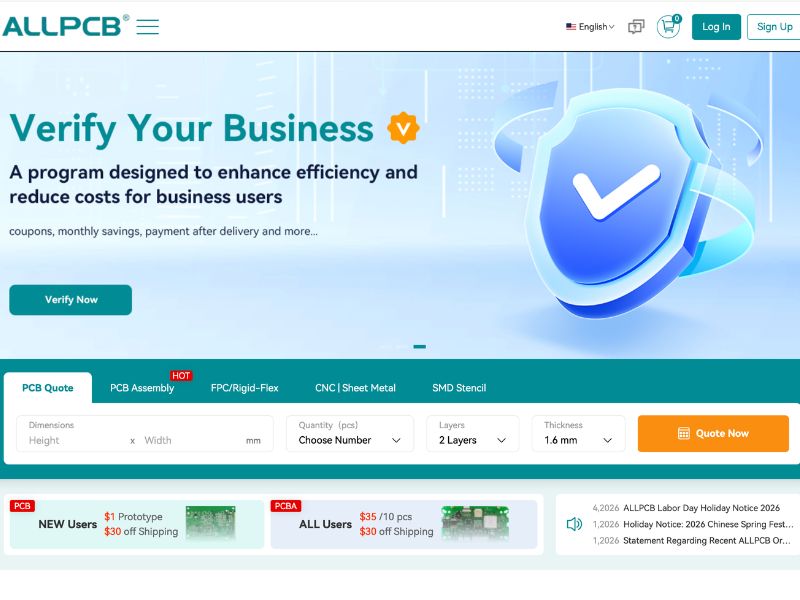
Built for certified, industrial-grade work. Holds UL, IATF 16949, and ISO 13485, and leans into multi-layer, heavy-copper, and impedance-controlled boards for IoT, medical, and industrial use. Turnkey assembly is integrated, and the quality system prioritizes commercial reliability over hobbyist iteration.
The weak spot is extreme rush: 12–24 h super-express is limited, and specialty high-frequency (PTFE), ceramic, and ultra-dense processes are thinner than at dedicated houses.
Seeed Studio
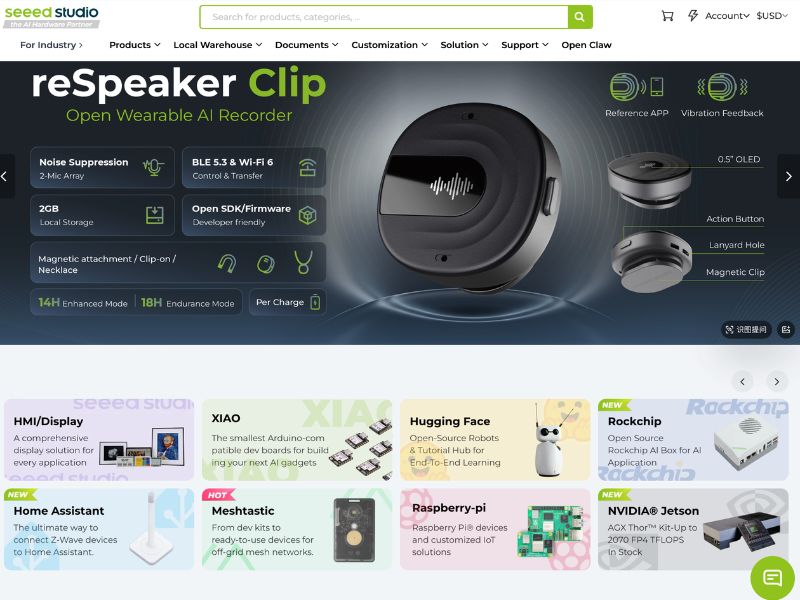
The open-source hardware anchor. Strong for wearable, IoT, and maker-style projects that need light customization and small-batch turnkey assembly, including component sourcing and functional test. The ecosystem fit for prototype-to-small-run is hard to beat.
It is not the place for high-layer-count, high-power, or large-batch work — pricing and process depth sit at the light end.
A-Tech Circuits
A high-reliability specialist. Public information points to strength in PTFE microwave boards, precision HDI, and metal-core substrates for medical, automotive, and industrial control, with compliant assembly and strict test flow. If your board fails safely only when the fab is disciplined, this is the lane.
Expect to pay for that discipline. It is not a low-cost rapid-iteration platform, and standard boards are better served elsewhere.
HQPCB
HQPCB, also known as Huaqiu, is a digital smart factory focused on cost-effective prototypes and small batches, with rigid, HDI, metal-core, and heavy-copper capability. A built-in DFM check and full-process traceability are the selling points — you can see where the order is, and the system flags issues before they become scrap.
Extreme rush (sub-12 h) is not its strength, and the highest-end specialty processes iterate more slowly than at dedicated houses.
JDBPCB
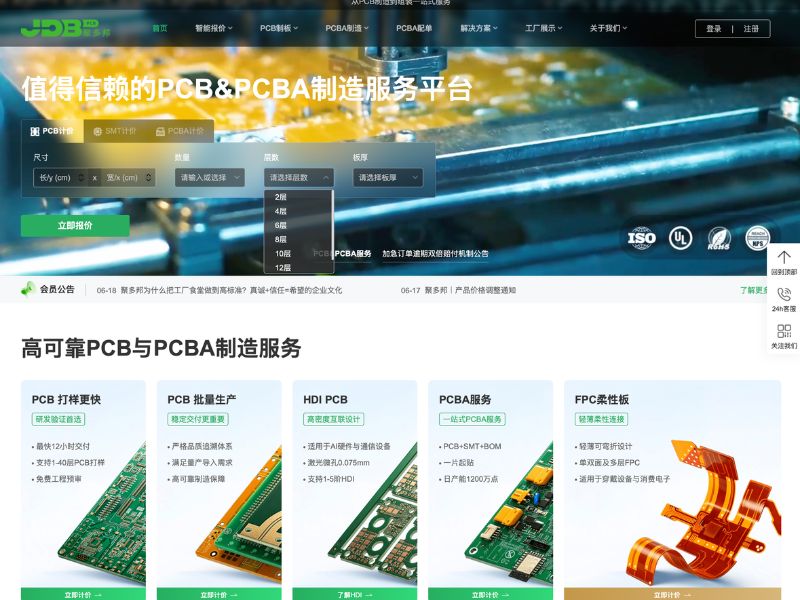
JDBPCB, also known as Jieduobang, is the rush option. 24 h express fabrication on rigid, flex, and aluminum boards, with small-batch turnkey assembly attached. For a deadline-driven respin, the fast-clock behavior is the reason to call.
High-end HDI and ultra-fine processes mature more slowly here; the core value is speed on conventional stacks.
MOKO PCB
An industrial-grade brand holding to EU/US quality expectations, with standard assembly, precision SMT, and functional test for small-batch commercial builds. The appeal is disciplined QC on finished product rather than rock-bottom price.
It is not the cheapest, and extreme rush is weaker than at the express-focused platforms.
WinSource PCB
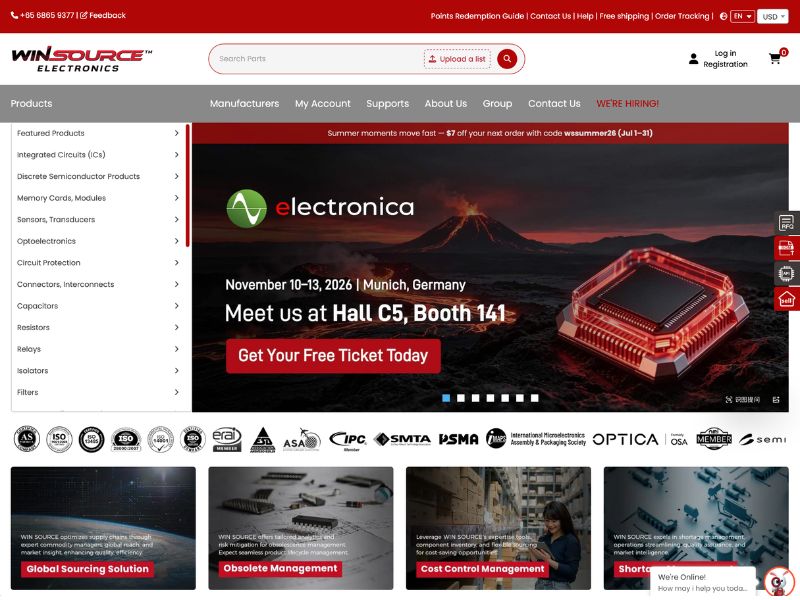
Solves the sourcing gap. PCB fabrication plus BOM matching, component procurement, assembly, and functional test sit under one turnkey roof, so you are not arbitraging a board house against a parts distributor.
The PCB specialization is a step shallower than at a pure fabrication house — the edge is supply-chain integration, not board-process depth.
SHBD Metal
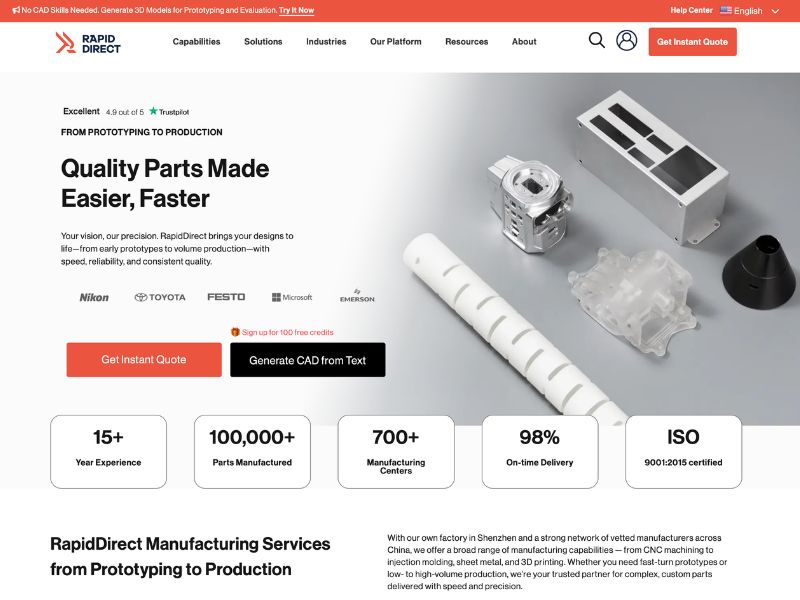
The only vendor in this list that pairs electronics with in-house mechanical manufacturing. PCB fabrication spans 1–32 layer rigid, HDI, flex/rigid-flex, metal core, ceramic, and high-frequency; assembly is turnkey with SMT, THT, BOM sourcing, and functional test. On the mechanical side, CNC machining, 3D printing, sheet metal, and injection molding run from the same 30,000 m² smart factory.
Verified capabilities: prototype PCBs in as fast as 12 hours with no MOQ, free built-in DFM on every order, 6 SMT lines, 45,000 m²/month PCB and 150,000 pcs/month PCBA capacity, and certification to ISO 9001, IATF 16949, ISO 13485, ISO 14001, ISO 45001, IPC Class 2/3, plus RoHS/REACH/FCC/CE/UL. Inspection covers SPI, AOI, X-ray, flying probe, FCT, FAI, and IQC.
The trade-off: it is not the ultra-low-price leader, and there is no 100k+ scale-volume line — the fit is prototype-to-low-volume with structure attached.
Match the Vendor to Your Project Stage
| Stage | What you need | Closest fit |
| Early prototype | Speed, no MOQ, cheap iterations | JLCPCB, JDBPCB, SHBD Metal |
| Small-batch pilot run | Turnkey assembly, stable quality | PCBWay, Seeed Studio, MOKO, HQPCB |
| Certified/reliable | UL / IATF / ISO 13485, disciplined test | ALLPCB, A-Tech Circuits |
| Board + enclosure together | Electronics + mechanical in one workflow | SHBD Metal |
| Volume (tens of thousands+) | Scale, cost-down, framework supply | High-end listed houses / EMS (separate tier) |
Beyond the Board: When One Platform Covers Enclosure Too
A tested board is only one part of a functional prototype. Connector alignment, mounting points, thermal paths, and enclosure clearance are where most first articles fail — and they are exactly the things a board-only supplier cannot validate.
SHBD Metal is the option in this list that can pair PCB fabrication and assembly with CNC-machined electronic enclosures or 3D-printed housings through one product workflow, keeping board, bracket, and shell on the same quality and delivery schedule. For a hardware team, that removes the multi-supplier drift — mechanical and electronic tolerances are resolved together, not negotiated across two vendors.
Common Mistakes When Picking a PCB Manufacturer
- Chasing the lowest price on the wrong process. A $2 prototype house will not hold your 18-layer impedance stack. Match process first.
- Ignoring MOQ until quote time. Some vendors quote per-panel; a 5-piece need can balloon.
- Forgetting assembly. A bare board is not a build. Confirm SMT/THT, BOM sourcing, and FCT before you commit.
- Treating certs as optional. If the product goes near a patient, a vehicle, or a grid, UL / IATF 16949 / ISO 13485 are gating, not nice-to-have.
- Splitting board and enclosure too early. Two suppliers means two tolerances and two ship dates — and the gap shows up at first article.
Conclusion
No single PCB manufacturing company wins every build. JLCPCB and JDBPCB win on speed and cost; PCBWay and Seeed Studio on turnkey breadth; ALLPCB and A-Tech on certified reliability; WinSource on sourcing integration. SHBD Metal is the fit when the board is not the whole product and the enclosure, bracket, and shell need to move with it.
Shortlist by the six criteria above, match them to your stage, then get specific. Get an instant quote for your PCB project, or compare solutions across the vendors above to lock the right partner before you order.
FAQ
Ask for the actual certificate documents and check the scope — a UL mark means little if it does not cover your board type. For automotive, confirm IATF 16949; for medical, ISO 13485. Public-listed certs on the vendor site are a start, but the cert number and validity window should be verifiable on the issuing body’s registry.
Standard platforms run 24–48 h for conventional stacks; express houses like JDBPCB advertise 24 h, and SHBD Metal lists prototype fabrication from 12 h. Complex HDI, rigid-flex, or ceramic boards take longer regardless of vendor — rush clocks apply to standard processes, not specialty laminates.
Turnkey fits teams that want BOM sourcing, procurement risk, and test handled for them. Consigned (you supply parts) keeps control of sourcing and authentic-component proof but adds logistics. Turnkey is the default for early prototypes; consigned matters when you hold allocated or classified parts.
Once volume reaches tens of thousands of pieces, or you need ultra-HDI / ceramic at scale with a long-term framework supply. The platform vendors here target prototype-to-low-volume; the listed giants and EMS tier target mature, stable, high-volume production and typically will not take a 10-piece order.
It is the only one with in-house mechanical manufacturing — CNC, 3D printing, sheet metal, and injection molding alongside PCB and PCBA. For products where the board lives inside a housing, that means enclosure and electronics are built and qualified in one workflow rather than coordinated across two suppliers.
Functional validation usually needs 5–20 pieces; an EVT build (production-representative stack-up, material, and BOM) typically runs 5–25. Two to three iteration rounds is a healthy ceiling — more usually signals a planning gap upstream, not a fabrication problem.
Comment
0 comments
Got thoughts or experiences to share? We’d love to hear from you!