

Estimating CNC machining lead times without a finalized quote often leaves project schedules vulnerable to unexpected delays. Underestimating production hours or material sourcing timelines now means painful project extensions and supply chain bottlenecks later. We analyzed thousands of rapid prototyping and production runs to isolate the exact variables that dictate machining schedules. For engineers and procurement managers looking for accurate planning data, this guide breaks down the true timeline drivers. Here is the data and calculation logic you need to keep your assemblies on track.
Standard CNC Machining Lead Times by Order Volume
Before analyzing the specific engineering variables, you need baseline expectations. Standard industry lead times scale directly with order volume and part complexity.
| Order Volume | Part Type | Standard Lead Time | Expedited Lead Time |
| 1-5 Parts (Prototype) | Simple | 3-5 days | 1-3 days |
| 1-5 Parts (Prototype) | Complex | 7-10 days | 3-5 days |
| 10-50 Parts | Low-Volume | 7-14 days | 7-10 days |
| 50-500 Parts | Mid-Volume | 21-28 days | 14-21 days |
| 500+ Parts | Production | 28-42 days | 21-28 days |
What Drives CNC Machining Lead Time?
Part Complexity and Geometry
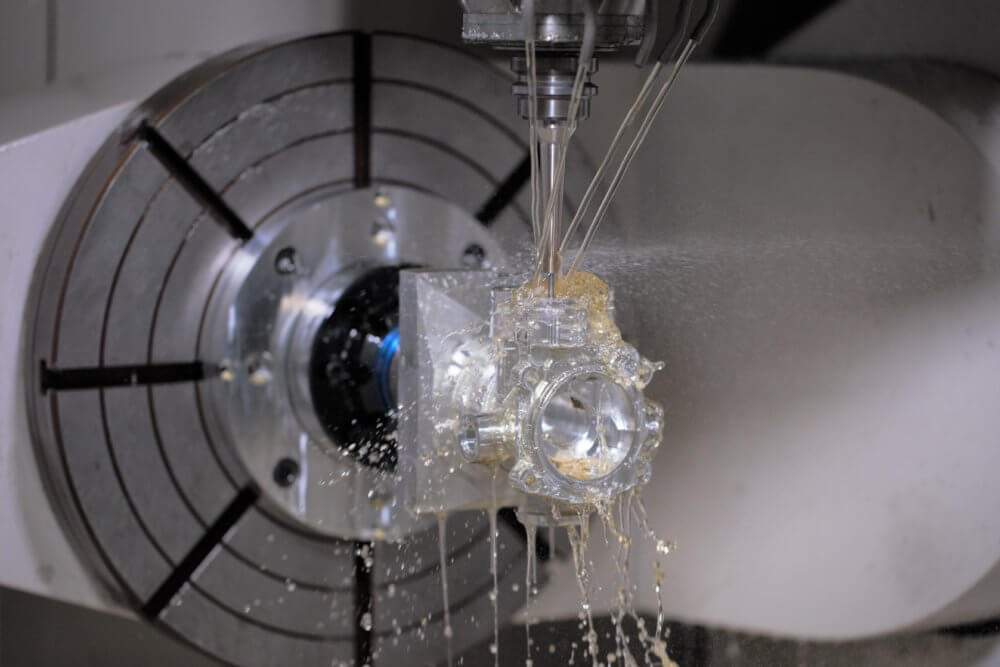
Every time a machine stops so an operator can reorient a part, lead time increases. Simple parts with single-axis features require minimal programming and a single setup. Multi-sided features, deep pockets, or undercuts require 4-axis or 5-axis indexing.
Complexity scales machining time exponentially rather than linearly.
Rule of Thumb: Design parts to be machined from a single setup whenever possible. Typically, this means confining complex features to one of the six orthographic faces.
Tolerance Requirements and Quality Control
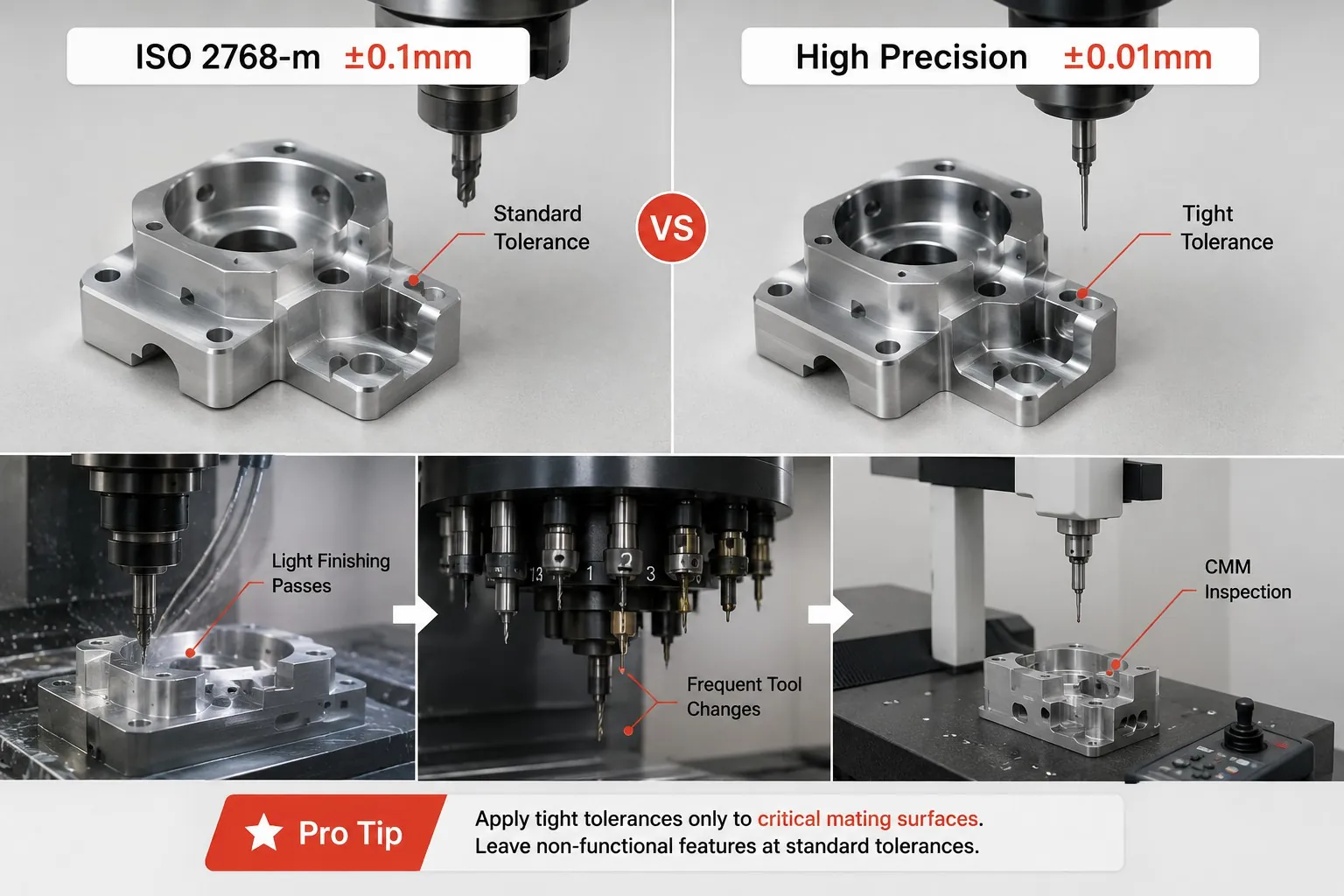
Tight tolerances demand slower feed rates, frequent tool changes, and meticulous metrology. Standard CNC tolerances of ISO 2768-m (±0.1mm) allow for high-speed material removal and rapid spot-checking. Pushing limits to ±0.01mm means operators must take multiple light finishing passes.
Extremely tight tolerances also force facilities to run full Coordinate Measuring Machine (CMM) inspections.
Pro Tip: Only apply tight tolerances to critical mating surfaces. Leave non-functional features at standard tolerances to prevent your parts from spending unnecessary hours in the quality assurance lab.
Material Selection and Machinability
Standard materials like 6061 Aluminum or 304 Stainless Steel are generally kept in stock. They machine predictably and require zero procurement wait time. Exotic alloys like Titanium or Inconel suffer from poor thermal conductivity and rapid work-hardening.
These tough materials require significantly reduced spindle speeds. This routinely turns a standard 10-minute aluminum cut into a 2-hour operation.
Rule of Thumb: If speed is critical, default to aluminum. If a tougher material is required, verify raw stock availability before finalizing the design.
Surface Finishing Delays
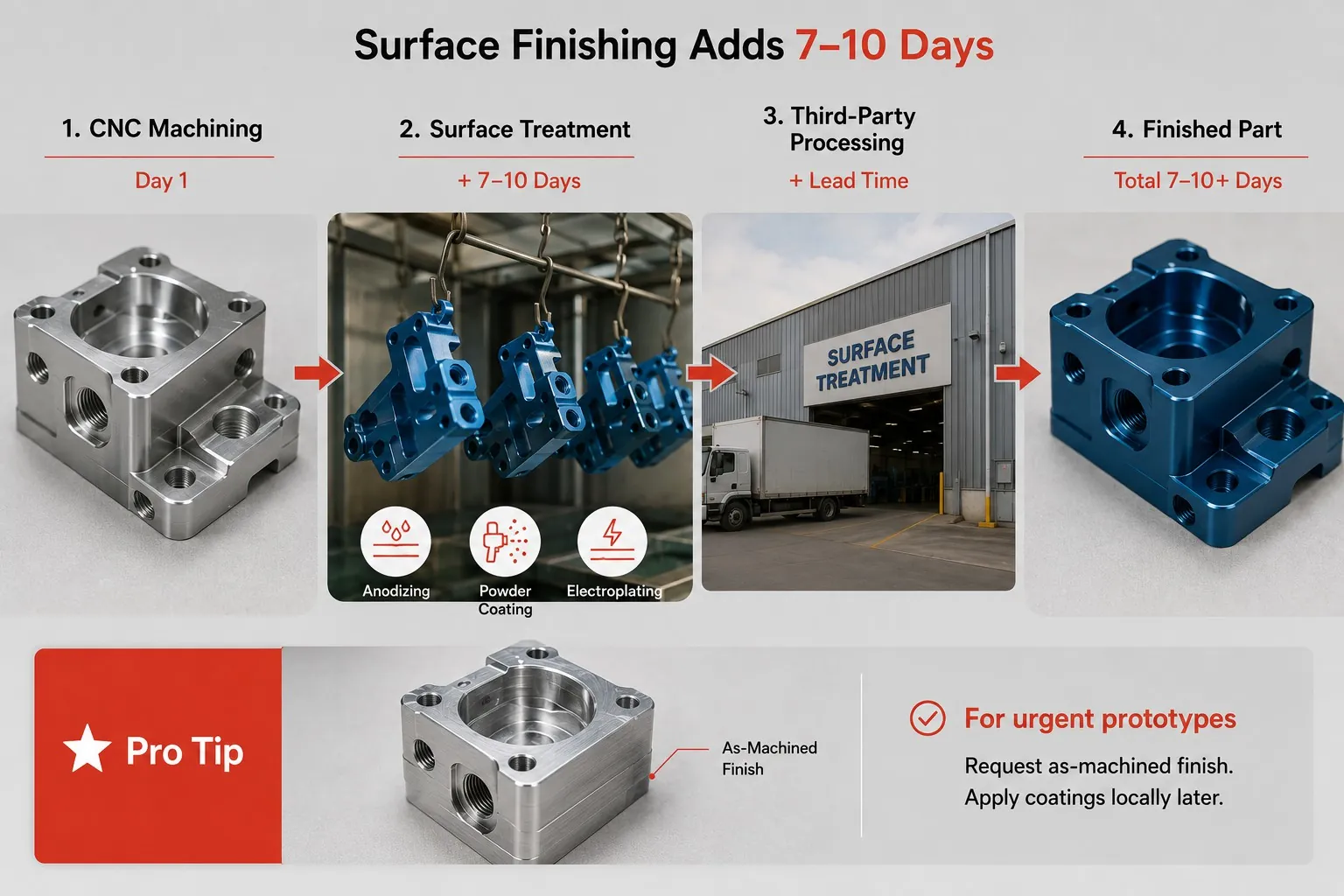
Post-processing adds mandatory, non-negotiable days to your timeline. Processes like anodizing, powder coating, or electroplating typically require an additional 7 to 10 days. Parts are often sent to specialized third-party facilities for these treatments. Multiple surface treatments applied to the same part will stack these lead times cumulatively.
Pro Tip: For urgent functional prototypes, request an “as-machined” finish. You can always apply protective coatings locally at a later date.
How to Shorten CNC Lead Times
Automate the Quoting Process
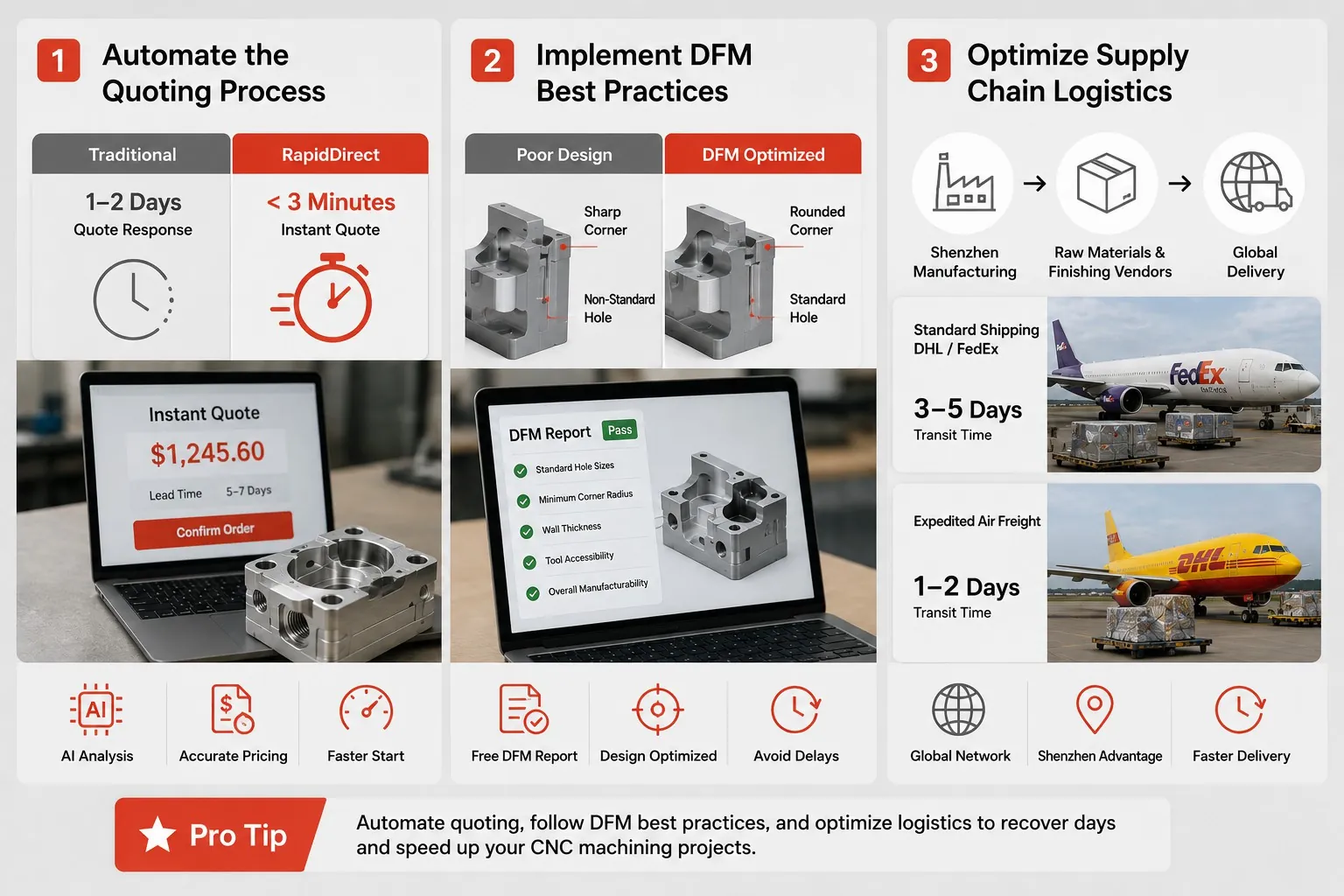
Traditional service bureaus often require 1-2 days just to return pricing and lead time estimates. This delay acts as a bottleneck before manufacturing even begins. SHBD Metal’s AI-driven instant quoting engine evaluates your CAD file and returns accurate pricing in under three minutes. This single shift recovers days of idle waiting.
Implement DFM Best Practices
Use standard hole sizes and avoid sharp internal corners to eliminate the need for custom tooling. SHBD Metal provides free Design for Manufacturability (DFM) reports instantly upon file upload. This guarantees your design is optimized for the spindle before a purchase order is cut.
Optimize Supply Chain Logistics
Standard global shipping via DHL or FedEx takes 3-5 days. For prototypes, expedited air freight easily offsets the longer transit times. Partnering with a manufacturer based in Shenzhen provides direct access to raw materials and finishing vendors, compressing the overall production timeline.
Summary
CNC lead times are dictated by a combination of geometry, material availability, tolerances, and finishing requirements. By applying DFM principles and standardizing materials, you can drastically reduce both cost and time. Leveraging automated quoting platforms eliminates front-end administrative delays entirely.
Ready to stop waiting days for vendor quotes? Upload your STEP files to the SHBD Metal platform today to get instant DFM feedback, precise pricing, and guaranteed lead times in minutes.
FAQs
Yes. Type II anodizing typically adds 0.005mm to 0.025mm per surface. Type III hardcoat anodizing can add up to 0.05mm, which must be accounted for on tight-tolerance holes.
5-axis programming requires complex toolpath generation to avoid collisions. Even though the physical setup might be faster, the upfront CAM engineering adds front-end lead time.
Not necessarily. Setup and programming take the same amount of time whether you order 1 part or 50. You only save on the incremental spindle time.
Comment
0 comments
Got thoughts or experiences to share? We’d love to hear from you!